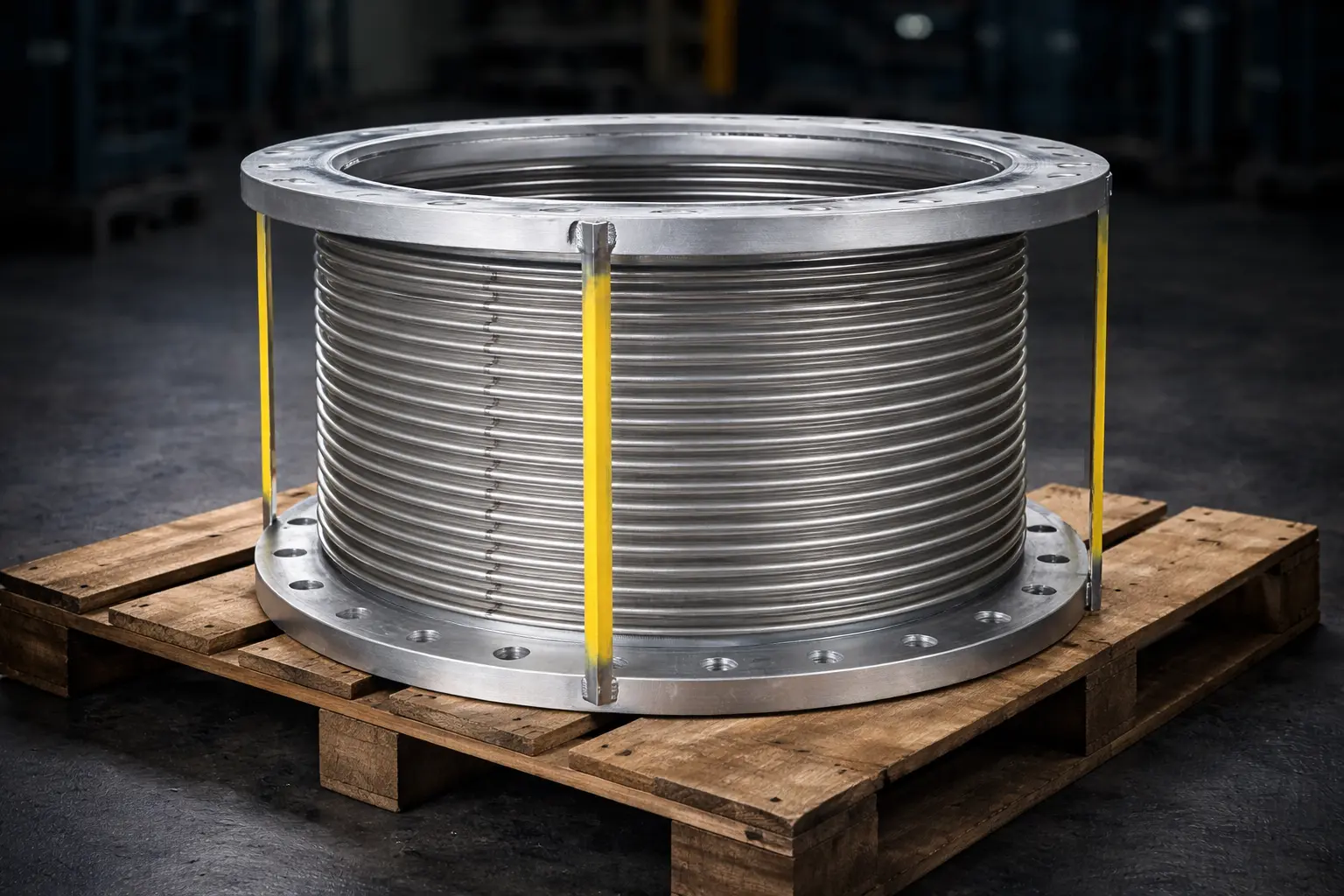
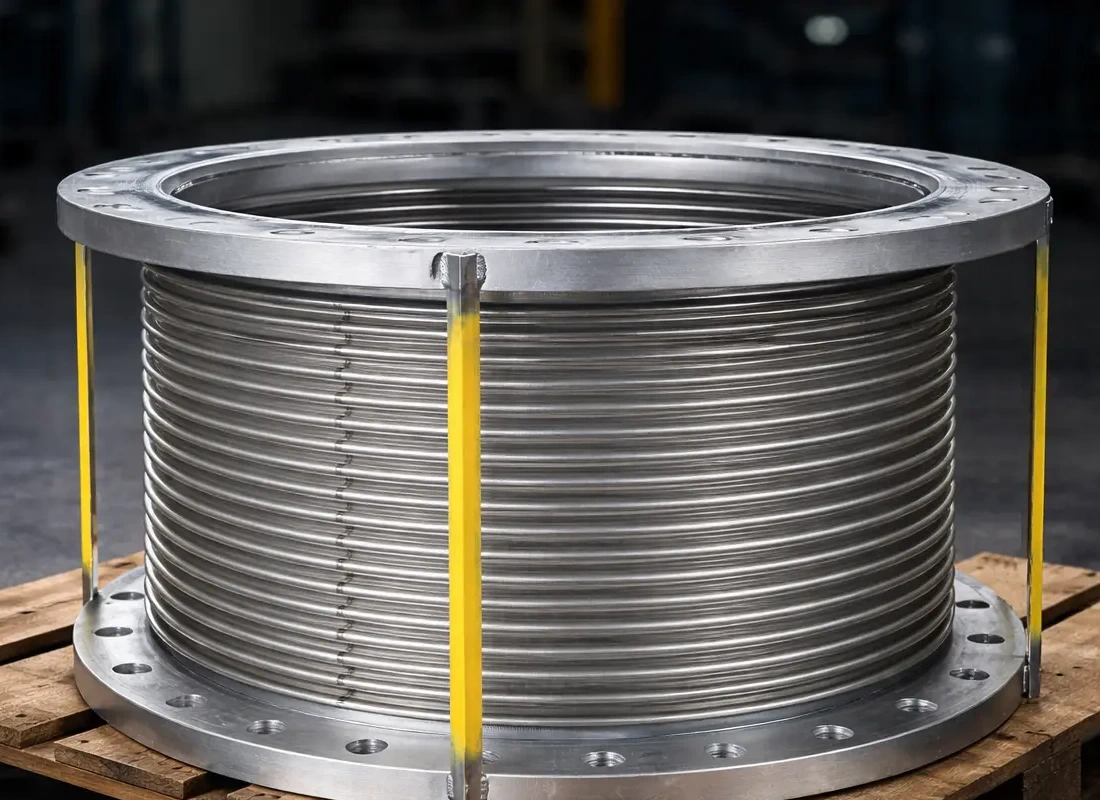
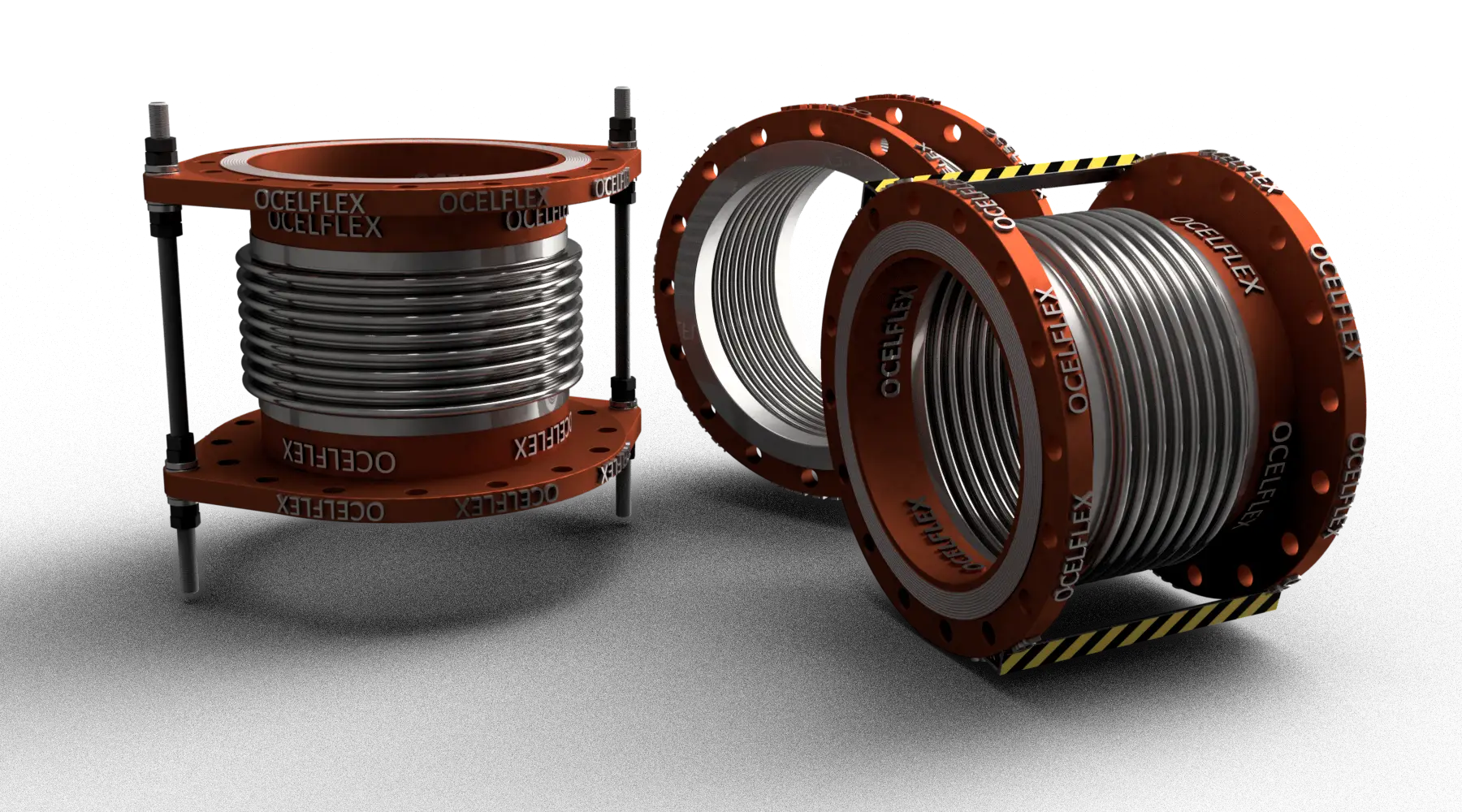
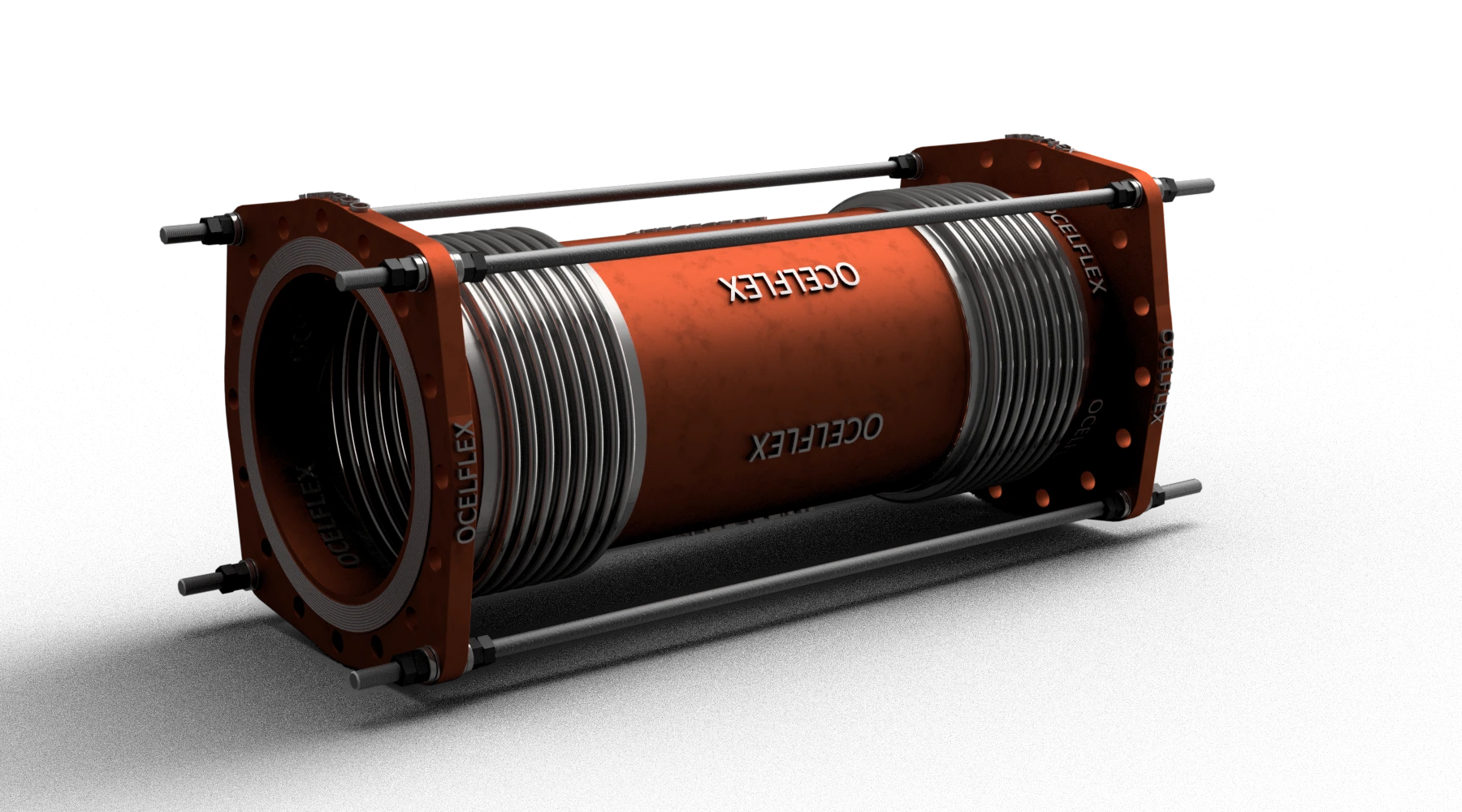
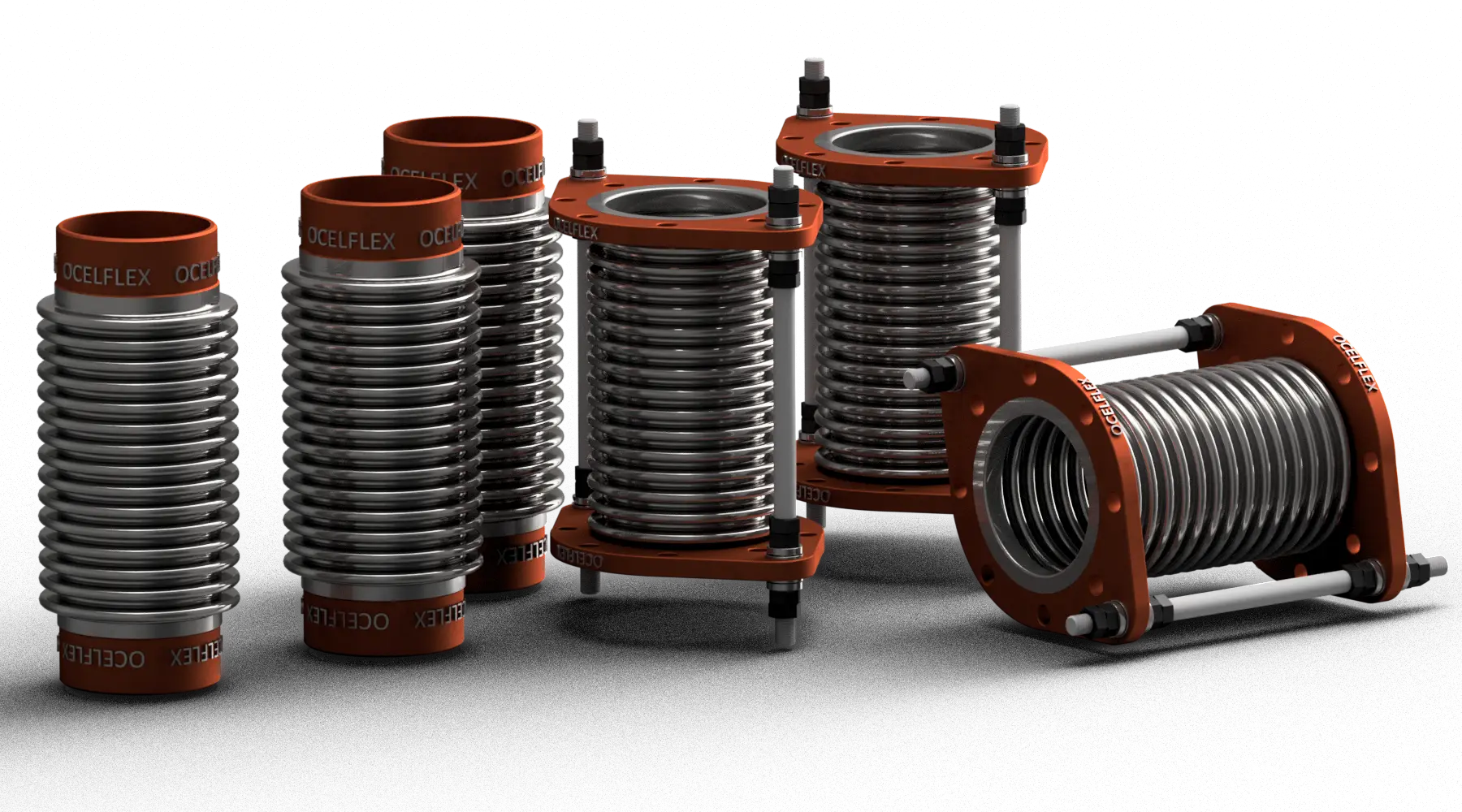
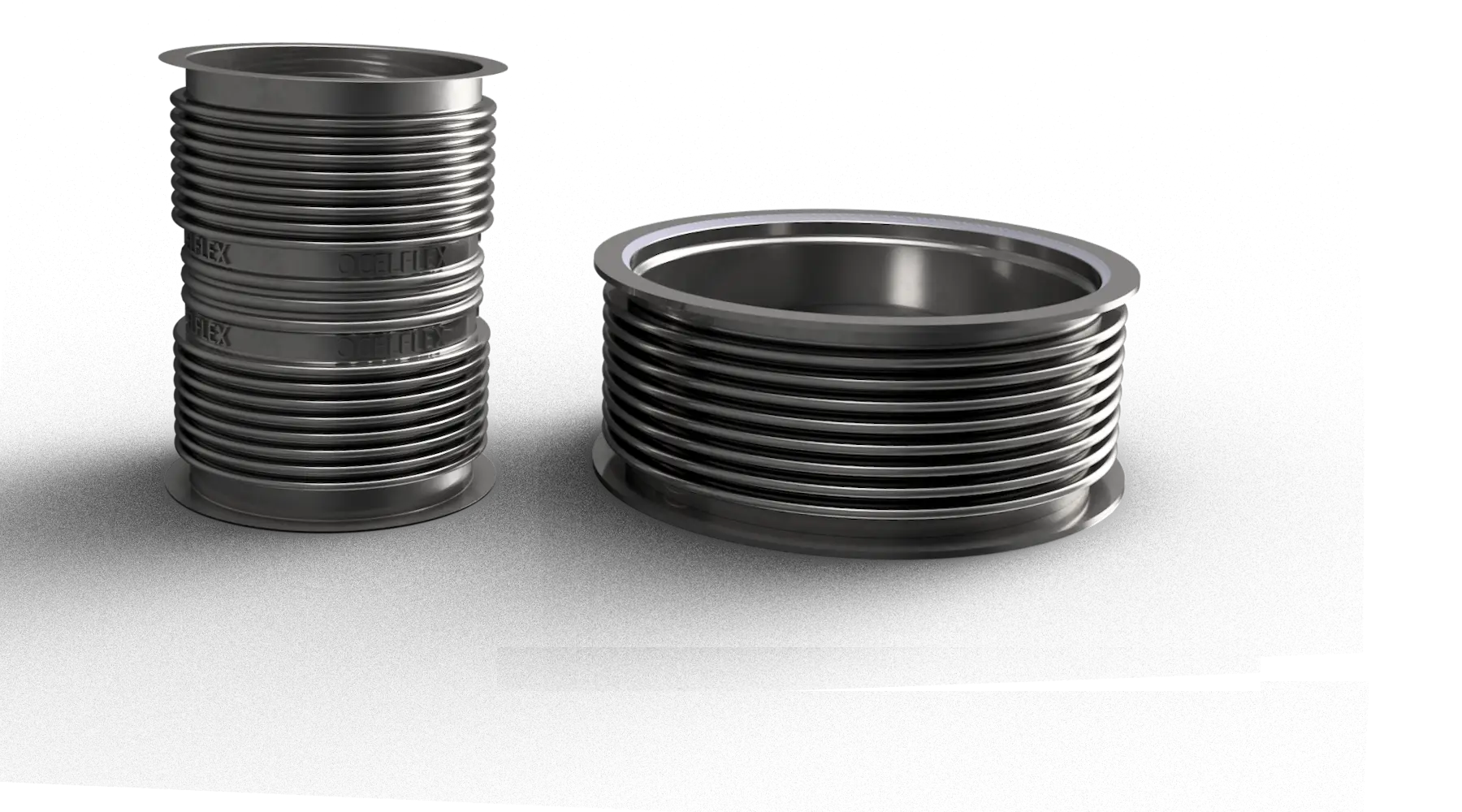
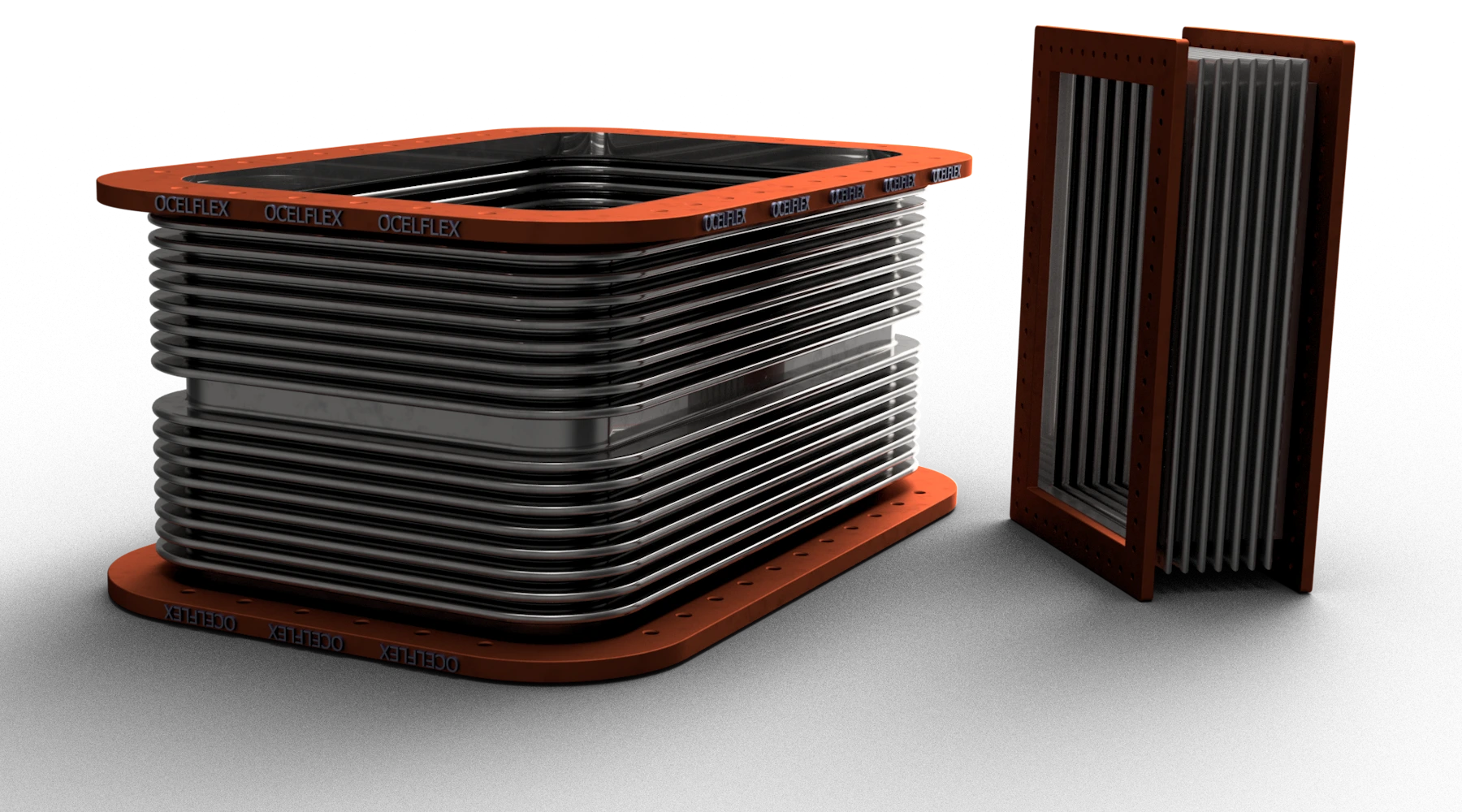
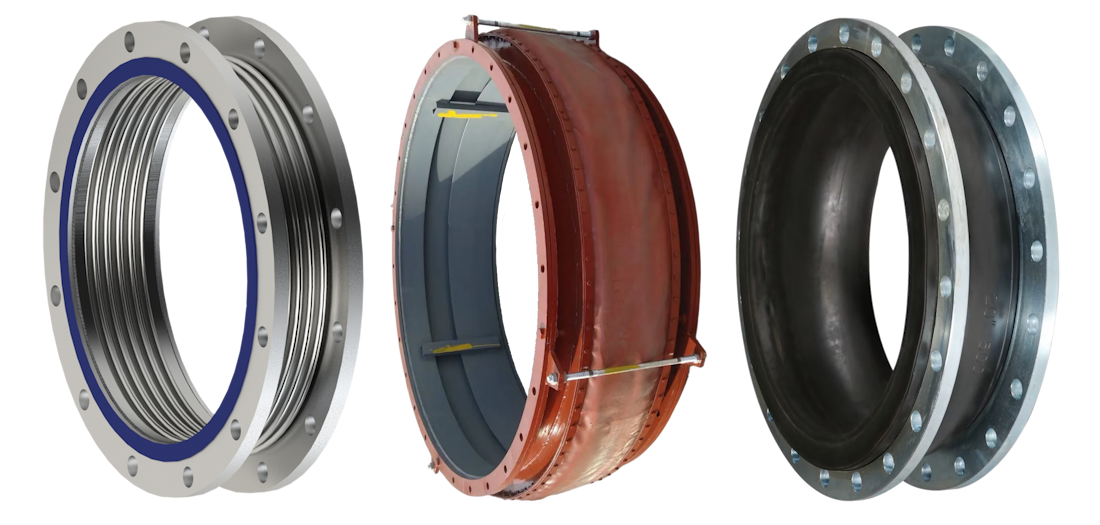
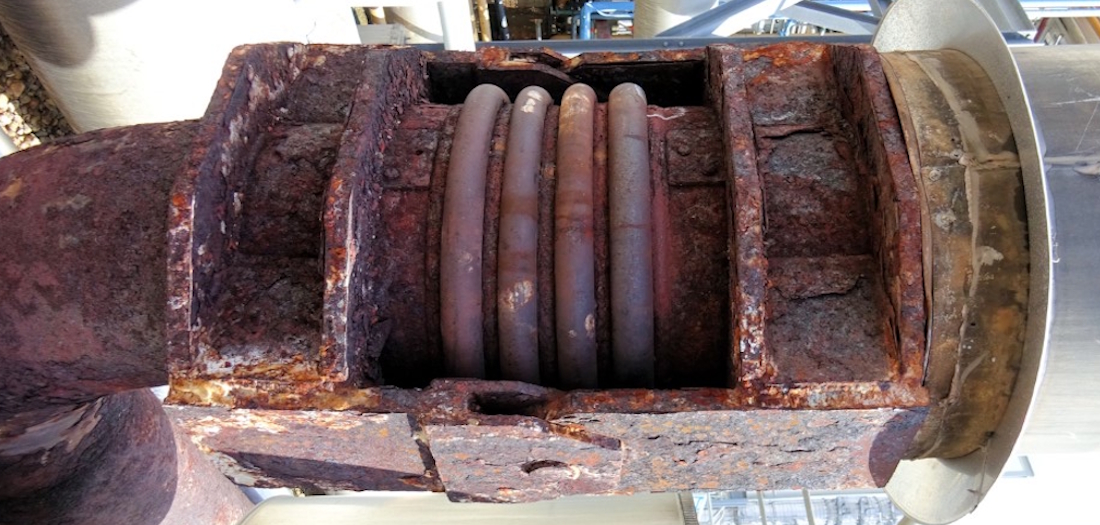
As an experienced metal expansion joint manufacturer in Oman, Ocelflex developed a customized solution tailored specifically to the smelter's demanding operating conditions.
ENGINEERED BELLOWS CONSTRUCTION
•
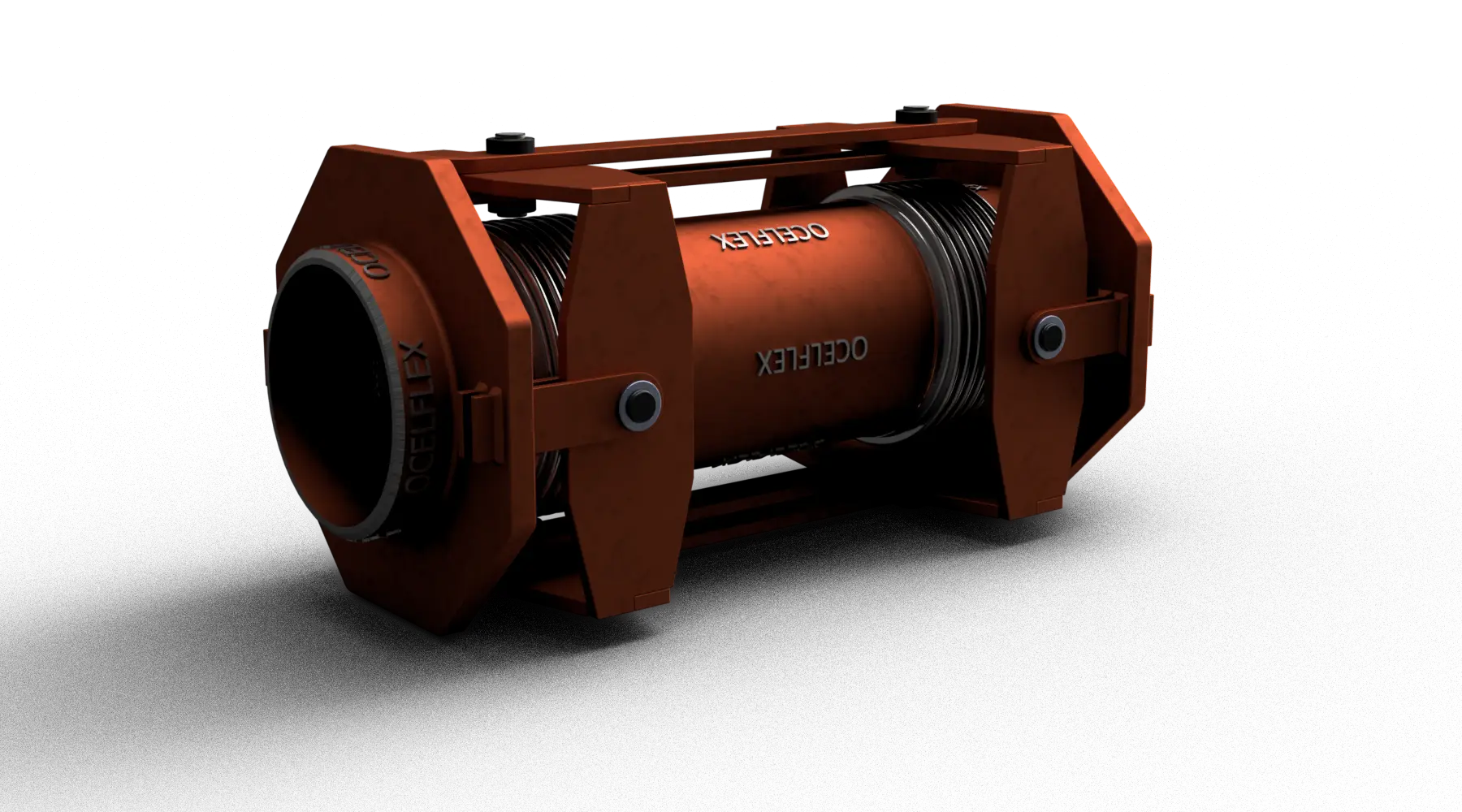
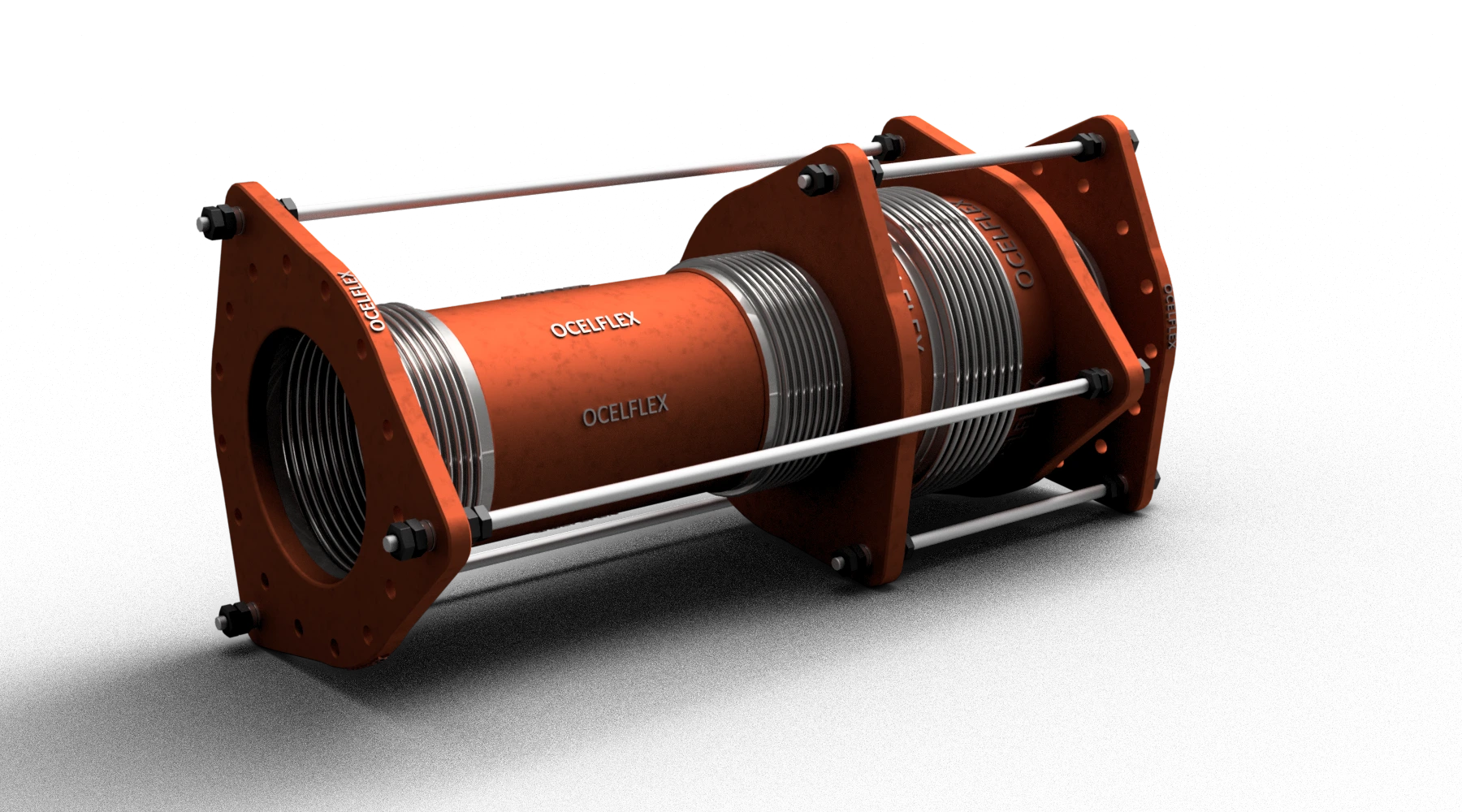
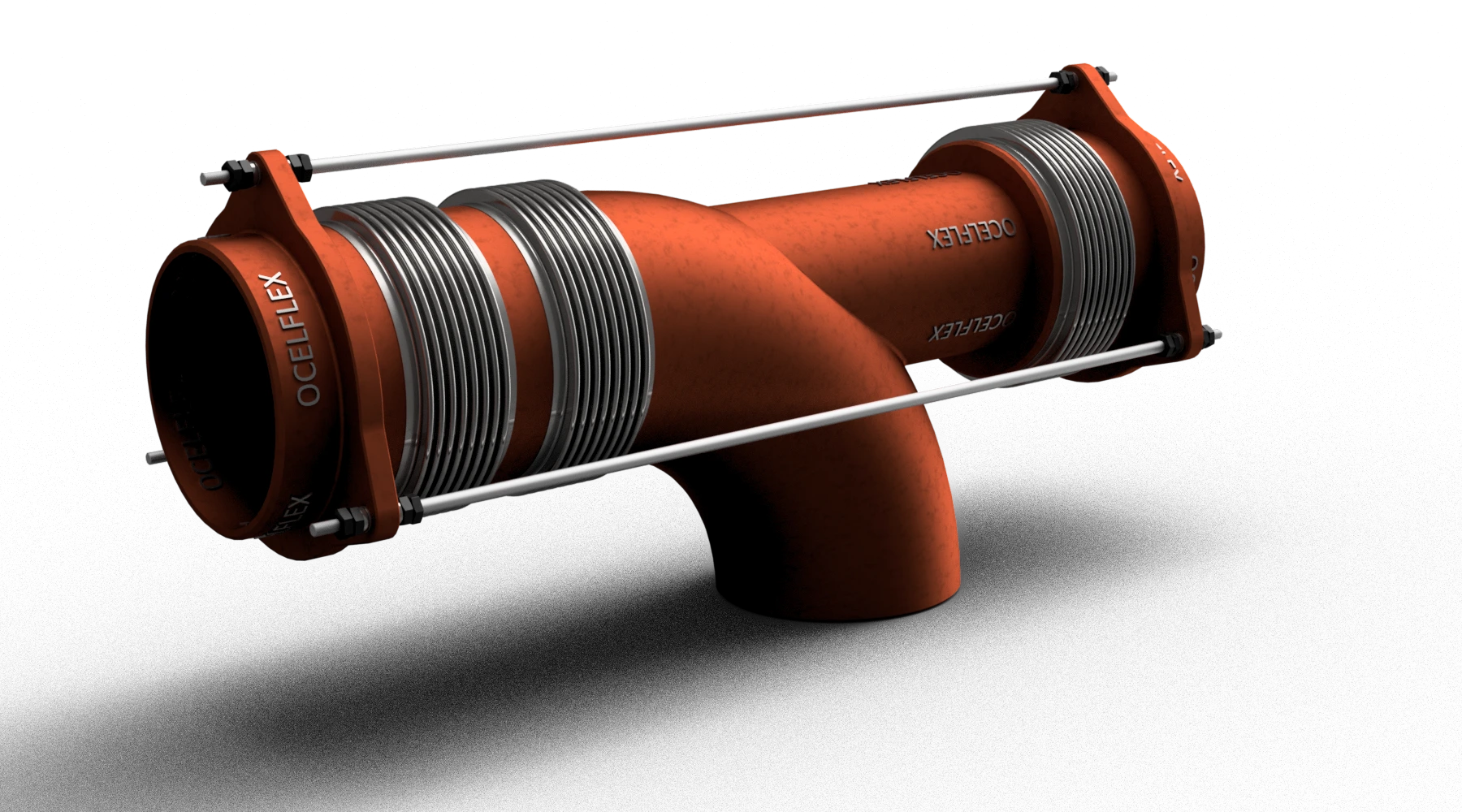
The potline exhaust duct is subjected to frequent temperature cycling. A multi-convolution metal expansion joint was selected to accommodate axial and lateral movement without transferring excessive stress to the ductwork or connected equipment.
•
The joints incorporated a 4-ply metal expansion bellow design, providing redundancy for enhanced safety, low spring rate for improved flexibility, and high fatigue resistance for long cyclic service life.
•
A deep convolution profile was chosen to reduce stress per convolution and improve movement capability during large thermal excursions.
MATERIAL SELECTION
•
For superior resistance to corrosion and elevated temperatures, the bellows were manufactured from Incoloy 825, a nickel-iron-chromium alloy well known for its excellent performance in acidic and chloride-containing environments.
•
This ensured the metal expansion joint could withstand both chemical attack and thermal stress over the long term.
PROTECTIVE FEATURES
•
High-velocity alumina dust and carbon fines can rapidly erode exposed components. An internal flow liner was incorporated to shield the bellows corrugations from direct particle impingement, significantly extending service life.
•
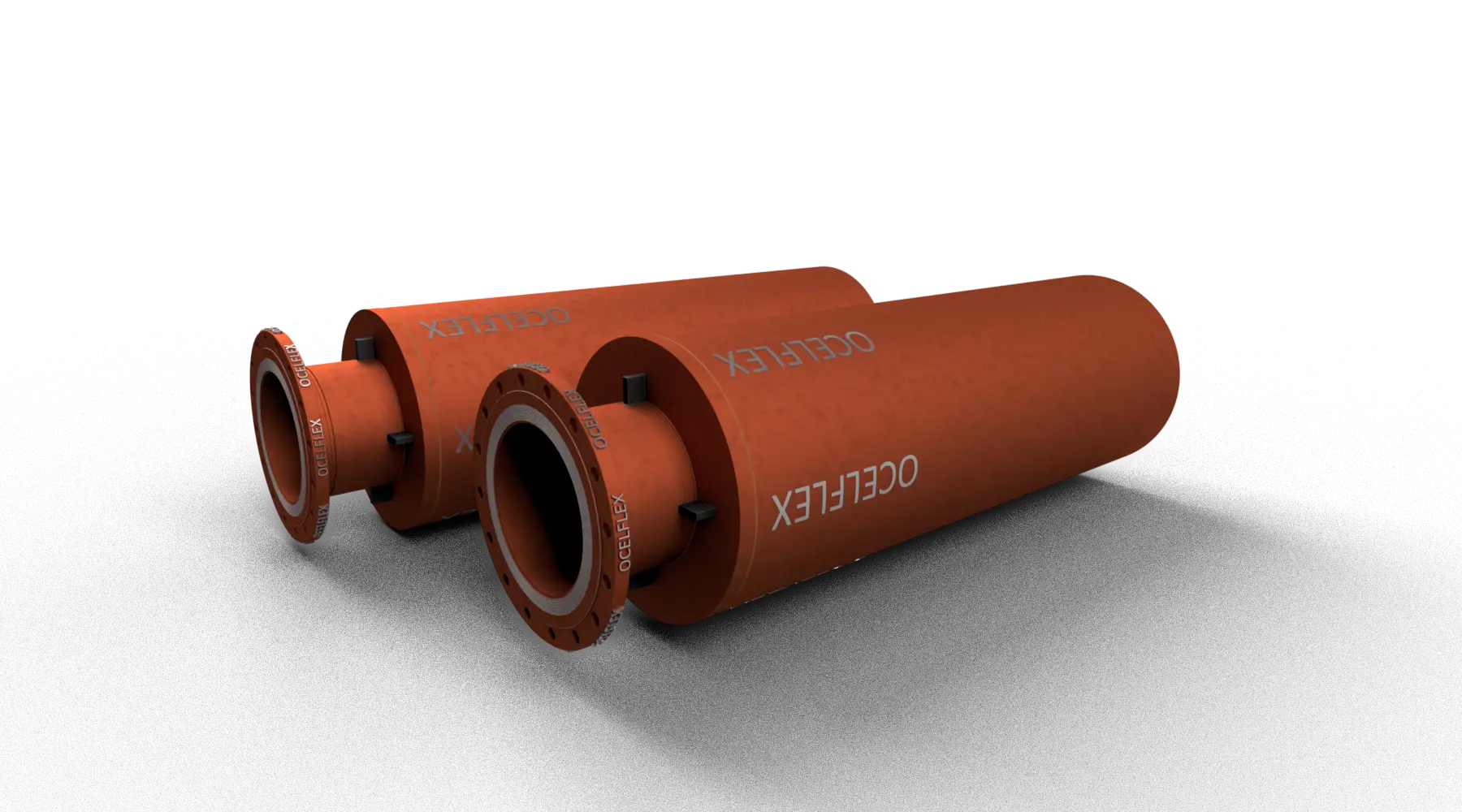
External protective covers were provided to prevent mechanical damage and external contamination of the corrugations, minimizing the risk of unplanned downtime.
•
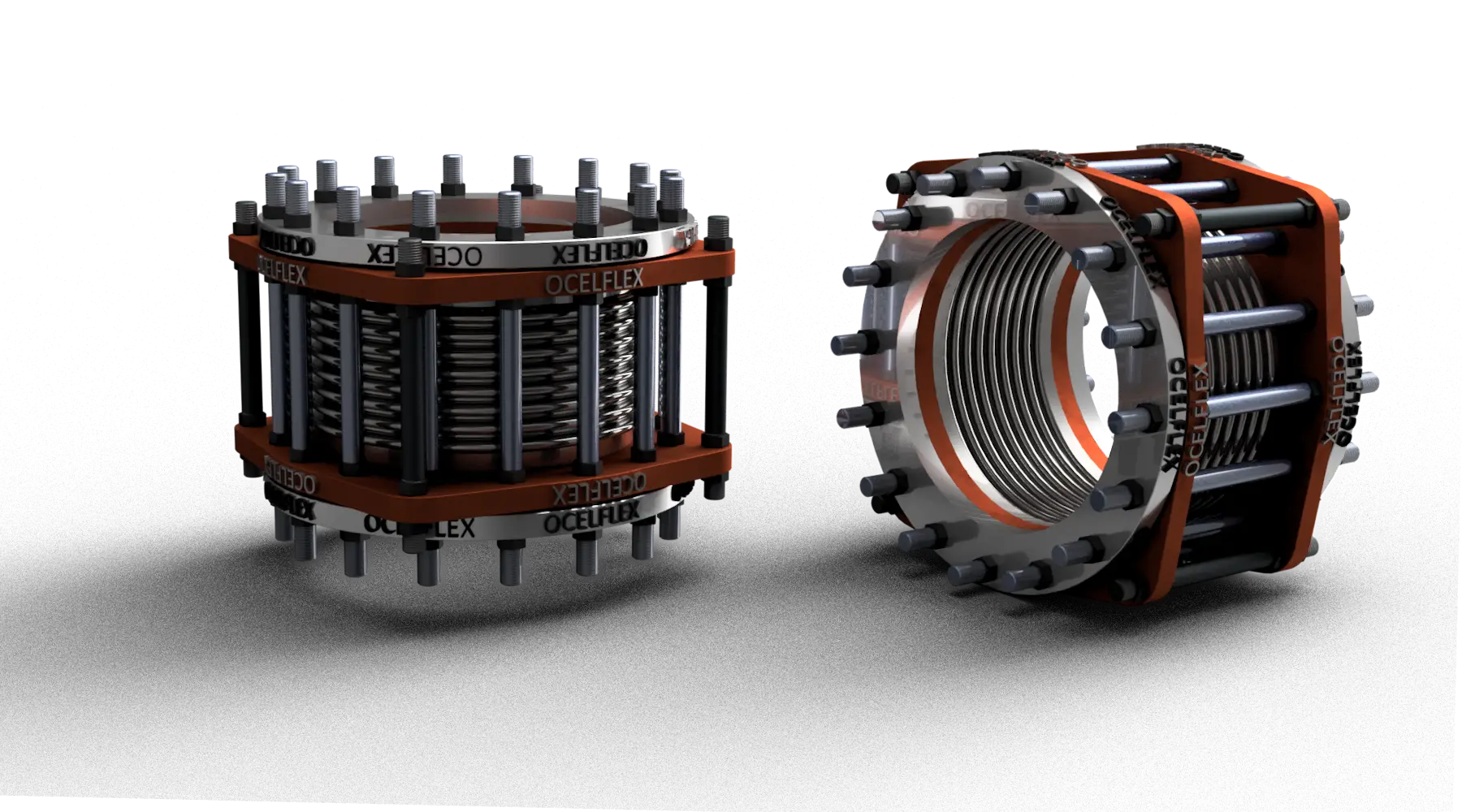
Tie-rods and limiters were integrated into the design to control movement range and protect the metal expansion joint from over-extension or over-compression during pressure or vacuum transients.
STRATEGIC INSTALLATION
The metal expansion joints were installed near the suction and discharge of high-capacity fans. In these locations, the flexibility of the metal expansion bellows helps dampen vibration, preventing the transmission of dynamic loads into the ducting structure.
By positioning the steel expansion joint assemblies in high-vibration zones around the fans, the system achieved maximum vibration isolation while protecting both the ductwork and the rotating equipment.