PHARMA-GRADE PTFE HOSES FOR CANADA’S DAIRY PROCESSING INDUSTRIES
Smooth Bore PTFE Hose, Convoluted PTFE Hose and Silicone Extruded PTFE Hose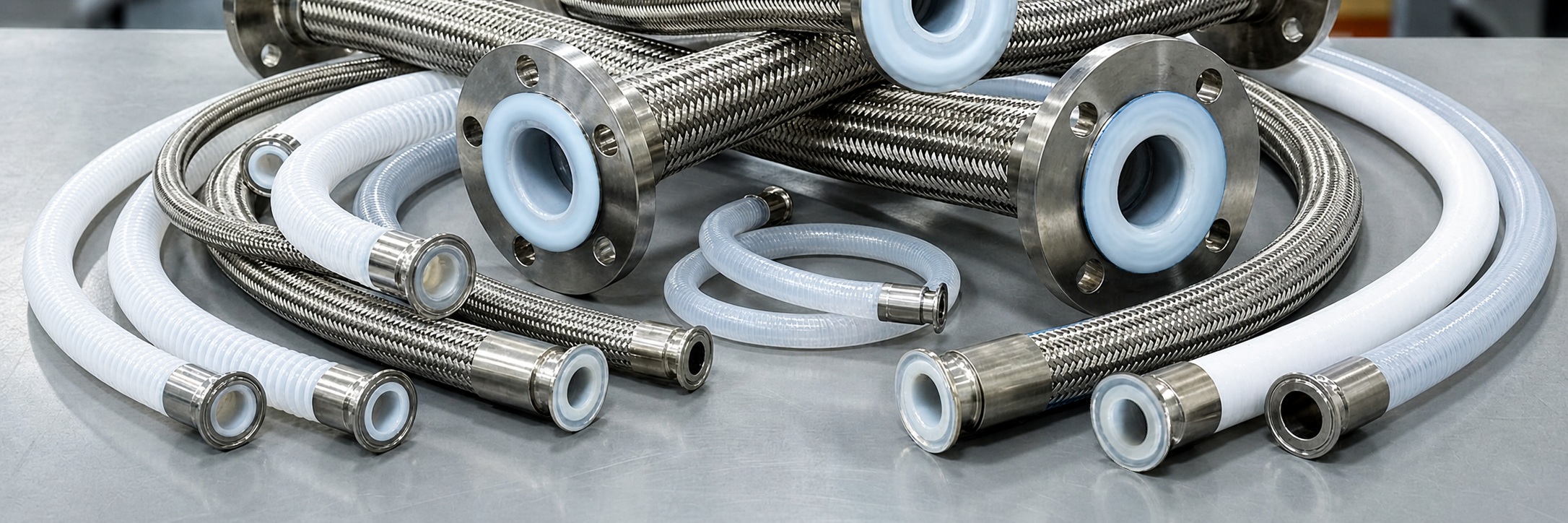
CLIENT REQUIREMENT
A major local contractor tasked us with supplying hose assemblies for one of Canada’s largest milk and yogurt producers for the expansion project they were undergoing. The Canadian dairy industry operates under some of the most stringent hygiene and efficiency requirements in the global food sector.
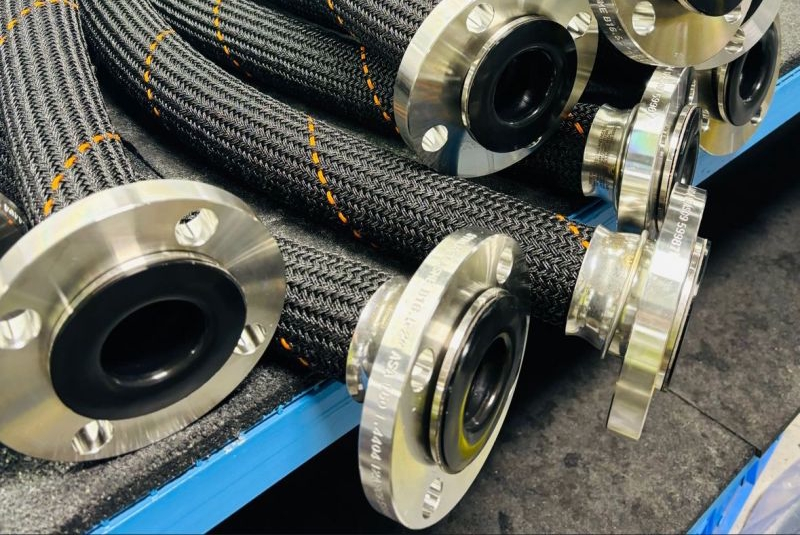
We offered the PTFE (Polytetrafluoroethylene) convoluted Ocelflex ConvuFlon™ hose, smooth bore Ocelflex LissoFlon™ hose and silicone covered PTFE Hose - Ocelflex FlexiSil™ hose assemblies with PTFE flared / tafted ( tufted ) end fittings.
Why PTFE is Ocelflex' choice for such application
In high-capacity dairy processing, traditional EPDM or silicone hoses may reach their fatigue limits prematurely under continuous thermal cycling, aggressive cleaning protocols, and repeated flexing. In such demanding applications, PTFE or Teflon®-lined hoses are often the preferred solution due to their unique molecular structure and resulting performance characteristics. Teflon® is a registered trademark originally owned by DuPont and now owned by Chemours.
Non-Stick, Non-Porous
Chemically and Thermally Inert
Thermal Stability
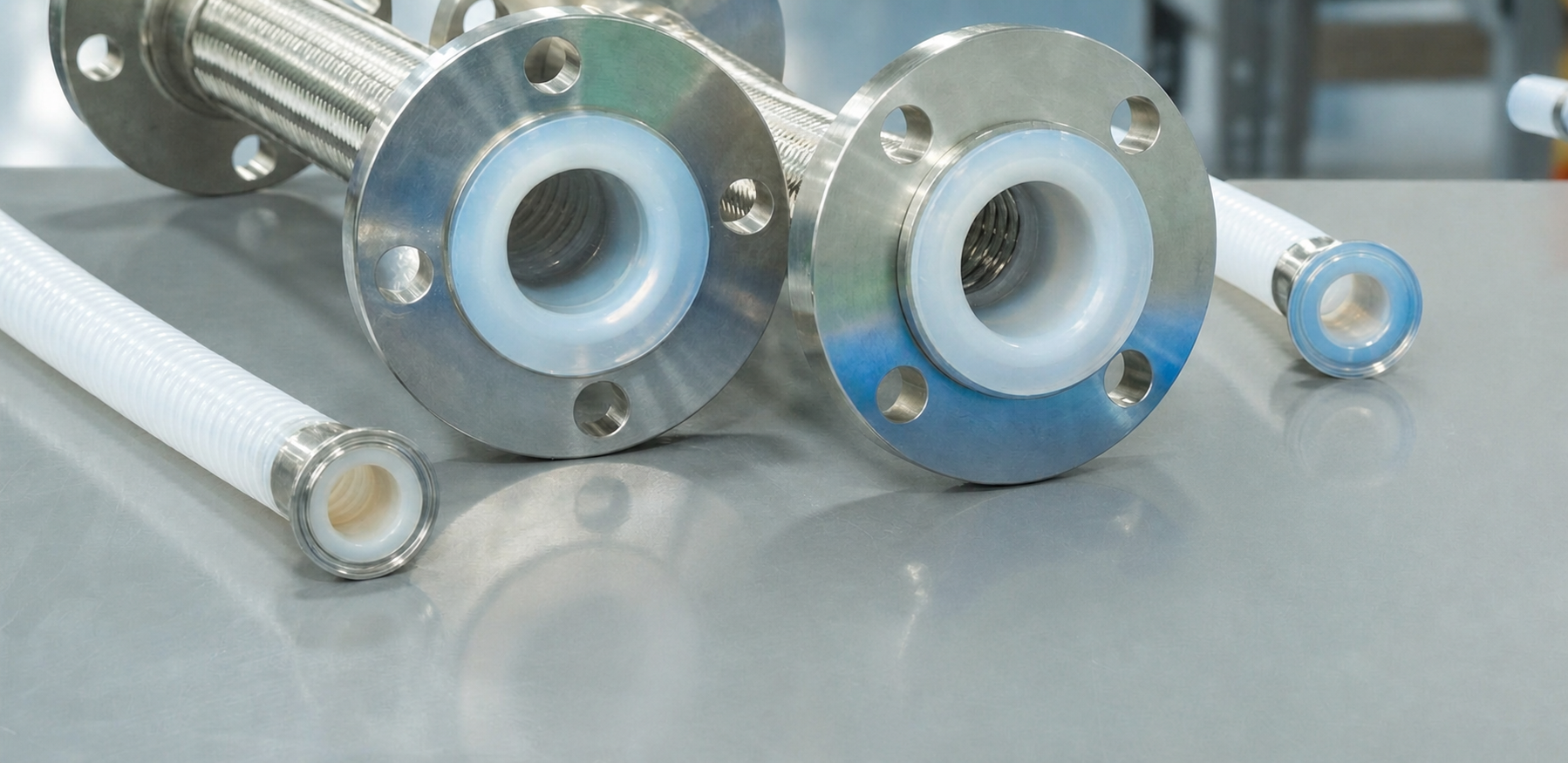
PTFE FLEXIBLE HOSE MANUFACTURED BY OCELFLEX
For this project, the selection of the right PTFE hose was critical to balancing cost, application requirement and maintainance:
Ocelflex LissoFlon™ XLF316
Ocelflex ConvuFlon™ XCB316
Ocelflex FlexiSil™ SCB304
To ensure rapid maintenance, hygienic integrity, and consistent leak-tight performance, two primary fitting configurations were selected based on line size and service conditions:
3-A Sanitary Flared / Tufted Fittings
ANSI/ASME Flared / Tufted Flange Fittings
Why Ocelflex PTFE Hose Design Exceeds Performance Expectations
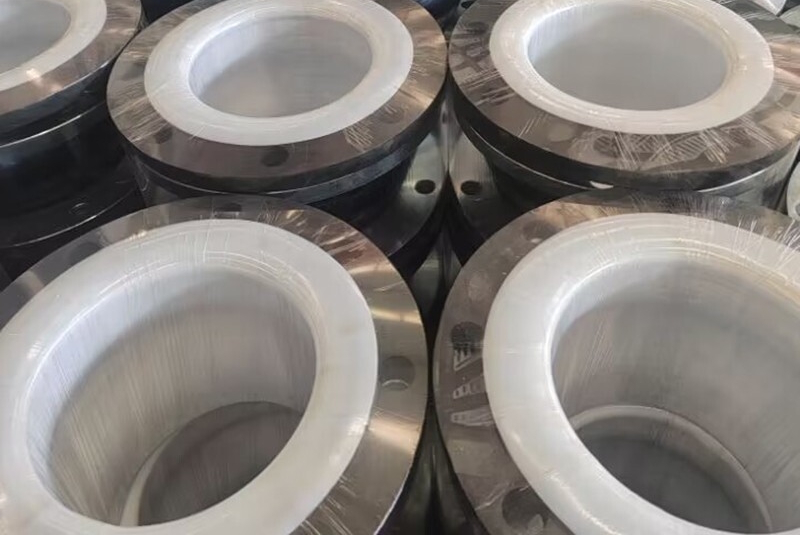
Conventional PTFE or Teflon® flexible hose assemblies frequently fail at the hose-to-coupling interface due to stress concentration, thermal cycling, or insufficient liner support. To eliminate these risks, Ocelflex assemblies are manufactured with precision-engineered flared, full-bore end connections. The Max-Bore Flarex™ design removes internal steps and crevices at the joint, ensuring a continuous and uninterrupted flow path that maintains the nominal internal diameter throughout the assembly. This significantly minimizes residue accumulation and reduces the risk of microbial growth.
Each PTFE hose is engineered for full vacuum service to prevent liner collapse under negative pressure conditions. This is especially critical during rapid cooling cycles and CIP/SIP transitions, where pressure fluctuations may induce vacuum within the line. Lower-grade tubing may deform or delaminate under such conditions; the specified Ocelflex construction safeguards against structural instability while maintaining dimensional integrity.
In yogurt and other cultured dairy production, where bacterial sensitivity to contamination is extremely high, Ocelflex PTFE hoses provide a decisive advantage. Unlike porous elastomeric hoses that can absorb and retain organic compounds, PTFE’s inert and non-absorbent structure prevents flavor carryover between batches, supporting consistent product quality and hygiene compliance.
Specialized Applications
For specialized applications, silicone-extruded stainless steel 304 braided convoluted PTFE hoses are supplied. These assemblies combine the flexibility of a corrugated PTFE liner with a platinum-cured silicone outer jacket. The smooth silicone cover enhances environmental hygiene, provides operator protection from braid abrasion, and reduces external contamination risk. Internally, the PTFE liner retains its broad chemical compatibility, high temperature resistance, and non-stick characteristics. All hoses comply with FDA 21 CFR 177.1550 requirements for repeated food contact.
Quality Assurance
Prior to dispatch, each assembly undergoes pneumatic pressure testing to verify leak-tight integrity at the specified test pressure. For powder handling or high-velocity dry transfer applications, electrical continuity testing is performed to ensure effective static charge dissipation. For food and beverage applications, all hoses are internally flushed and cleaned before packing to maintain sanitary standards.