Expansion Joint Terminology
Understand the most commonly used technical terms when referring to Metal Expansion Joints, Rubber Expansion Joint, Fabric and PTFE Expansion Joint.
Read More


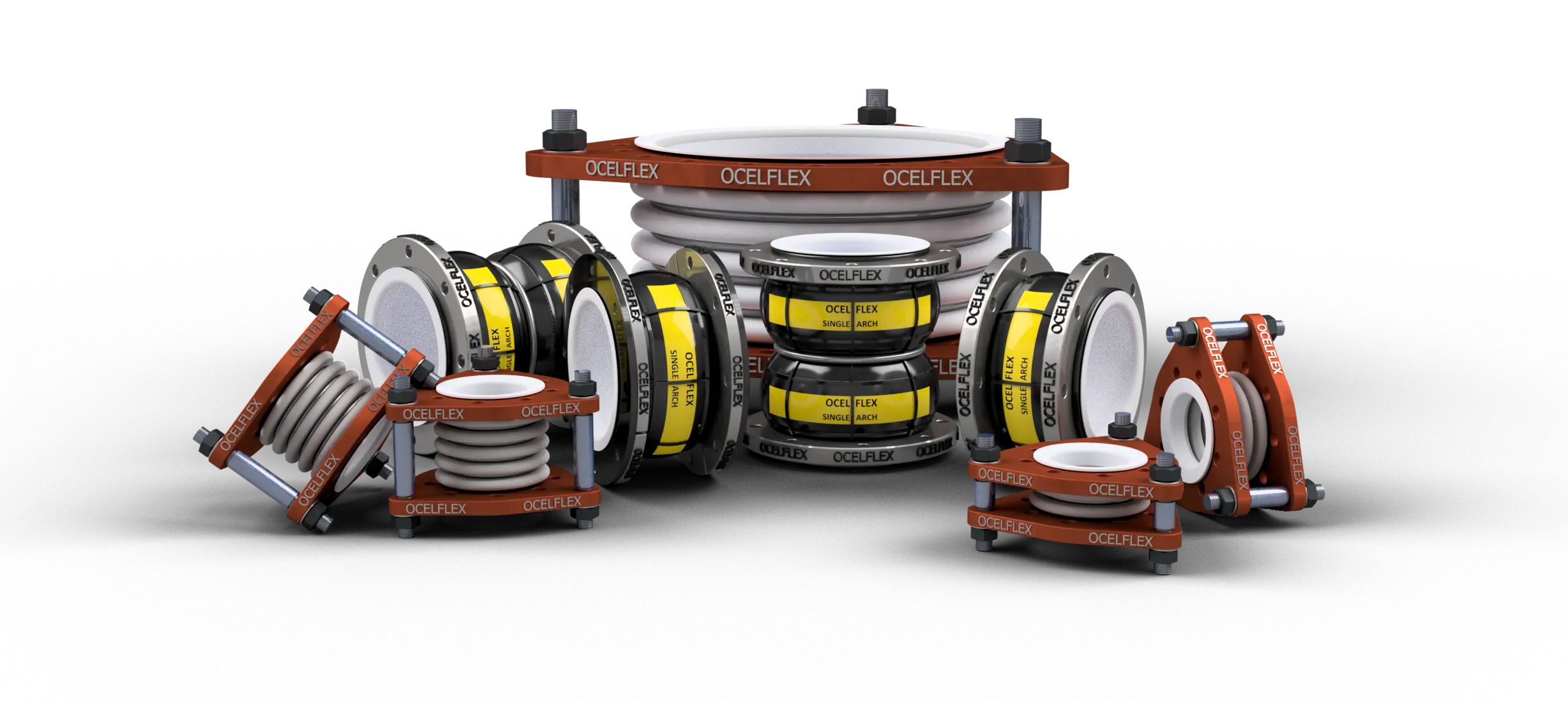
Engineered for the most demanding industrial environments, our PTFE expansion joint solutions are precision-designed to perform under sustained pressure, extreme temperatures, and highly corrosive process conditions, delivering uncompromised reliability in critical applications. Our non metallic expansion joints have been installed internationally and domestically across refineries, petrochemical plants, chemical facilities, and power industries for durability, flexibility, and long-term reliability.
Driven by innovation and advanced customization capabilities, we stand among India’s foremost — and possibly the only — PTFE expansion joint manufacturers offering an extensive range of designs incorporating hybrid material configurations. Our solutions integrate advanced material science with precision manufacturing to deliver performance, durability, and adaptability tailored to complex industrial process requirements.
One of the key factors for considering the use of PTFE Hoses and expansion joints is to be able to transport aggressive chemicals or foods and beverages while maintaining stringent purity standards, thermal stability and operational safety.
Stainless Steel Braided PTFE Hoses are suitable for transferring fluids in the pipeline systems, but are not capable of absorbing movements and vibration. Ocelflex’ PTFE expansion joint functions as a flexible connector designed to absorb thermal expansion, mechanical vibration, and structural misalignments while providing near-universal chemical inertness.
PTFE exhibits non stick properties and excellent inertness to various chemicals ( acids, solvents and caustics ), making it an ideal choice for a wide range of FDA applications in pharmaceutical, chemical and food processing plants.
PTFE ( Polytetrafluroethylene ) also known as Teflon is a registered trademark of Chemours, previously DuPont Inc. The unique molecular architecture of PTFE, characterized by the strength of the carbon-fluorine bond, provides a material foundation that traditional metallic or elastomeric solutions cannot replicate in highly corrosive or ultra-pure environments.
Offering a wide range of Non Metallic Expansion Joint materials to select from.
Small to large diameters, engineered for high-pressure and high-temperature service conditions.
Good movement compensation and vibration absorption.
Chemical & Petrochemical Processing
Pharmaceutical & Biotechnology
Food & Beverage Production
Power Generation & Utilities
Water & Wastewater Treatment











Exporting PTFE expansion joints and PTFE hoses to numerous countries worldwide, Ocelflex has cultivated a distinguished global presence founded on engineering excellence, uncompromising quality standards, and performance-driven innovation. Regarded as a trusted manufacturer and designer, we serve as a preferred supplier to prominent oil and gas refineries, power generation plants, and other mission-critical industries where reliability, safety, and operational continuity are essential.
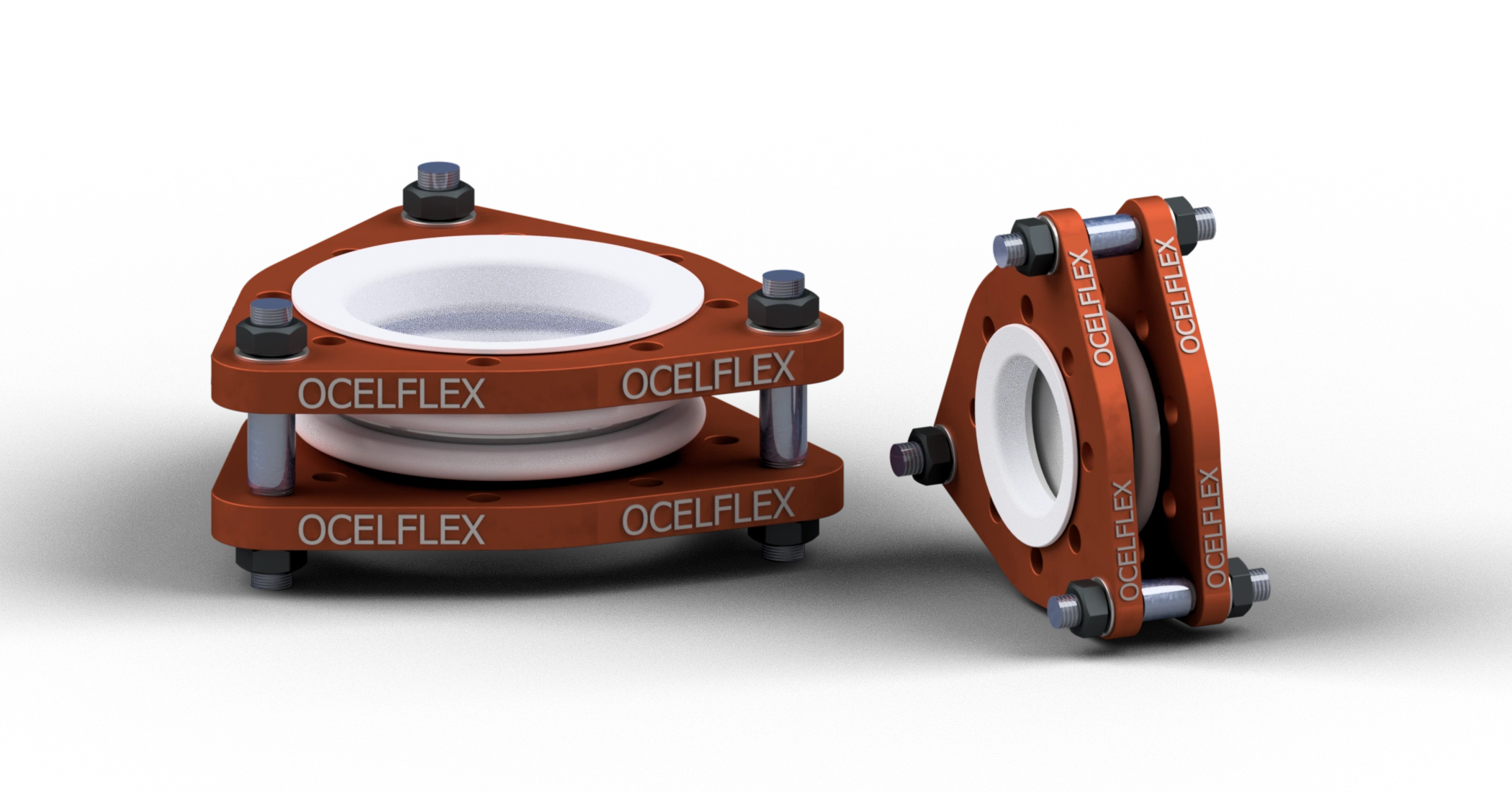
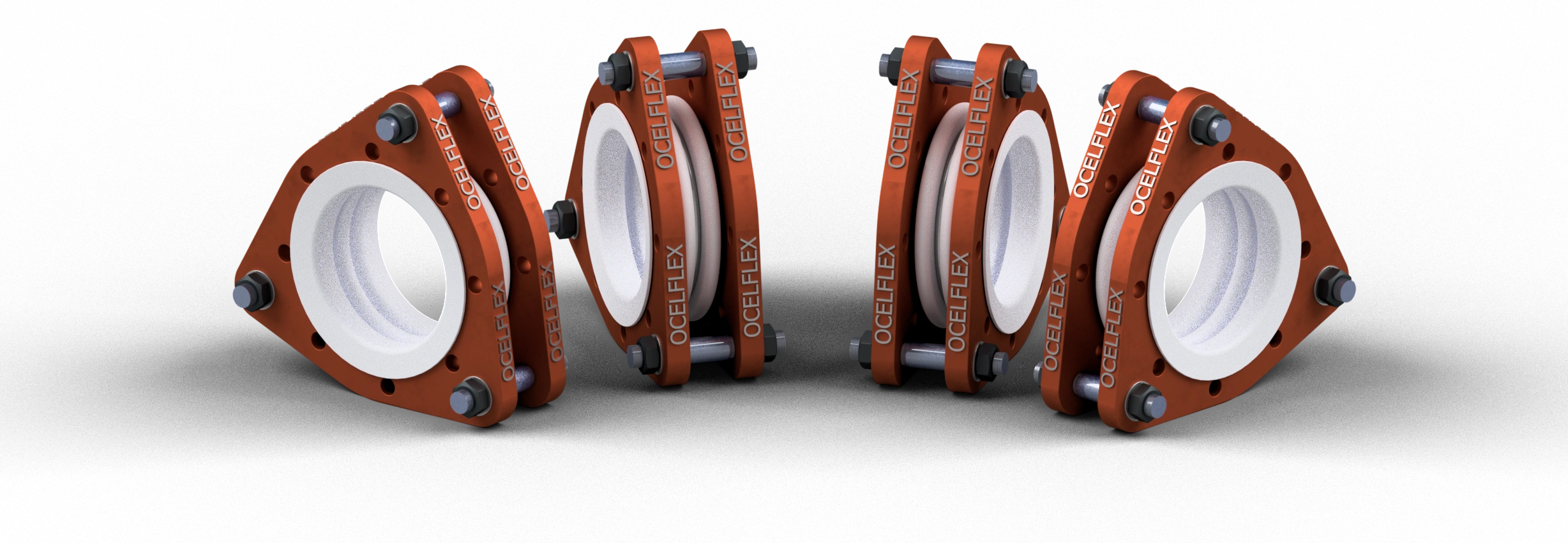
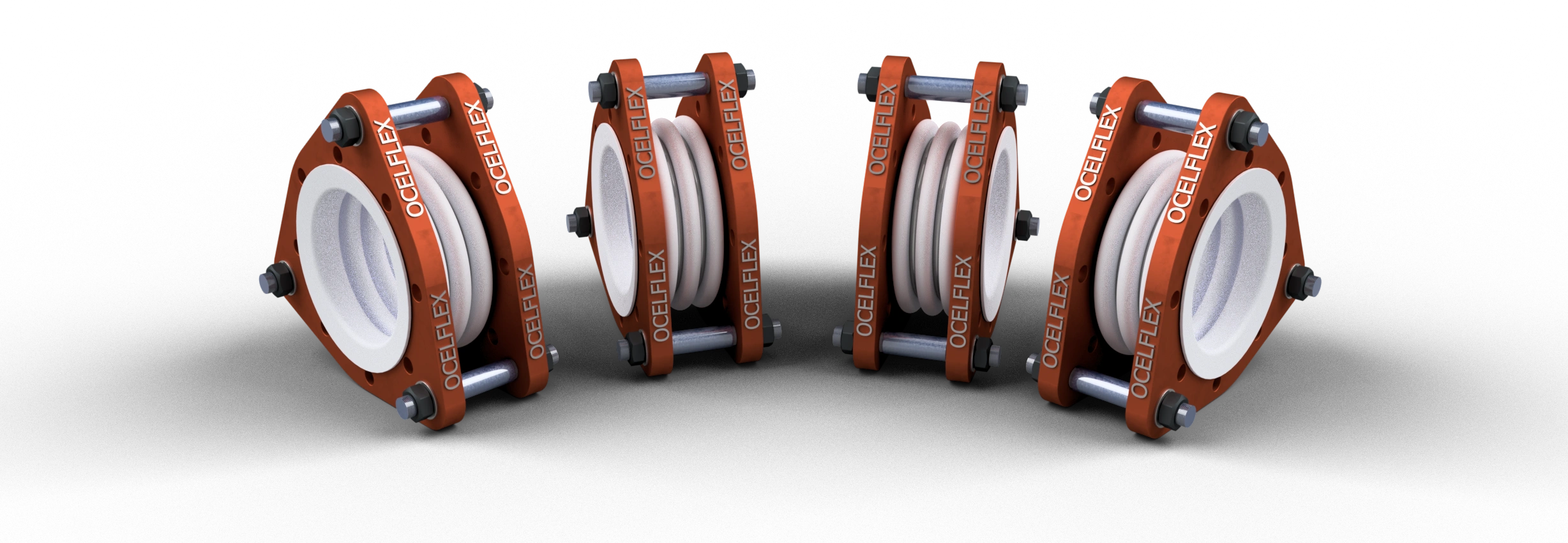
Ocelflex’ Two Convoluted PTFE Expansion Joints are high-performance non metallic expansion joints specifically engineered to accommodate low axial movements, minor misalignments and high frequency vibration absorption in piping systems.
Owing to their relatively medium-wall thickness construction, they provide a higher spring rate while maintaining optimum pressure capability.
The two-convolution design offers an efficient, low-profile solution for piping expansion and compensation, making it particularly suitable for installations with space constraints while maintaining reliable movement absorption.
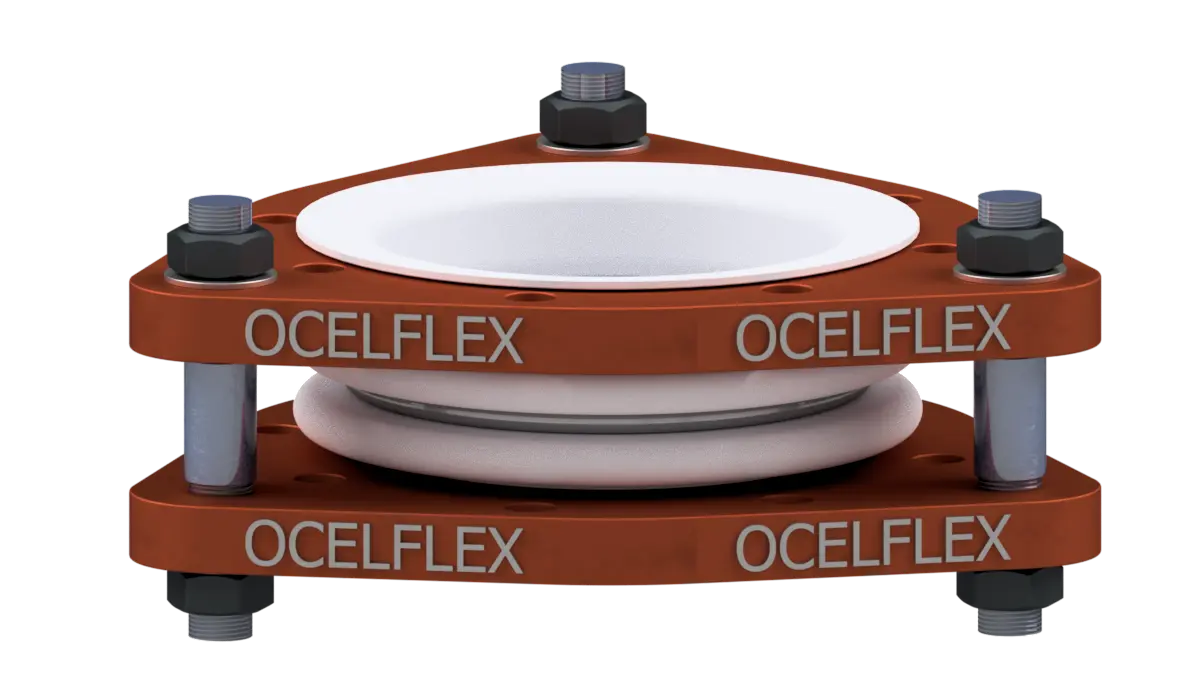
Ocelflex manufactures PTFE expansion joint with standard or customised flange specifications.
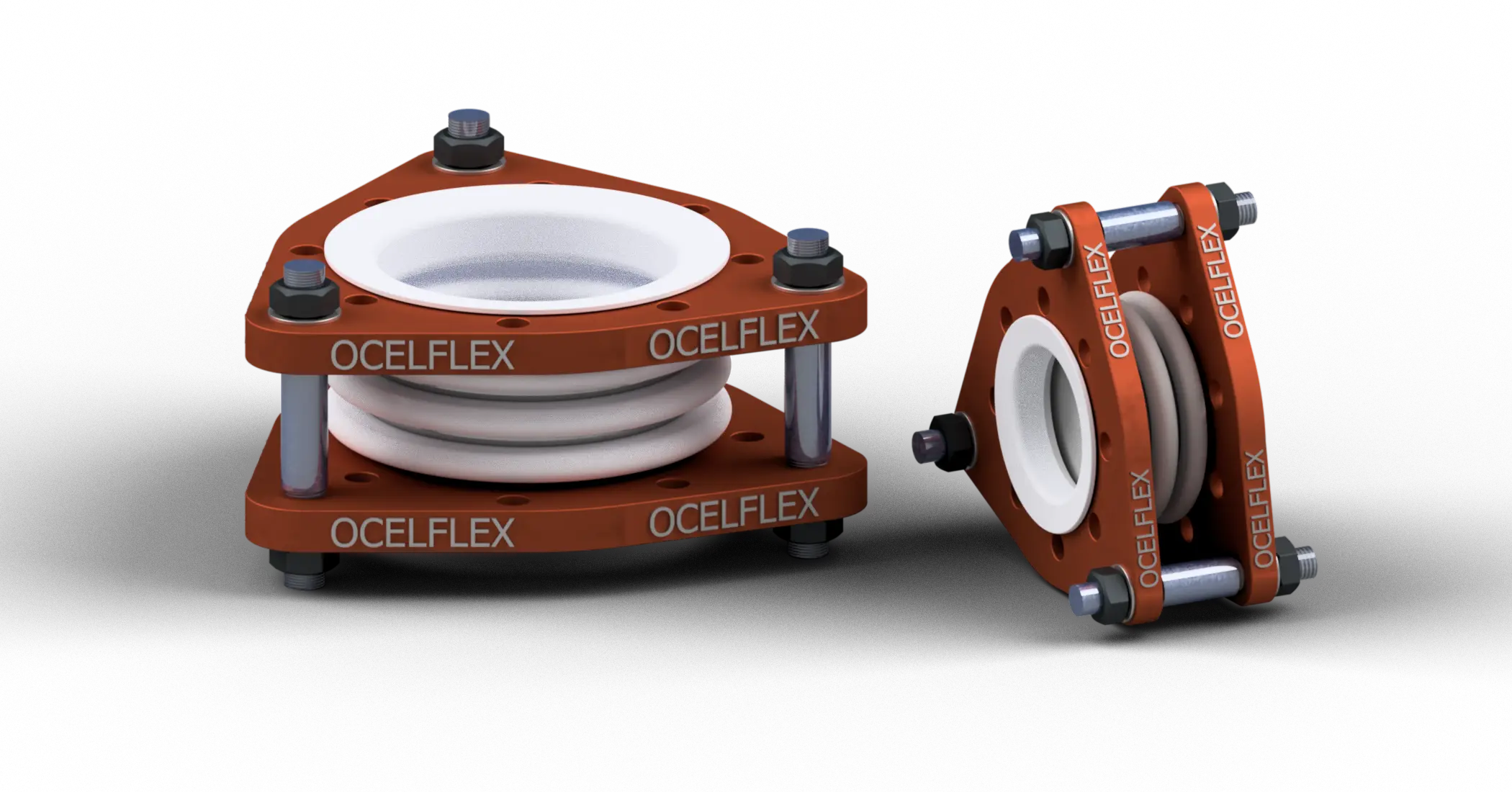
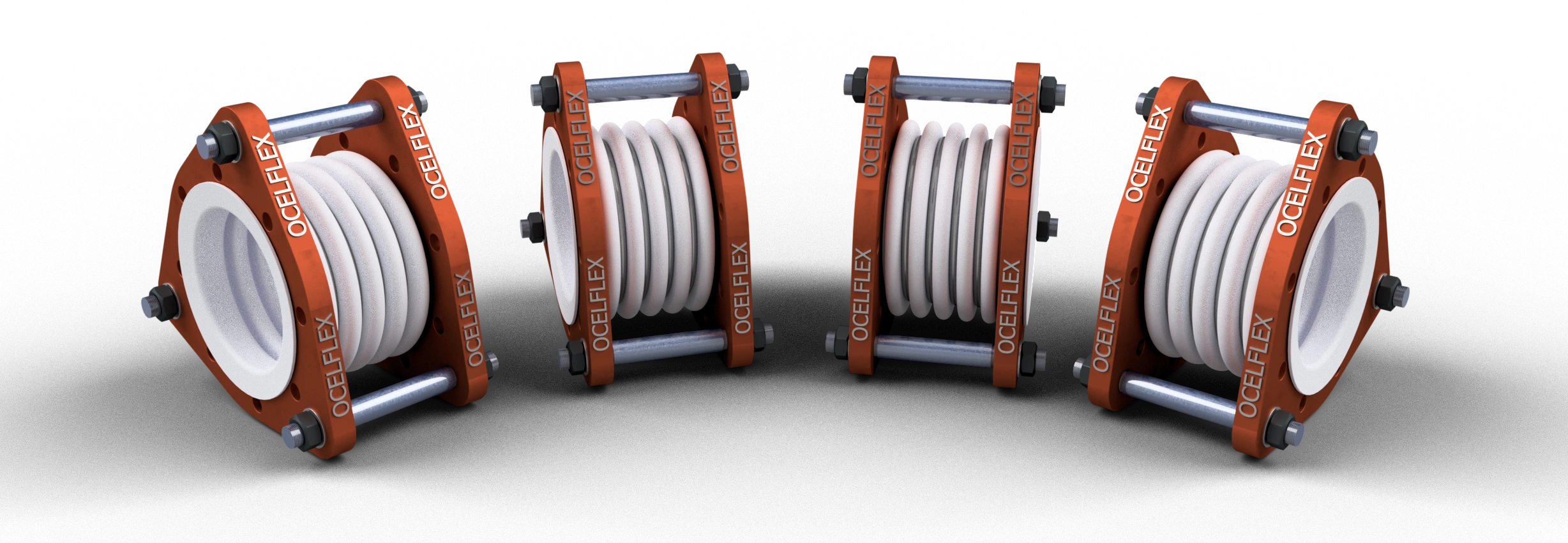
Designed to accommodate medium axial movement, minor lateral displacement, and angular misalignment in corrosive piping systems, the Ocelflex’ Three Convoluted PTFE Expansion Joint is a medium-wall construction with uniform wall thickness for consistent strength and pressure integrity.
The precision-formed outer ends are integrally flared to create a continuous, single-piece PTFE lining. This design ensures 100% media contact exclusively with the PTFE surface, completely eliminating exposure of metallic components to aggressive process fluids. The seamless lining construction enhances corrosion resistance and conforms to FDA requirements, making this PTFE Expansion Joint suitable for chemical, pharmaceutical, and food-grade applications.
The three-convolution configuration provides an optimal balance between two-convolution and five-convolution designs in terms of compactness and movement capability. It offers a highly efficient solution for medium piping expansion and thermal compensation while maintaining a practical face-to-face dimension for installations with space limitations.
The Ocelflex Three Convoluted PTFE Expansion Joint is ideally suited for applications requiring enhanced flexibility over compact designs while avoiding the more expensive and larger profile of five convolution configurations.
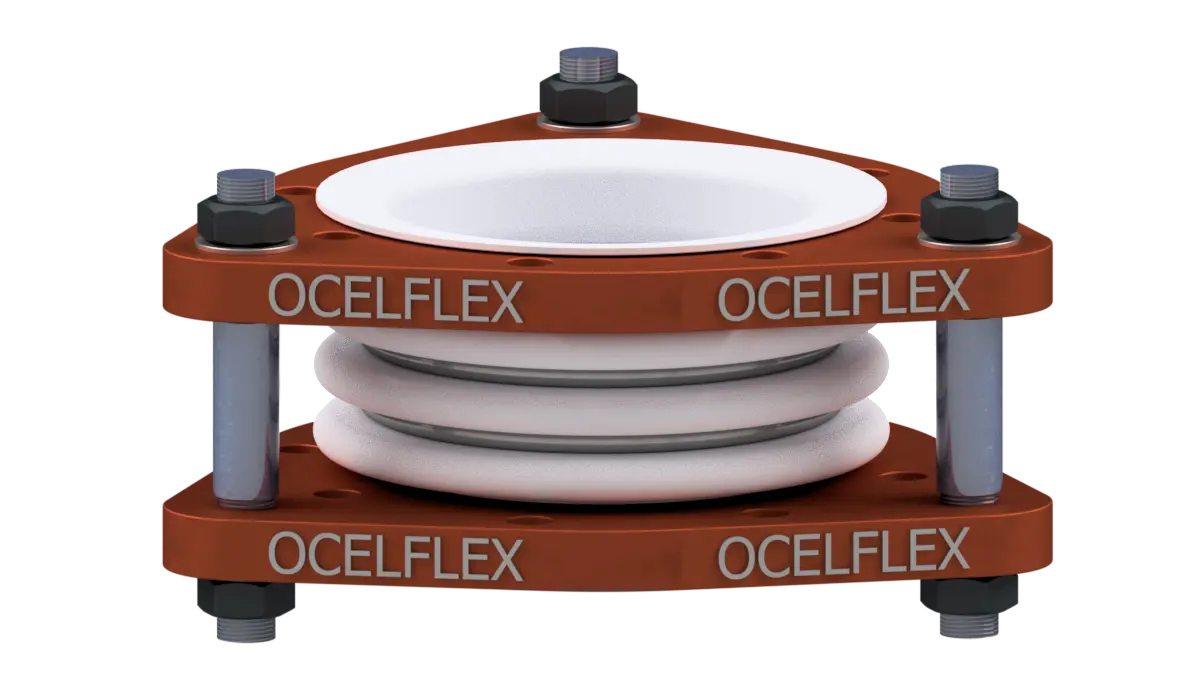
Ocelflex manufactures PTFE expansion joint with standard or customised flange specifications.
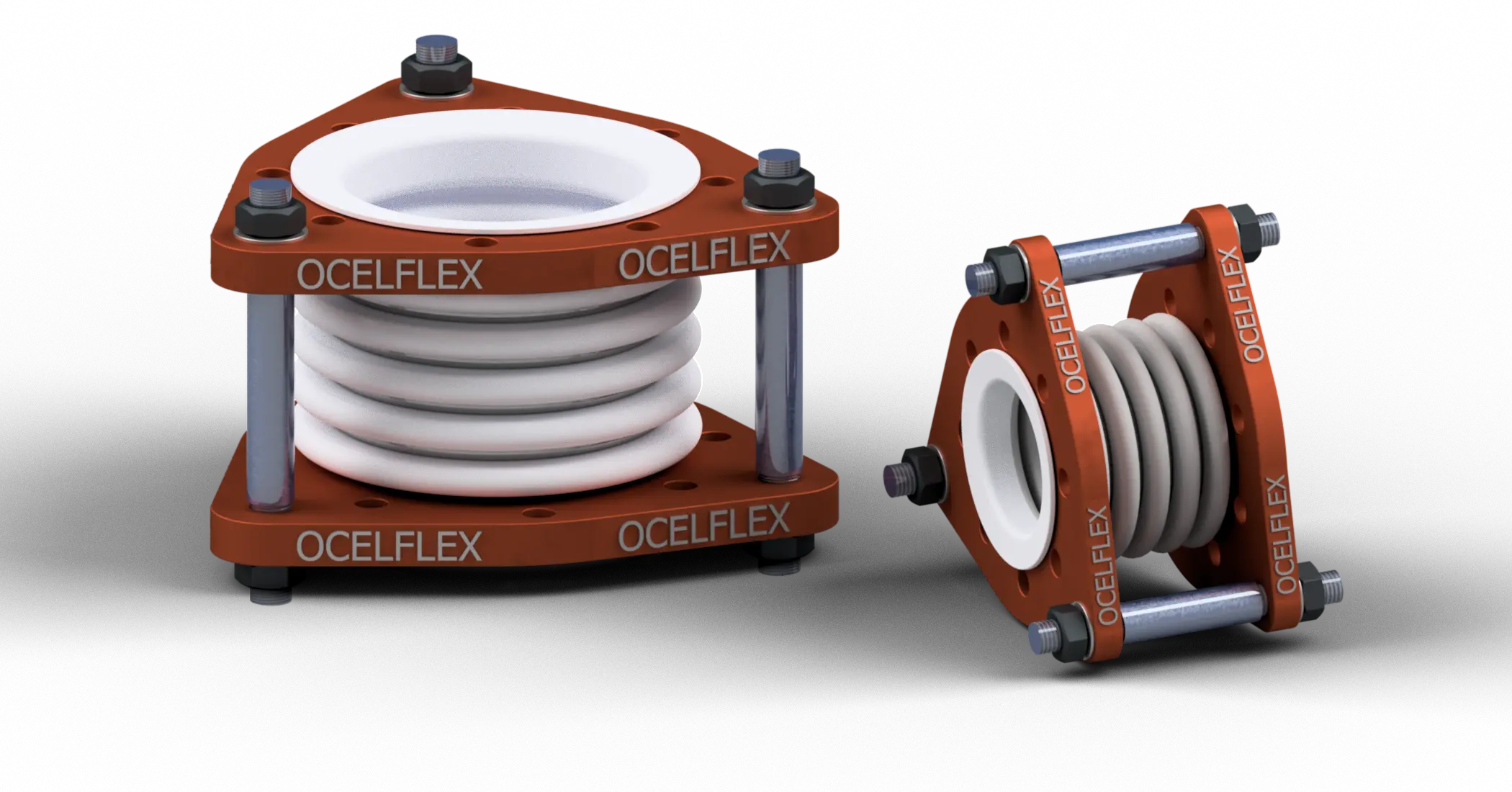
For applications requiring higher axial, lateral, and angular movement absorption, increasing the number of convolutions is essential. The Ocelflex Five Convoluted PTFE Expansion Joint is a high-performance Non Metallic Expansion Joint engineered to accommodate comparatively large thermal expansion and significant piping misalignment.
The five convolution is manufactured with a medium-wall construction and a deeper convolution profile, providing superior flexibility while maintaining structural integrity. The uniform wall thickness across each deep convolution ensures consistent stress distribution, enhanced pressure handling capability, and improved fatigue resistance under cyclic movement conditions.
Like the two and three convoluted expansion joint, the five convoluted PTFE Lined Expansion Joint is incorporated with an external reinforcement ring to provide additional stability, improve vacuum resistance, and prevent deformation under pressure or heavy-duty service conditions. These reinforcement rings provide structural stability to the bellows, preventing deformation or “squirm” under pressure, while still allowing the PTFE element to maintain sufficient flexibility to effectively absorb axial and lateral movements.
Due to its robust design, the five convoluted PTFE Expansion Joint is particularly suitable for heavy tank nozzles, reactor connections, pump discharge lines, and other critical process applications where large movement compensation is required.
All Ocelflex two, three and five-convolution PTFE Expansion Joints are supplied with limit bolts to prevent over-expansion and ensure operational safety during pressure surges or unexpected movement.
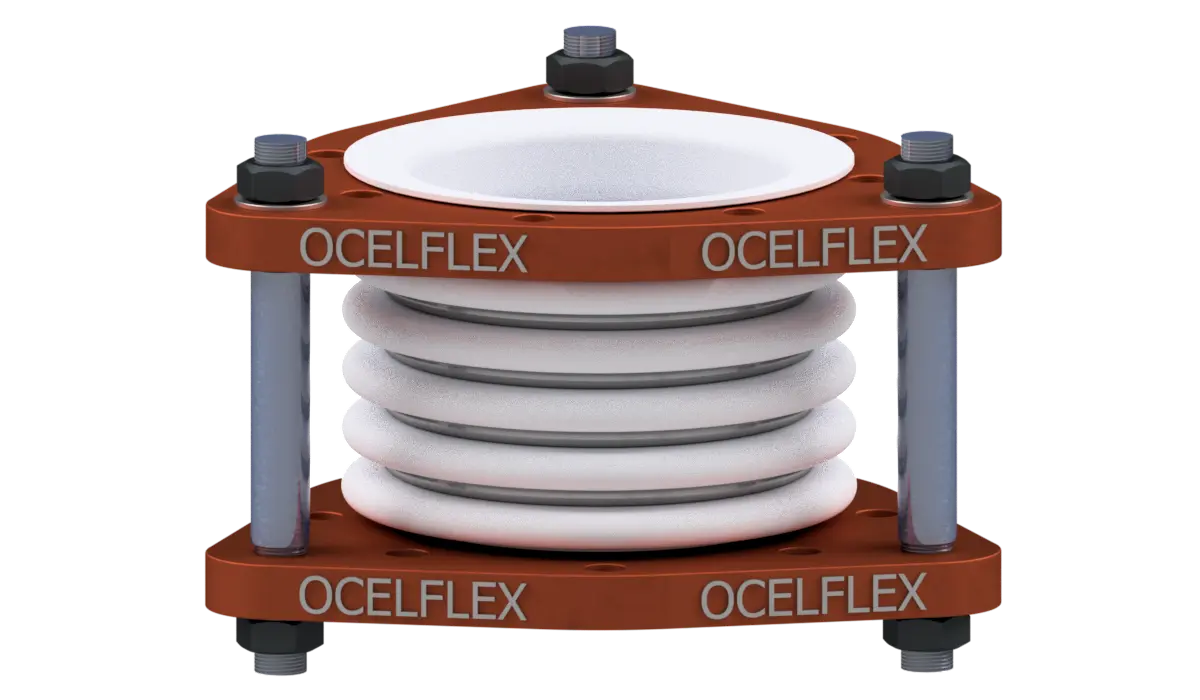
Ocelflex manufactures PTFE expansion joint with standard or customised flange specifications.
Two-, three-, and five-convoluted PTFE expansion joints are typically reinforced only with an external ring. As a result, they offer comparatively lower pressure resistance and provide limited protection in the event of a sudden tear caused by pressure exceeding the burst limit.
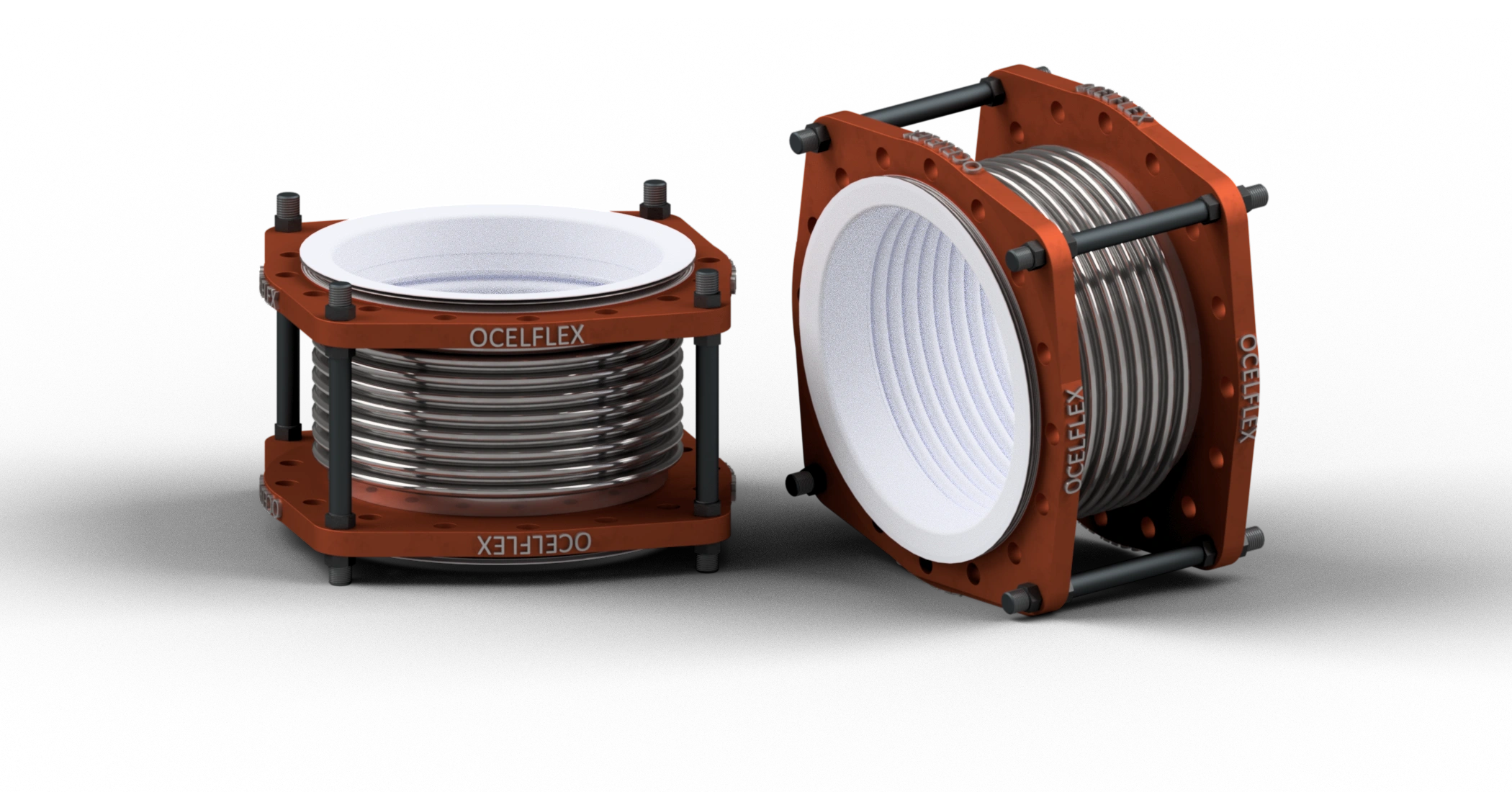
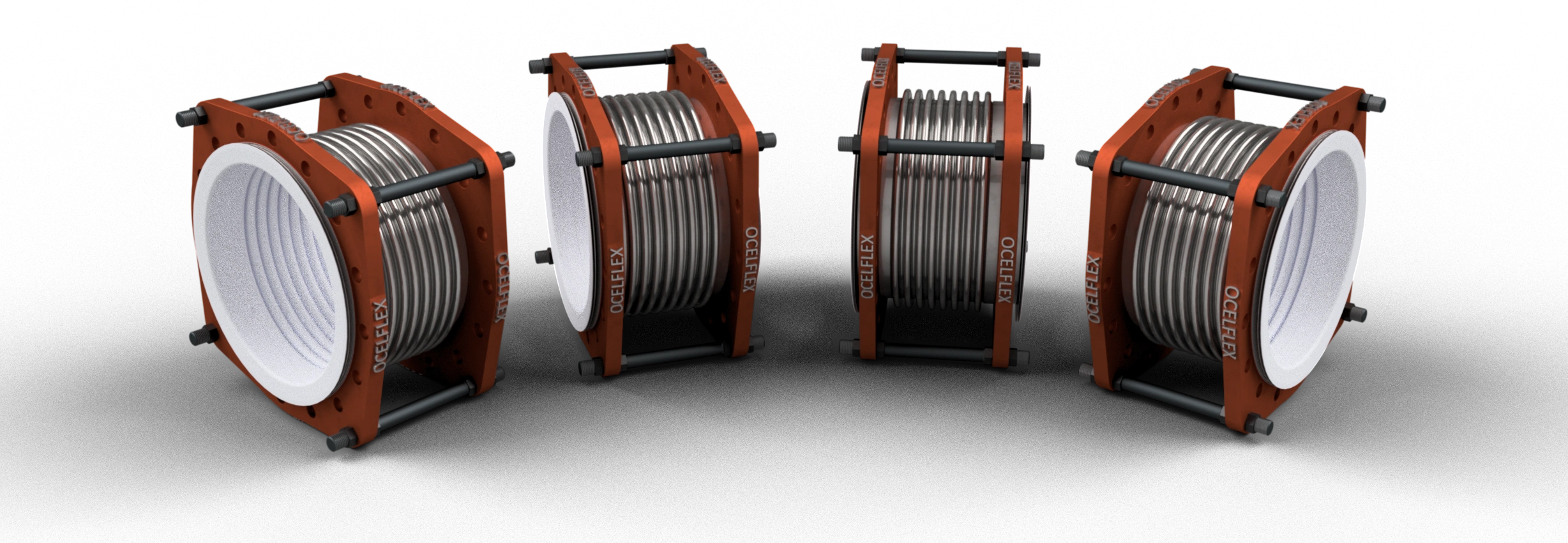
Ocelflex’ PTFE Lined Metal Expansion Joint combines structural strength with chemical resistance. It consists of a welded metallic bellows—manufactured from materials such as stainless steel or Hastelloy—which serves as the primary pressure-retaining component. A precision form-fitted PTFE liner is integrated to match the corrugations of the metal bellows, ensuring that the process media comes into contact exclusively with PTFE.
The PTFE liner is further extruded to create outer flared ends using automated machinery. This design ensures full wetted surface protection, preventing any exposure of the metallic components to aggressive chemicals and delivering superior corrosion resistance and chemical compatibility.
This hybrid construction provides the mechanical strength of a metal expansion joint while maintaining the chemical inertness associated with PTFE Non Metallic Expansion Joints. The reinforced PTFE Lined metallic bellows safely withstands system pressures up to 300 psi, with higher ratings available for custom-engineered designs.
Additionally, in the event of abnormal pressure spikes or failure conditions beyond the specified design limits, the metallic bellows acts as a secondary safety barrier, significantly reducing the risk of catastrophic rupture.
All Ocelflex two, three and five-convolution PTFE Expansion Joints are supplied with limit bolts to prevent over-expansion and ensure operational safety during pressure surges or unexpected movement.
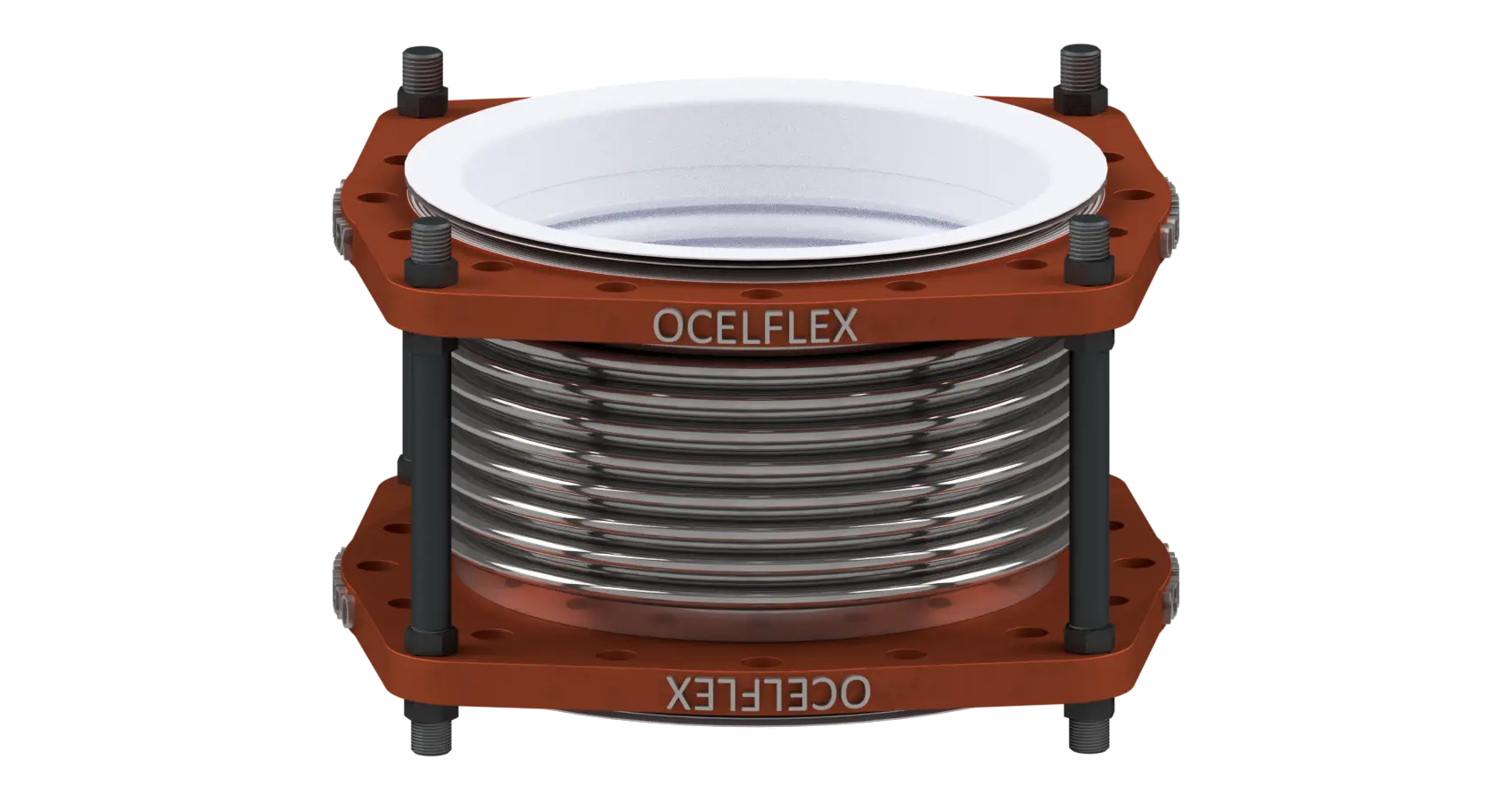
Ocelflex manufactures PTFE expansion joint with standard or customised flange specifications.
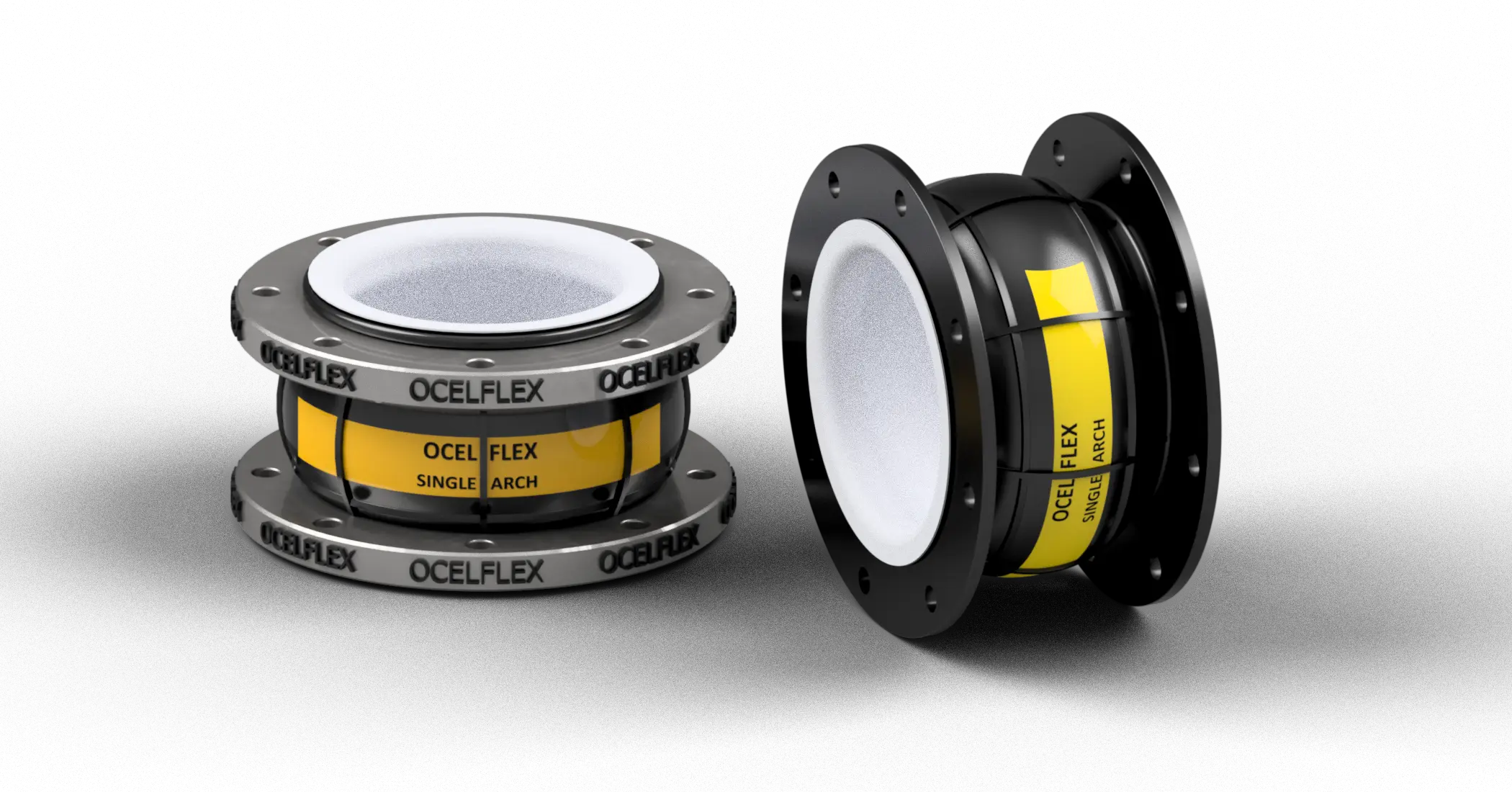
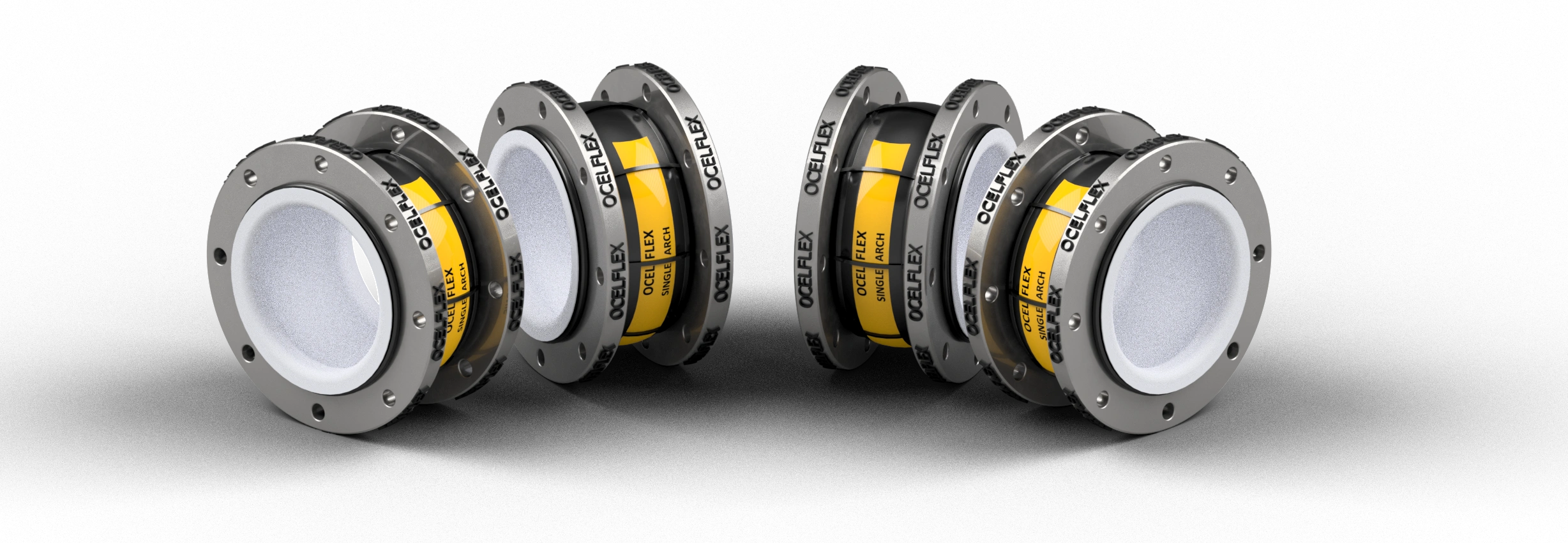
A PTFE Lined Rubber Expansion Joint is a highly versatile solution designed for piping systems that demand both chemical resistance and mechanical flexibility. By combining the vibration isolation and pressure-handling capability of a conventional Rubber Expansion Joint with the chemical inertness of a PTFE Lined Expansion Joint, this hybrid design offers reliable performance in aggressive and high-purity service conditions.
The construction of a PTFE Lined Rubber Expansion Joint begins with a precision-molded white PTFE arch-type liner, which forms the primary wetted surface. Around this PTFE liner, layers of elastomer—typically EPDM or Neoprene—are carefully hand-wrapped or molded to create the flexible body of the joint. During this process, high-strength polyester reinforcement fabric is incorporated to enhance pressure resistance and control expansion under operating loads.
The rubber body acts as the structural and flexible component of the assembly, absorbing axial compression and extension, lateral deflection, and angular misalignment while also providing excellent vibration damping and noise reduction. The PTFE liner is flared over the flange faces, ensuring that all wetted surfaces in contact with the process media remain 100% PTFE. This design eliminates exposure of the rubber carcass to corrosive fluids and preserves system purity, making the PTFE Lined Rubber Expansion Joint particularly suitable for sensitive applications.
For harsh outdoor or chemically aggressive atmospheres, an optional Hypalon coating can be applied to provide superior resistance to UV radiation, ozone, weathering, and chemical splash. The Hypalon-layer exterior also offers a non-marking, high-visibility finish suitable for food, pharmaceutical, and clean utility environments.
The PTFE Lined Rubber Expansion Joint is widely used in chemical processing plants, water and wastewater treatment facilities, desalination systems, power plants, and high-purity RODI (reverse osmosis deionized) water systems. It is especially effective in handling acids, alkalis, and other corrosive fluids while simultaneously protecting pumps, compressors, and piping systems from vibration-induced stress and thermal expansion.
Compared to a fully metallic expansion joint, this configuration offers superior vibration isolation and easier installation, while compared to an unlined rubber expansion joint, it delivers significantly improved chemical compatibility and media purity.
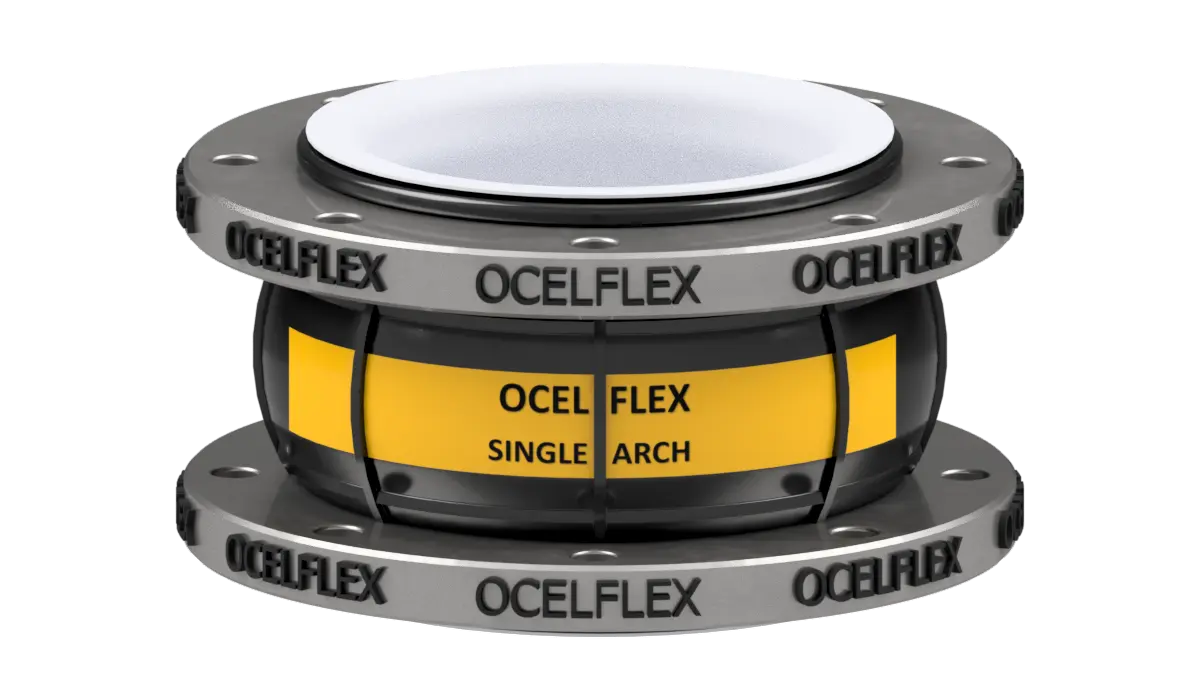
Ocelflex manufactures PTFE expansion joint with standard or customised flange specifications.
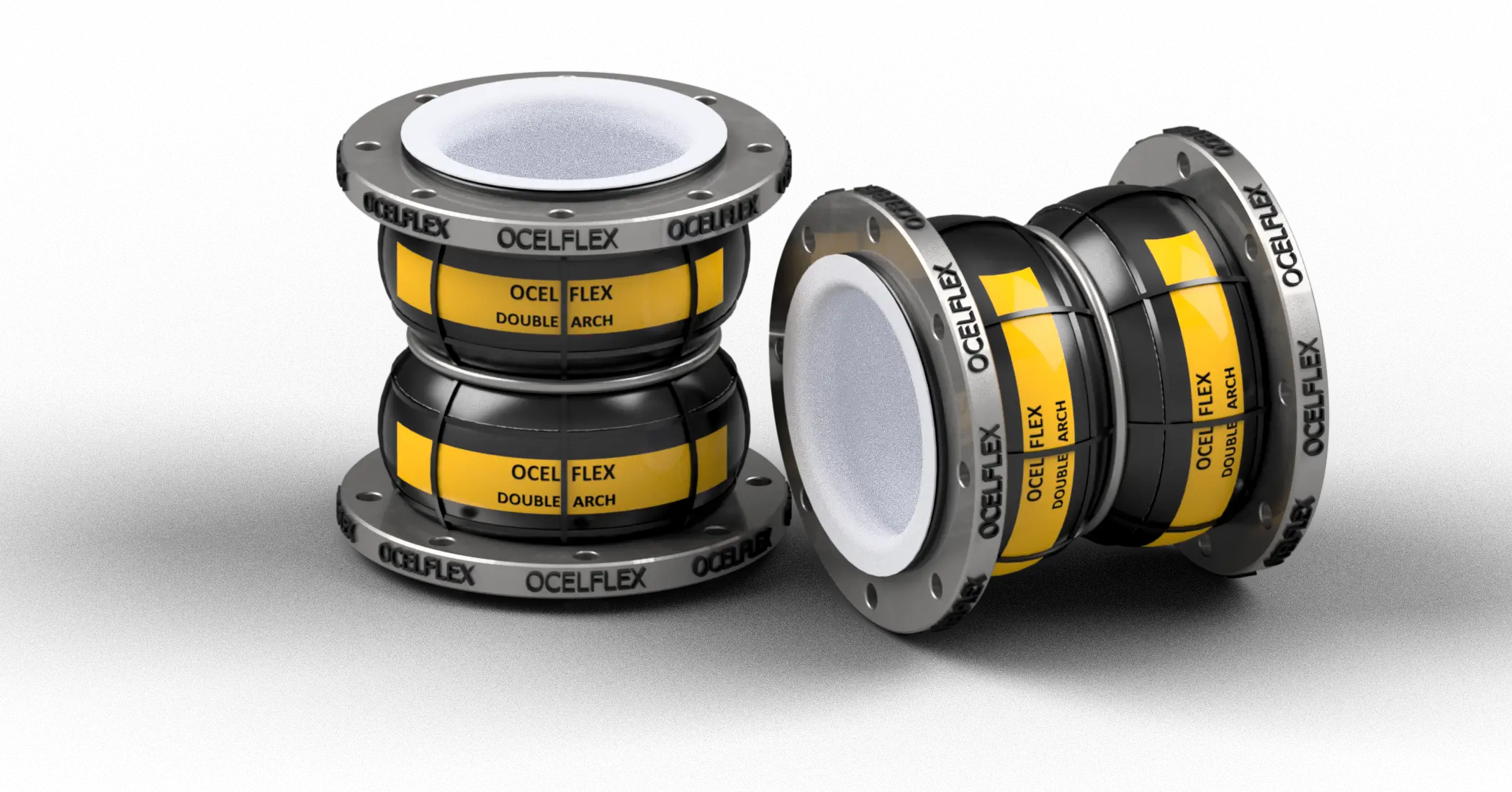
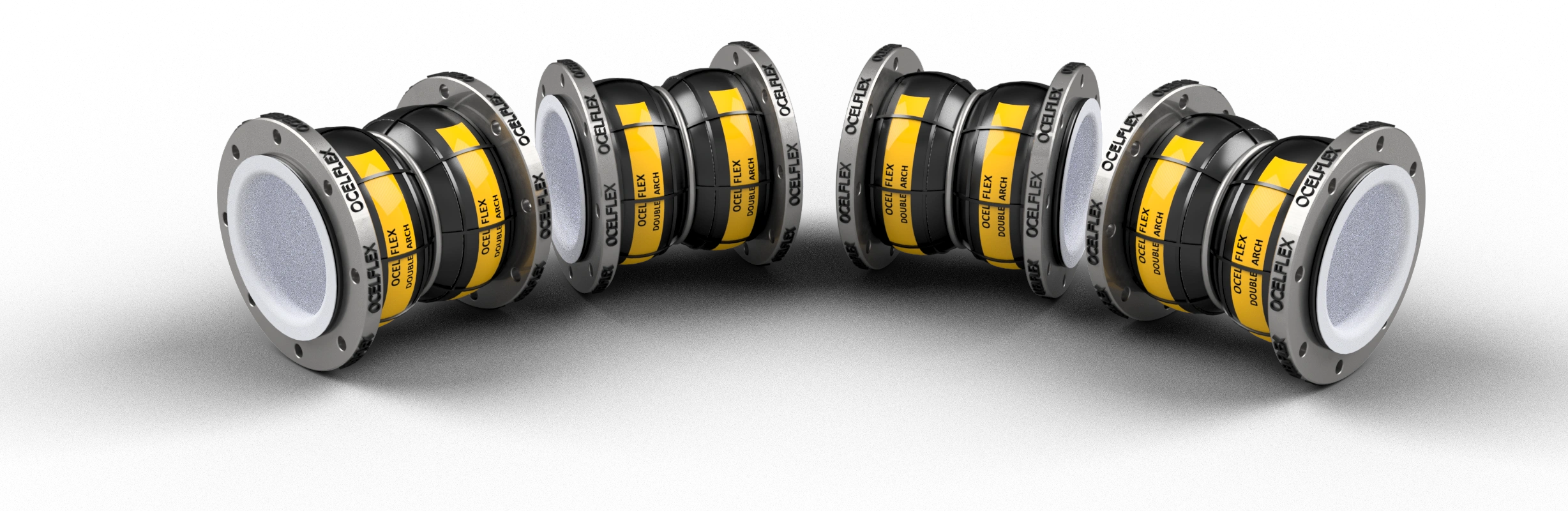
A PTFE Lined Double Arch Rubber Expansion Joint is an advanced non-metallic flexible connector engineered for piping systems that require exceptional chemical resistance along with enhanced movement capability. By integrating the corrosion-proof properties of PTFE Expansion Joints with the flexibility and vibration-absorbing characteristics of elastomeric construction, this design provides dependable performance in aggressive media handling as well as high-purity process environments. The double arch configuration further improves flexibility compared to single arch designs, allowing greater movement absorption with reduced reaction forces on connected equipment.
The construction of a Double Arch PTFE Expansion Joint begins with a precision-formed virgin PTFE liner that creates the primary wetted surface. This liner is carefully shaped to match the dual-convolution geometry, ensuring uniform thickness and consistent performance across both arches. Surrounding the PTFE liner, layers of elastomer—commonly EPDM, Neoprene, or specialized rubber compounds—are hand-wrapped or compression molded to form the flexible body. High-tensile polyester or nylon reinforcement fabric is embedded within the rubber structure to enhance pressure capability, dimensional stability, and burst resistance under demanding operating conditions.
The dual-arch rubber body significantly increases axial compression and extension capacity while also accommodating higher lateral and angular movements compared to a single arch PTFE Lined Rubber Expansion Joint. This improved flexibility reduces stress transmission to pumps, valves, and piping supports, extending equipment life and minimizing maintenance requirements. The PTFE liner is flared over the flange faces to ensure complete isolation of the elastomer carcass from the process media, maintaining chemical compatibility and preventing contamination in sensitive services such as ultrapure water or corrosive chemical transfer.
For installations exposed to harsh environments, an optional Hypalon or equivalent protective coating can be applied to the external rubber surface. This coating enhances resistance to UV radiation, ozone, weathering, and chemical splashes while providing a durable, non-marking outer finish suitable for pharmaceutical, food processing, and clean utility systems.
The Non Metallic PTFE Rubber Expansion Joint with double arch construction is widely used in chemical processing plants, desalination facilities, water and wastewater treatment systems, and power generation units. It is particularly effective for handling acids, alkalis, and corrosive fluids while simultaneously providing vibration isolation, noise reduction, and thermal expansion compensation.
Compared to metallic bellows, the Double Arch PTFE Expansion Joint offers lower spring rates, superior vibration damping, and easier installation. When compared to unlined rubber joints, it delivers substantially improved chemical resistance and media purity, making it an optimal solution for demanding industrial applications where reliability and longevity are critical.
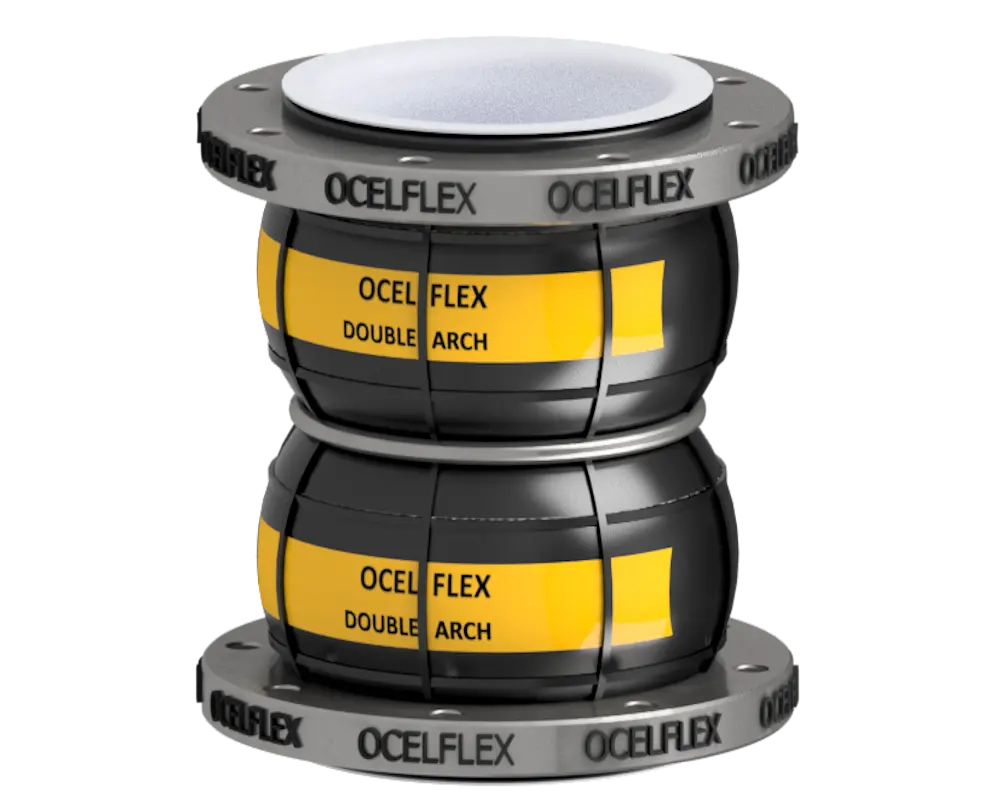
Ocelflex manufactures PTFE expansion joint with standard or customised flange specifications.
 Expansion Joint
Understand the most commonly used technical terms when referring to Metal Expansion Joints, Rubber Expansion Joint, Fabric and PTFE Expansion Joint.
 Expansion Joint
Know what parameters to consider when choosing the right expansion joint for your application.
 Expansion Joint
Understand the axial, lateral, angular and torsional movements an expansion joint is designed to compensate, based on different expansion joint design specifications.
 Expansion Joint
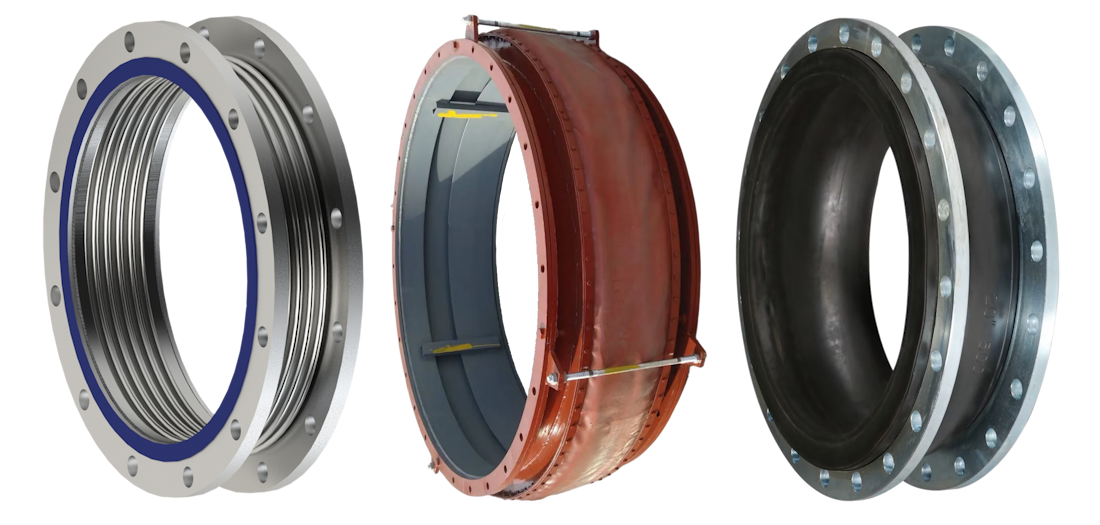
Confused which type of expansion joint is right for you? This guide will help you understand the difference between fabric expansion joints, metal expansion joints and rubber expansion joints.