
Expansion Joint Terminology
Understand the most commonly used technical terms when referring to Metal Expansion Joints, Rubber Expansion Joint, Fabric and PTFE Expansion Joint.
Read More


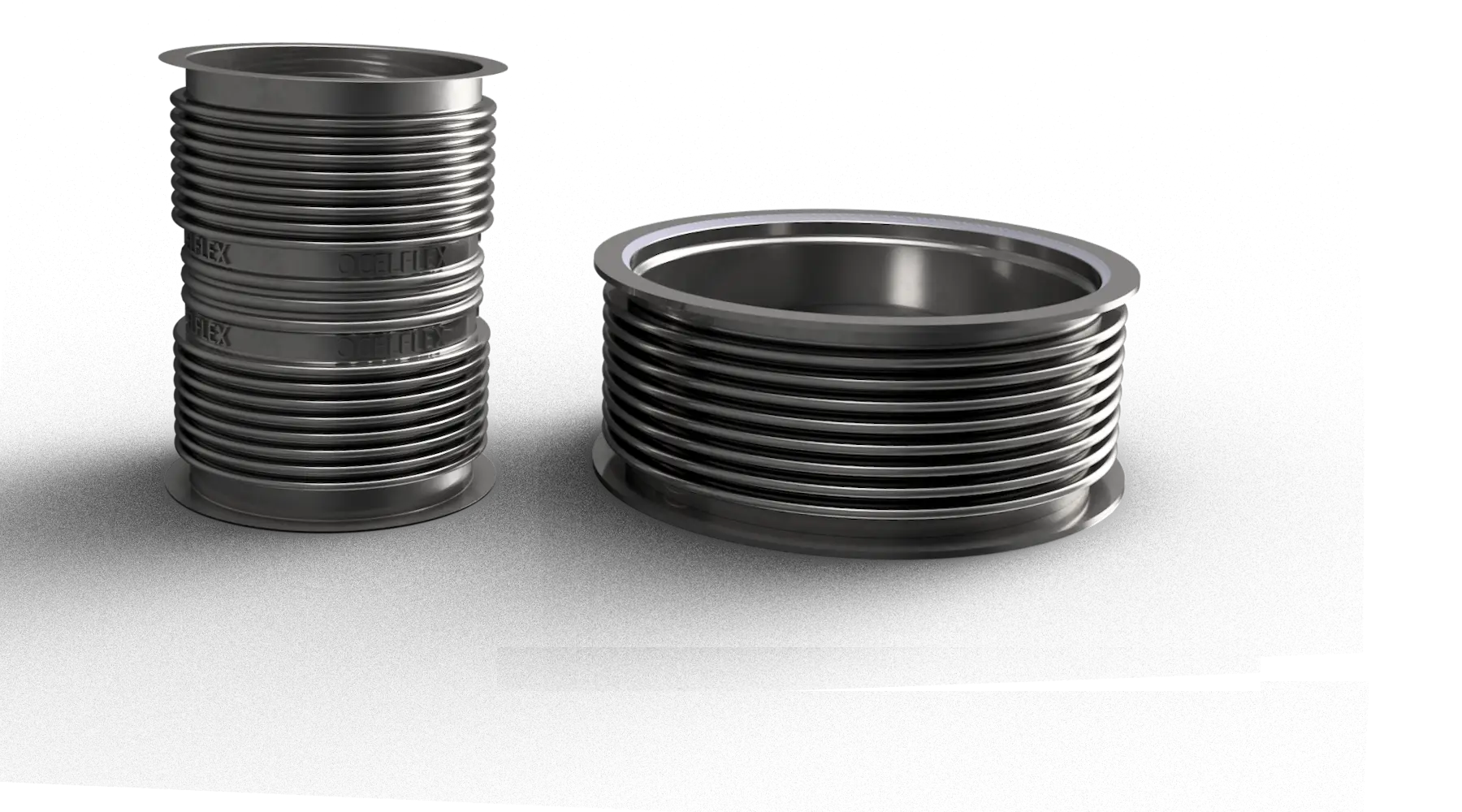
As a leading metal expansion joint manufacturer, we specialize in the production of hinged angular metal expansion joints, engineered to accommodate rotational displacement within piping systems. Angular movement in an expansion joint is the bending displacement of the metal expansion bellows’ longitudinal axis around a fixed pivot point.
In this metal expansion joint design, both end fittings are fabricated with connections having integrated metallic pivots or hinges that allow rotation strictly in a single plane, making them an essential design feature for systems requiring angular movement control. In standalone applications, a single hinged stainless steel angular expansion joint does not accommodate axial or lateral movements
The hinge designs are of two types, round fixed type or the long-slotted type. The round fixed hinge design inherently provides the metal expansion joint with the ability to withstand pressure thrust and other mechanical forces acting on the system. Long-slotted hinges can also be used in application where moderate axial movement is needed, but then the hinged angular steel expansion joint cannot hold any pressure thrust of the piping system.
Hinged Angular metal expansion joint have the advantage of absorbing large movements in multi-planer piping systems when used in pairs or with a gimbal angular metal expansion joint unit.
Unlike traditional angular hinged metal expansion joints, gimbal metal expansion joints incorporate two sets of hinge pins or pivots, arranged with their axes perpendicular to each other. These dual pivot sets are connected by a central gimbal metal ring, enabling the joint to pivot in angular direction along perpendicular planes.
With 30+ years of experience as a stainless steel expansion joint manufacturer, we design these joints to work in combination of multiple sets in the piping systems to allow angular deflection in several planes, making it more versatile than standard hinged angular expansion joints.
These metal expansion joints are restrained for heavy duty application, to absorb angular movements without transferring pressure thrust to fixed support points, thus minimizing stress on adjacent pipe sections.
For effective absorption of angular movements, these metal expansion joints must be strategically installed at pipeline corners or bends in single or multiple units. Precise installation is critical to ensure that the expansion joint delivers the desired flexibility, absorbs angular stresses efficiently, and maintains the overall stability of the piping system.
ANGULAR METAL EXPANSION JOINT
At Ocelflex, we manufacture fittings and end connections for steel expansion joints
in accordance with international standards and custom specifications. As a leading
metal expansion joint manufacturer, we produce high-quality fittings using materials
such as stainless steel, mild steel, brass, and other alloys tailored to specific
application requirements.
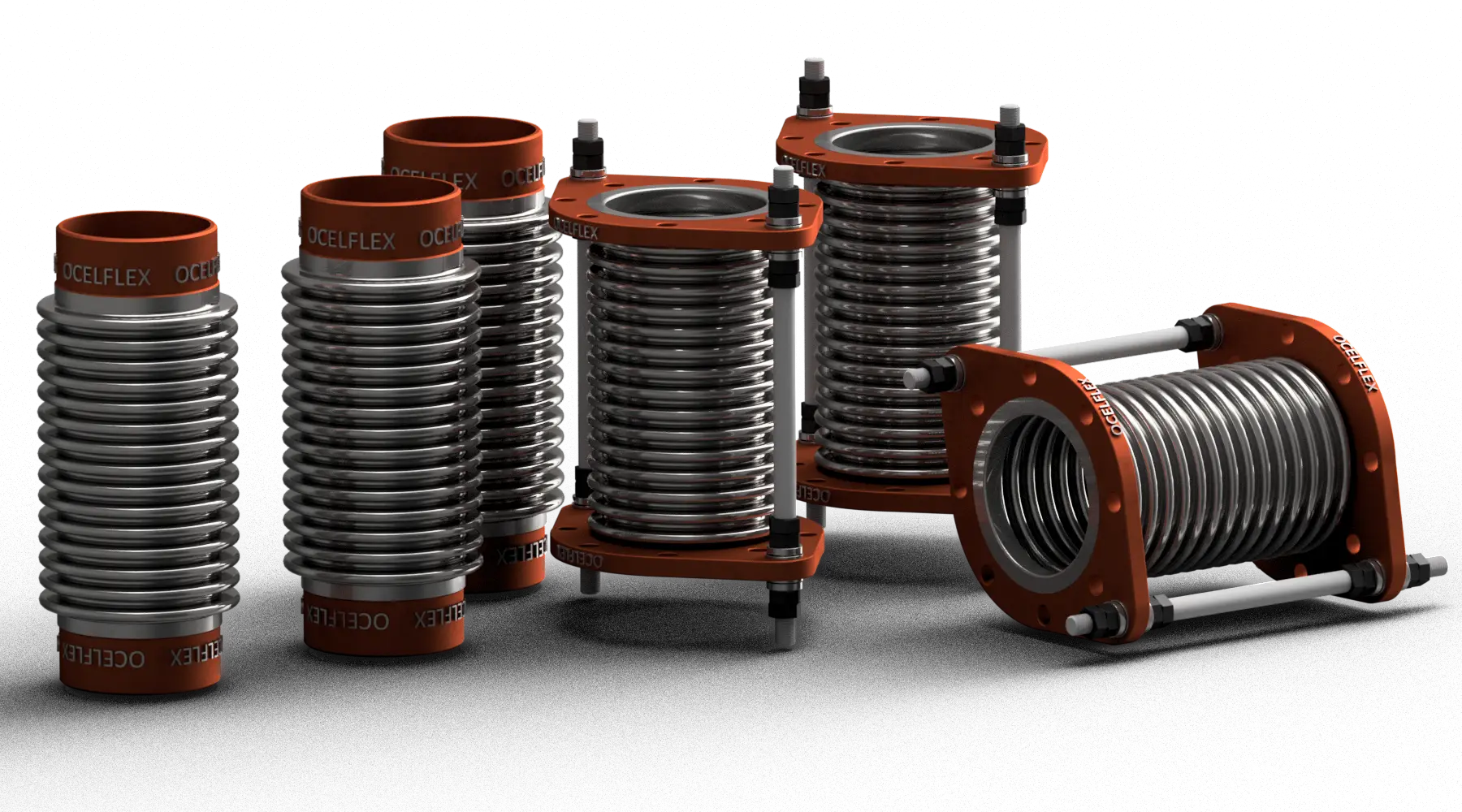
We offer a wide range of end connections such as fixed flange, vanstone fittings,
square flange, swivel flange, large union fittings, standard pipe end, customised
pipe end, grooved pipe end, fire standard pipe end, special purpose aerospace fittings
or customised fittings as per your requirement.
Our automated manufacturing processes and traceable material inspection ensure that every
component meets the demanding technical and performance standards necessary for
reliable operation in dynamic piping systems.

Ocelflex manufactures metal expansion joints with standard or customised flange specifications. The fixed flange fittings are welded to the joints, while Swivel Flanges (or floating flanges) are fitted over stub ends, allowing flange rotation and easier alignment during installation.
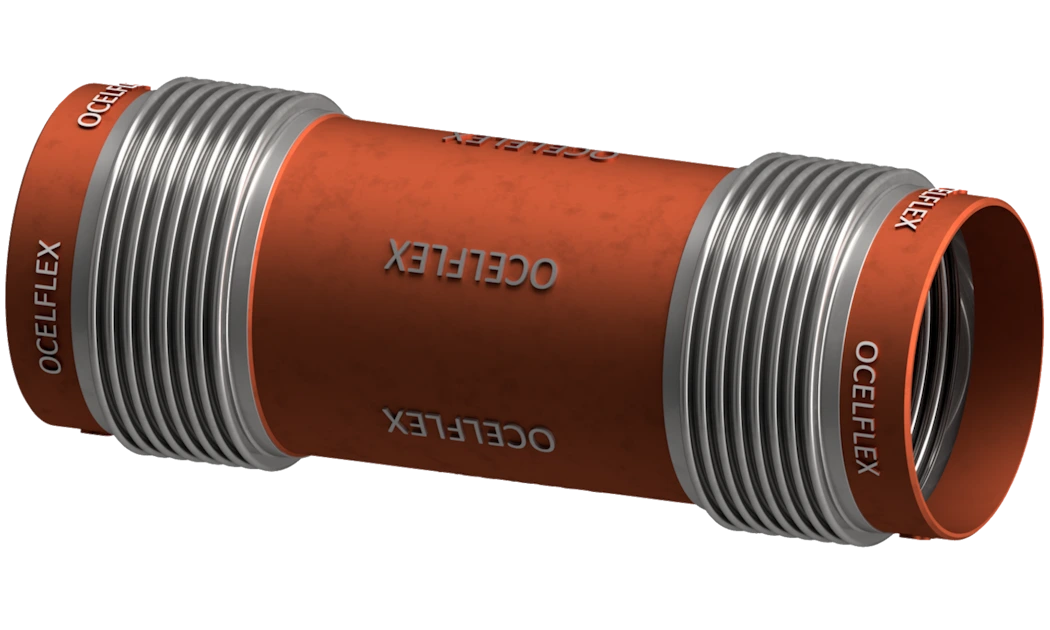
Expansion joints with weld ends or pipe ends offer a seamless connection by welding the joint directly to the piping system. This design minimizes the risk of leaks and provides a high-integrity, permanent solution—particularly advantageous in high pressure and high temperature applications.
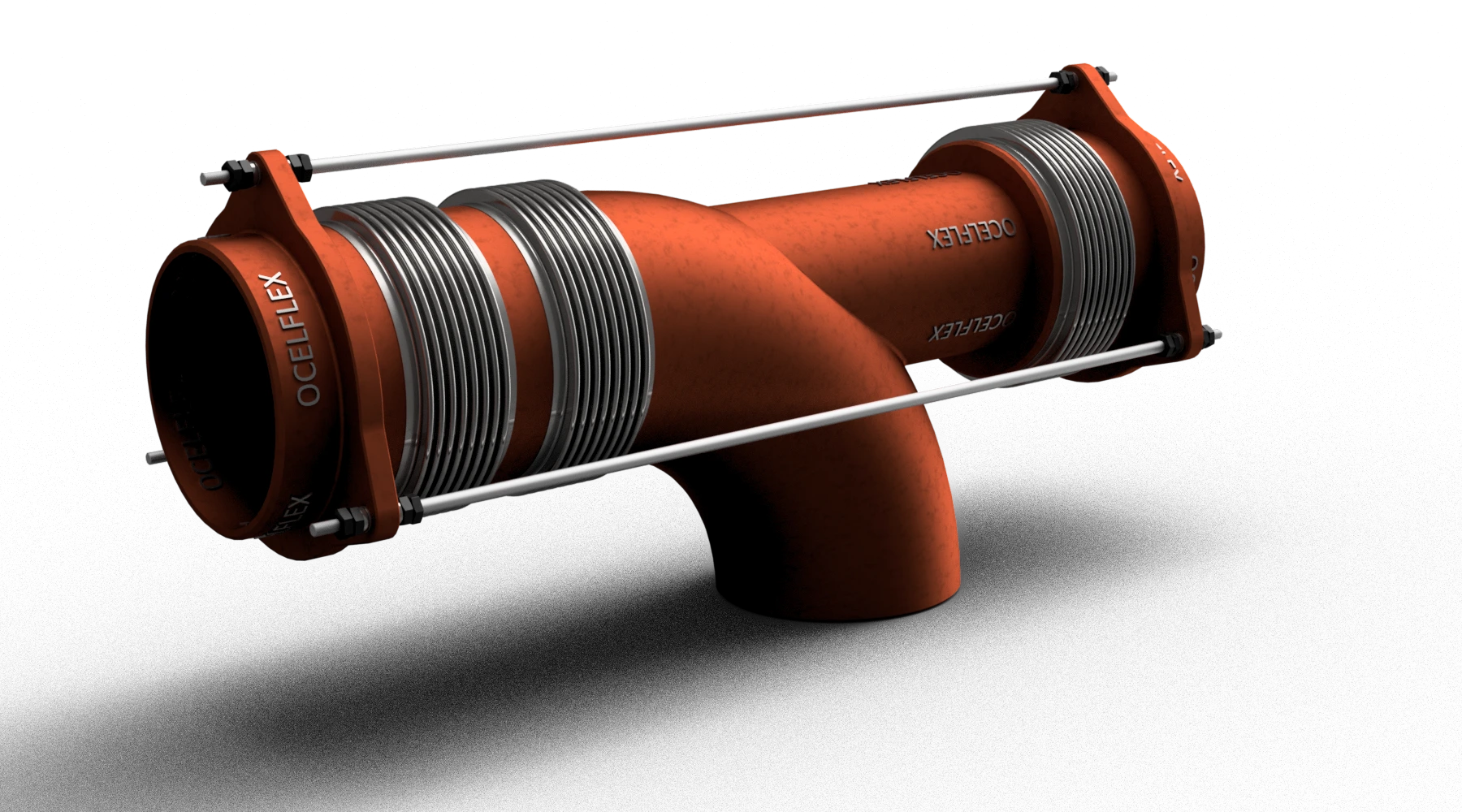
Angular steel expansion joints are designed to be fully restrained, requiring only economical intermediate guides and fixed anchors. In many cases, standard piping design is sufficient without the need for additional supports.
When angular expansion joints are installed in combination with other hinged, gimbal, or both types, and deployed across multiple units and axis, these joints efficiently absorb thermal expansion and contraction. This integrated approach enables the system to handle significant angular, axial, and lateral movements as a cohesive unit.
Ocelflex manufactures angular stainless steel expansion joints which are heavy engineered to support dead weight, absorb thermal movements, prevent torsion on metal expansion bellows and to eliminate pressure thrust forces.
Moderate in case of specialized slotted hinges. However, axial movement is not recommended for round fixed hinge type.
None. Not recommended for lateral movement unless used with multiple such joints in series.
Good. Capable to withstand large angular movement.
Ocelflex manufactures angular metal expansion joints from sizes ranging :
From 1 1/2 inch NB ( DN 40 ) to 60 inch ( DN 1500 ).
We can manufacture expansion bellows of customised lengths for any size. Our standard lengths are :
For Diameters less than 24 inch, lengths upto 24 inch.
For Diameters from 24 inch to 60 inch, lengths upto 30 inch.
Depending upon the design, our hinged and gimbal expansion joints can work at operating temperatures ranging form - 270 ℃ to 1000 ℃.
Ocelflex's gimbal metal expansion joints are available in single ply and multiply design, for upto 40 bar pressure rating and full vacuum conditions.
Wide range of materials like :
Stainless Steel 304 (1.4301),
Stainless Steel 304L (1.4307)
Stainless Steel 316 (1.4401),
Stainless Steel 316L (1.4404)
Stainless Steel 321 (1.4541),
Inconel, Hastelloy, Monel
EJMA X, ASME Sec. VIII, Div. 1, ASME B31.3, ASME B31.1, EN 14917, EN 13480, EN 13445

The long slotted hinge design consists of a long slot fabricated in the connecting component of the two end fittings, such that the connecting component is connected by a pin which can freely move axially through the slot.
Normally the angular expansion joint cannot absorb axial movement, but with the use of long slotted joints, the expansion joint can compensate for small amounts of axial movements along with angular movement.
At Ocelflex, the connecting components and pin of the angular metal expansion joints are manufactured using high alloy steels or stainless steel to withstand mechanical stresses at high temperature and pressure.
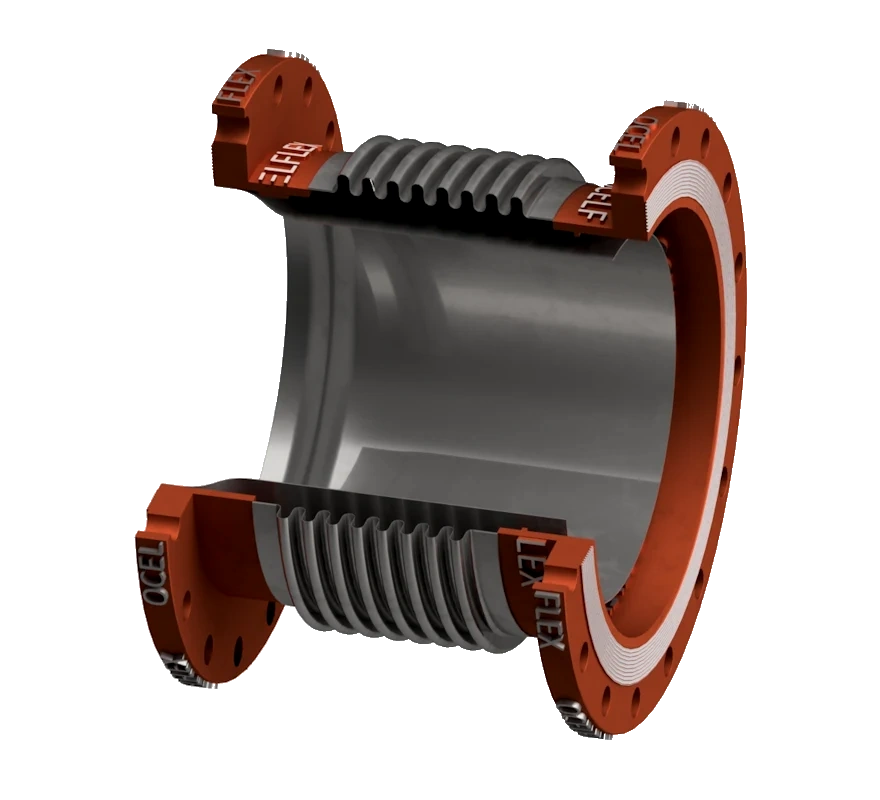
Ocelflex recommends to use inner sleeve in applications where there are high frequency vibrations caused by the inner media flow or where the inner media is corrosive enough to damage the inner thin wall of the metal expansion bellow.
Inner sleeves or liners minimizes the pressure drop throughout the expansion joint.
At Ocelflex we design the inner sleeves keeping into consideration that it should not restrict the movement.

Limit rods are for protection of the universal expansion joint in case of anchor failure.
The threaded rods are fixed at the maximum movement points and so restrain the excess movements which can be caused due to pressure and forces caused during anchor failure. .
These rods are also help prevent buckling as it controls the movement in the desired range. These limit rods are designed to be slighly shorter than the desired movement range.
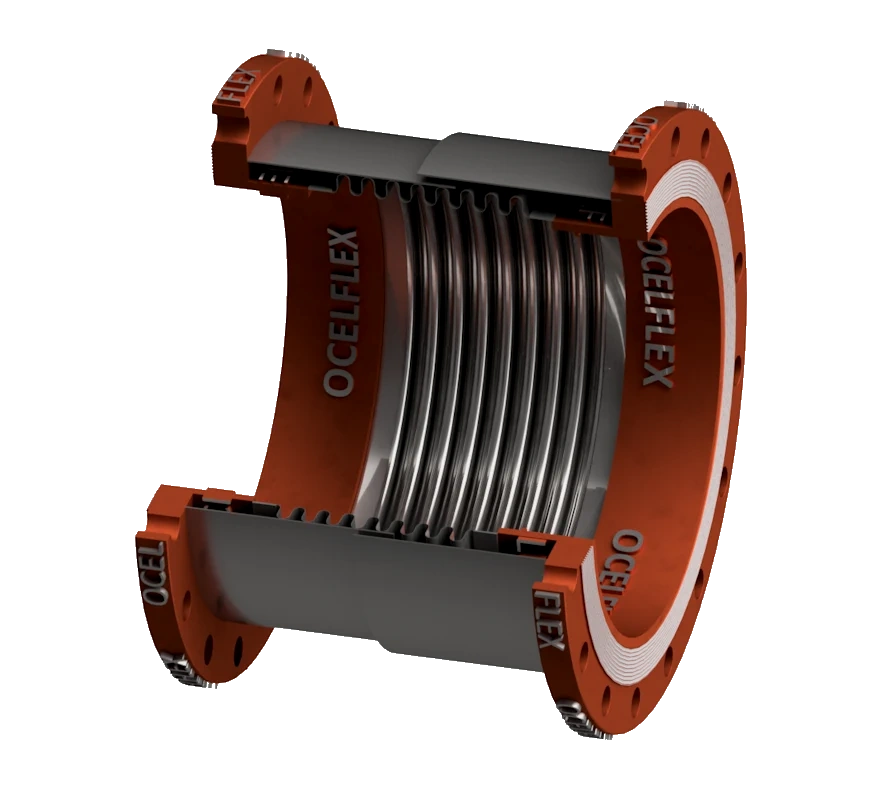
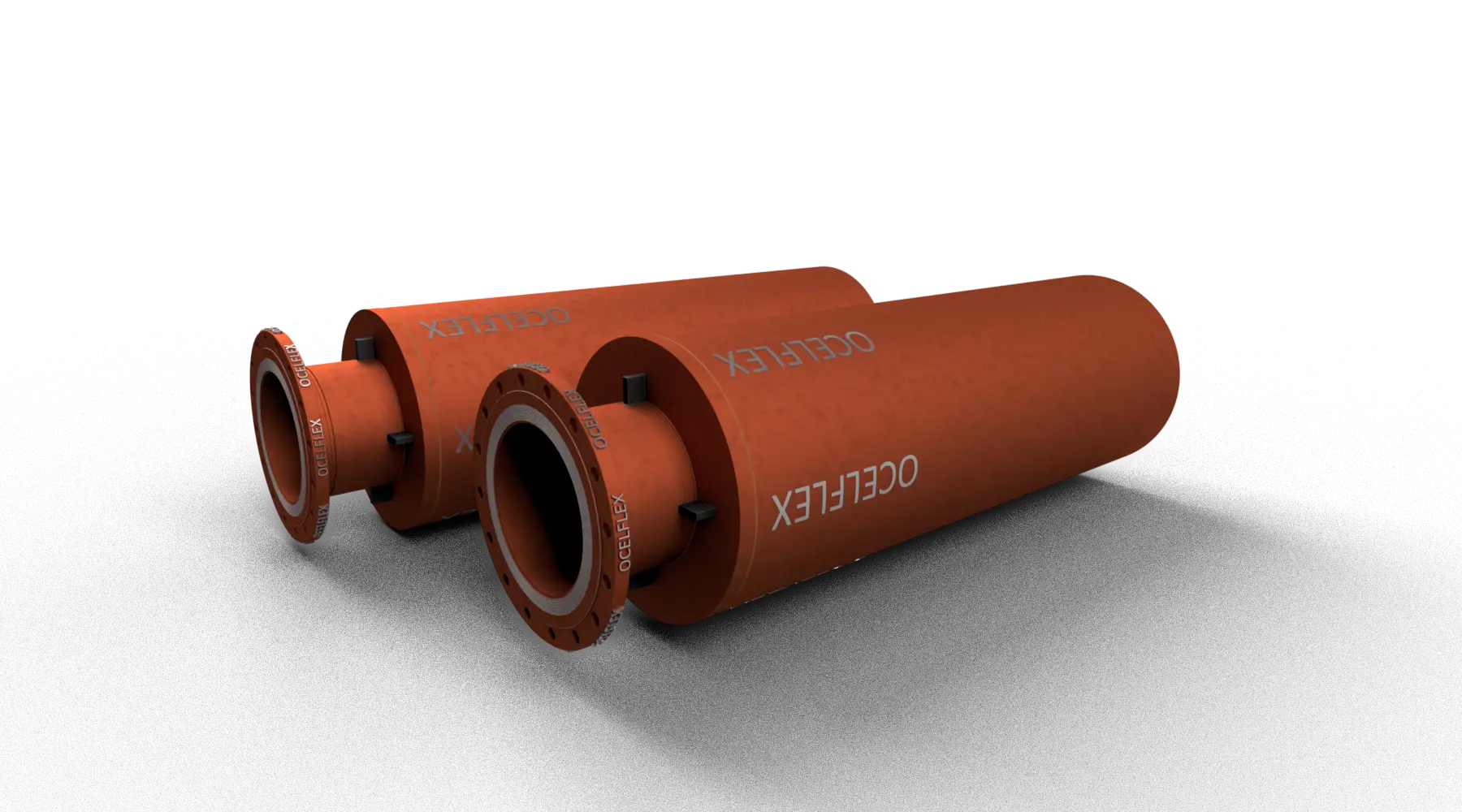
Given the delicate nature of the thin walled metal bellow element we recommend metal outer covers to protect these joints during plant construction and maintenance activities.
This cover also safeguards the expansion bellows from weld splatter, falling tools or parts, and potential damage from nearby accidents.
When designing metal expansion joints with an outer cover, it is crucial to account for any movement restrictions to ensure optimal performance.
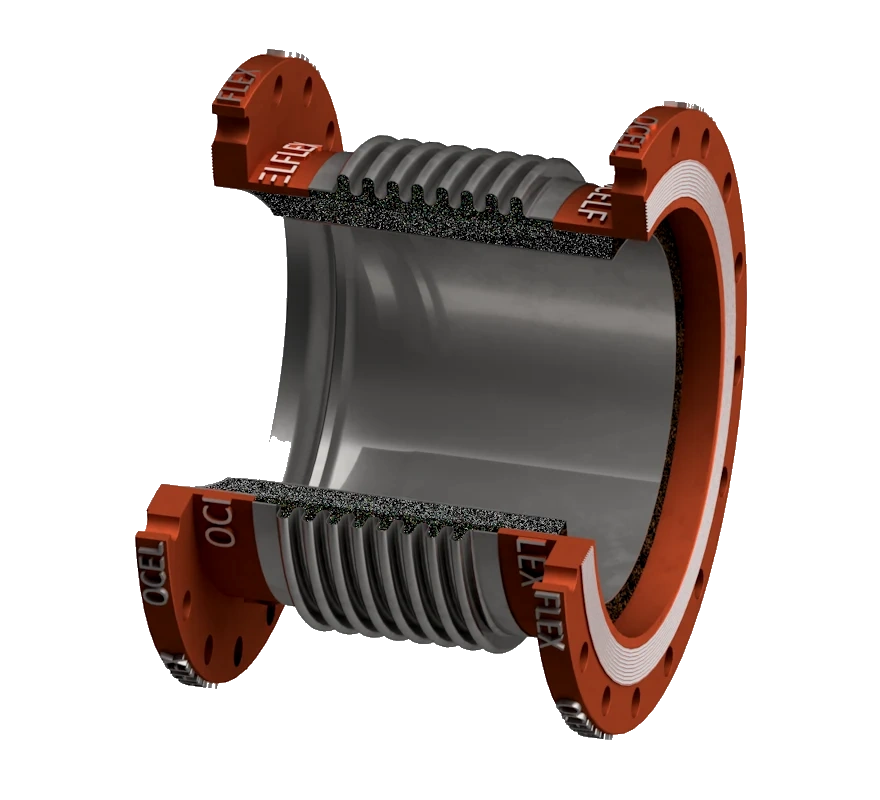
In applications where the inner media of a steel expansion joint carries significant particulate matter, these particles can accumulate in the bellows' convolutions, potentially causing corrosion or restricting movement. To address this issue, a protective particulate barrier is employed.
Typically made from fiberglass or ceramic fiber—materials well-suited for high-temperature environments—this barrier is installed without compromising the functionality of the steel expansion joint.
The barrier also serves as a thermal insulator, thereby enhancing the overall durability and performance of the joint in demanding industrial settings.
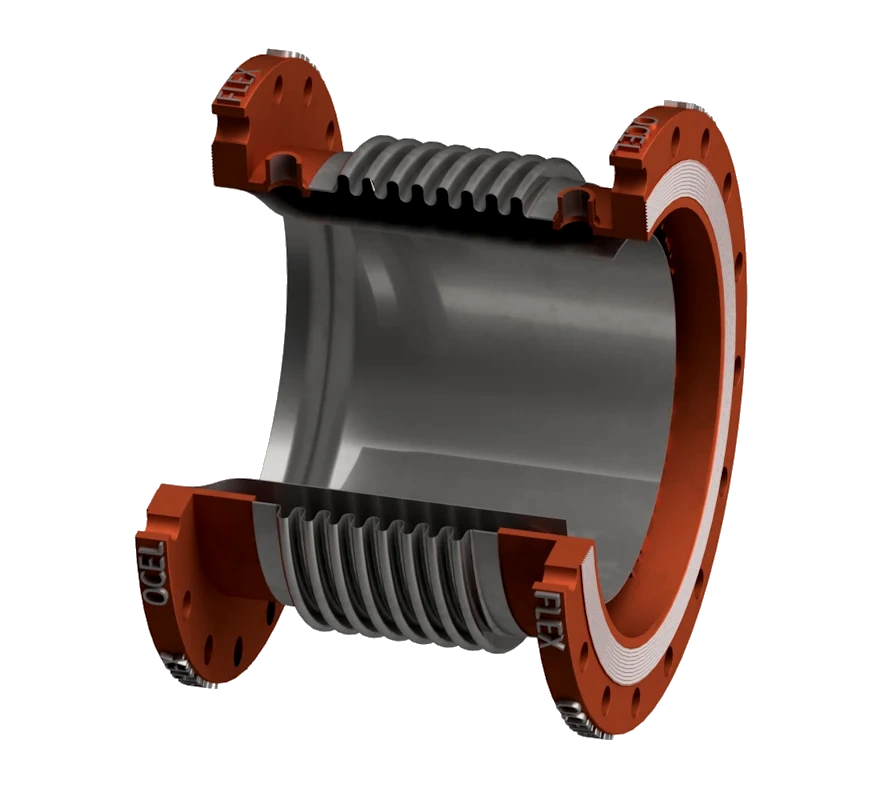
The purge connections are designed to allow the controlled flow of purging media, ensuring the joint remains free from contaminants and maintains optimal performance.
Incorporating a purge connection into a metal expansion joint requires meticulous design to ensure that the additional piping and fittings do not impede the joint’s primary function—accommodating movement.
By using steam or air as the purge media, the purge connections can help in stabilizing temperature gradients within the metal expansion joint.
 Expansion Joint
Understand the most commonly used technical terms when referring to Metal Expansion Joints, Rubber Expansion Joint, Fabric and PTFE Expansion Joint.
 Expansion Joint
Know what parameters to consider when choosing the right expansion joint for your application.
 Expansion Joint
Understand the axial, lateral, angular and torsional movements an expansion joint is designed to compensate, based on different expansion joint design specifications.
 Expansion Joint
Confused which type of expansion joint is right for you? This guide will help you understand the difference between fabric expansion joints, metal expansion joints and rubber expansion joints.