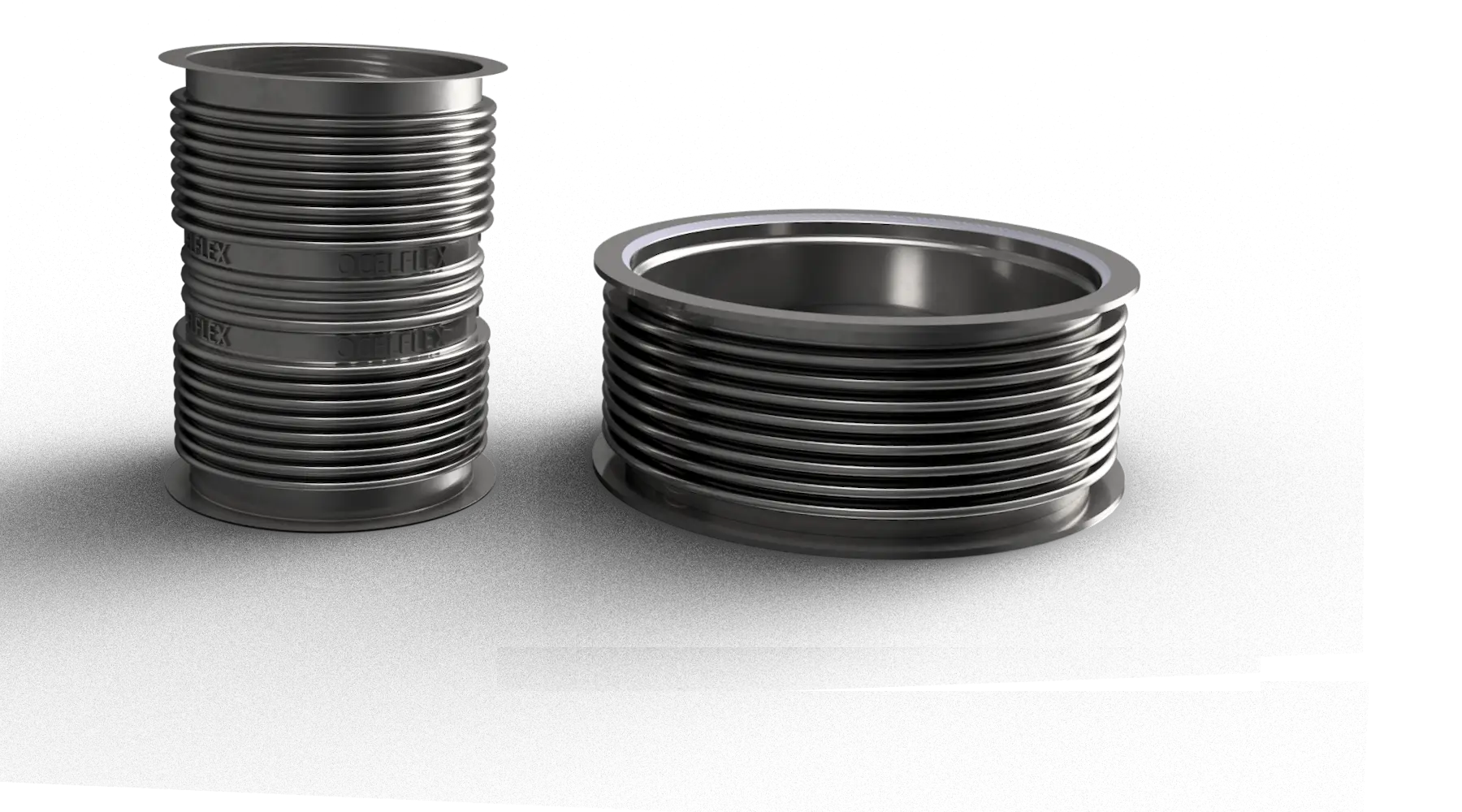
Expansion Joint Terminology
Understand the most commonly used technical terms when referring to Metal Expansion Joints, Rubber Expansion Joint, Fabric and PTFE Expansion Joint.
Read More


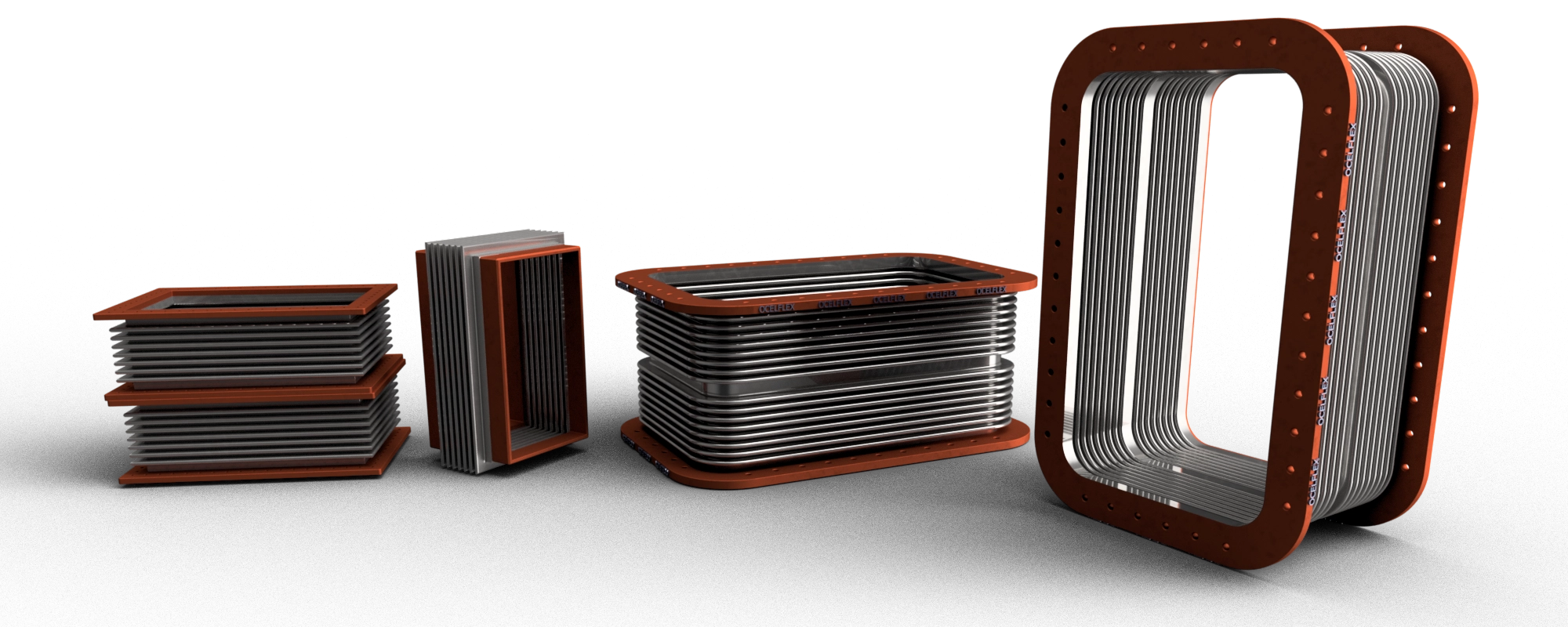
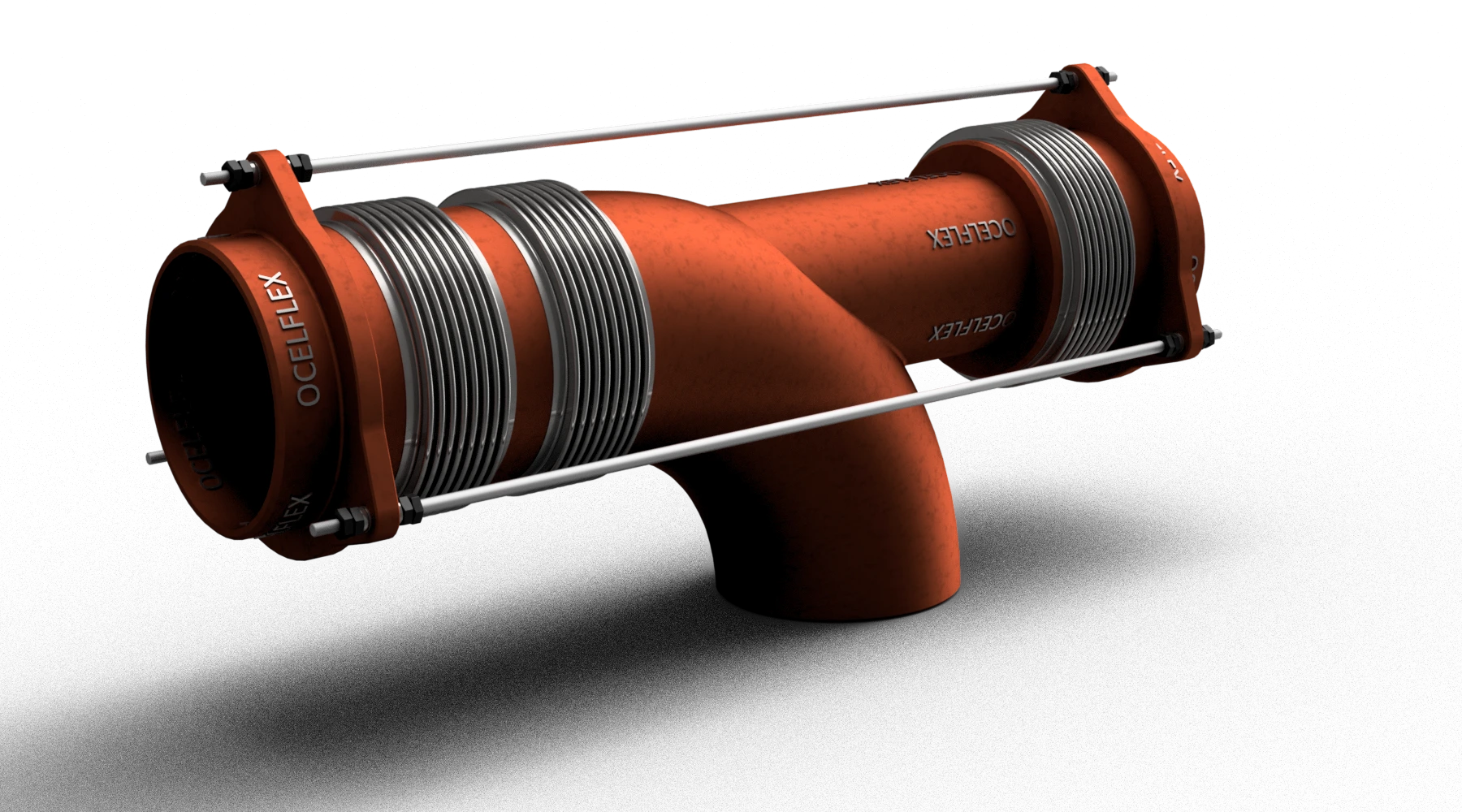
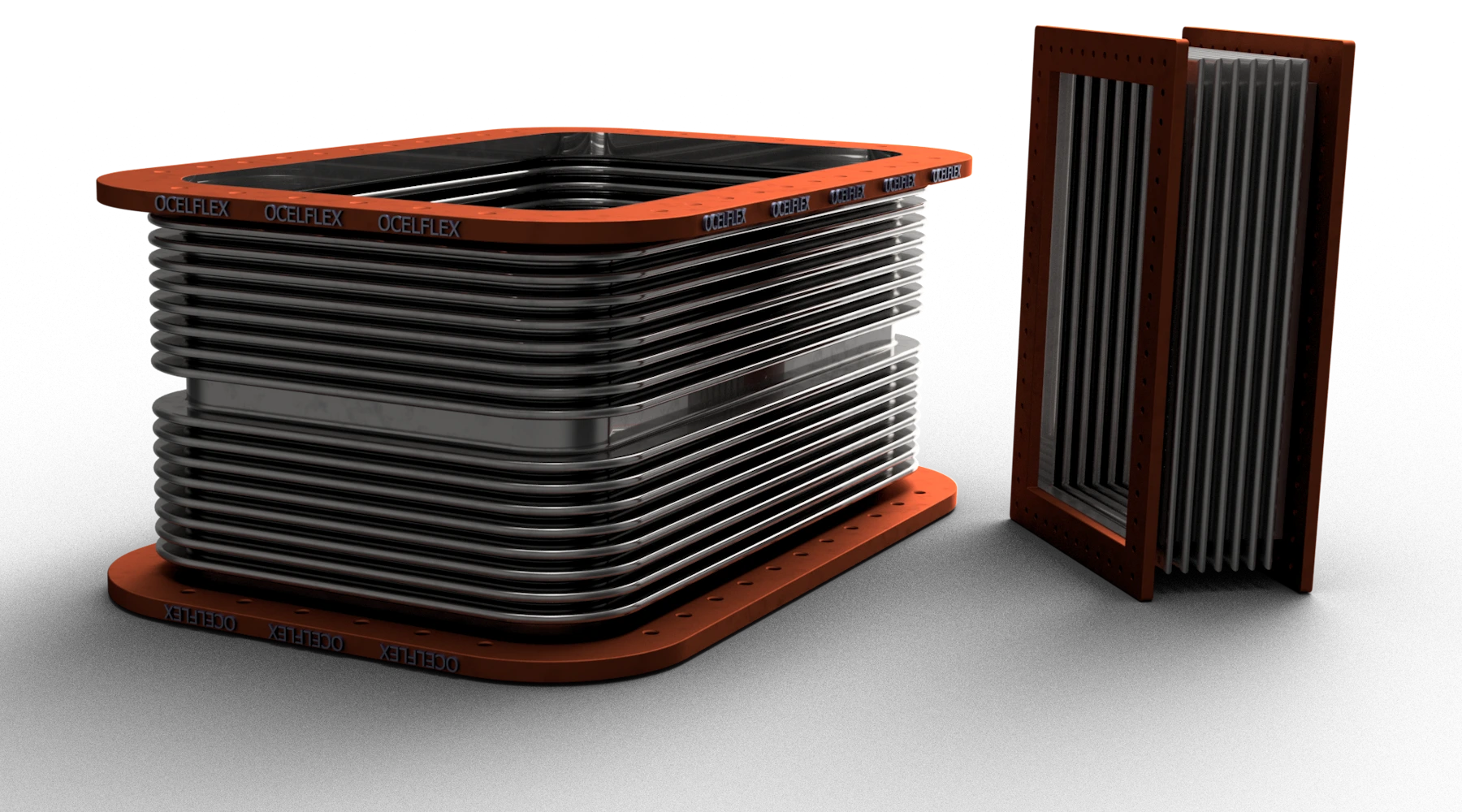
Rectangular metal expansion joints, much like their circular counterparts, are designed to accommodate three-dimensional movement—axial, lateral, and angular. These components are custom-engineered for rectangular ductwork applications, which typically do not adhere to standardized dimensions. This tailored design approach ensures not only optimal performance but also cost efficiency. Ocelflex manufactures rectangular metal expansion joints without size constraints, meeting a wide variety of project requirements.
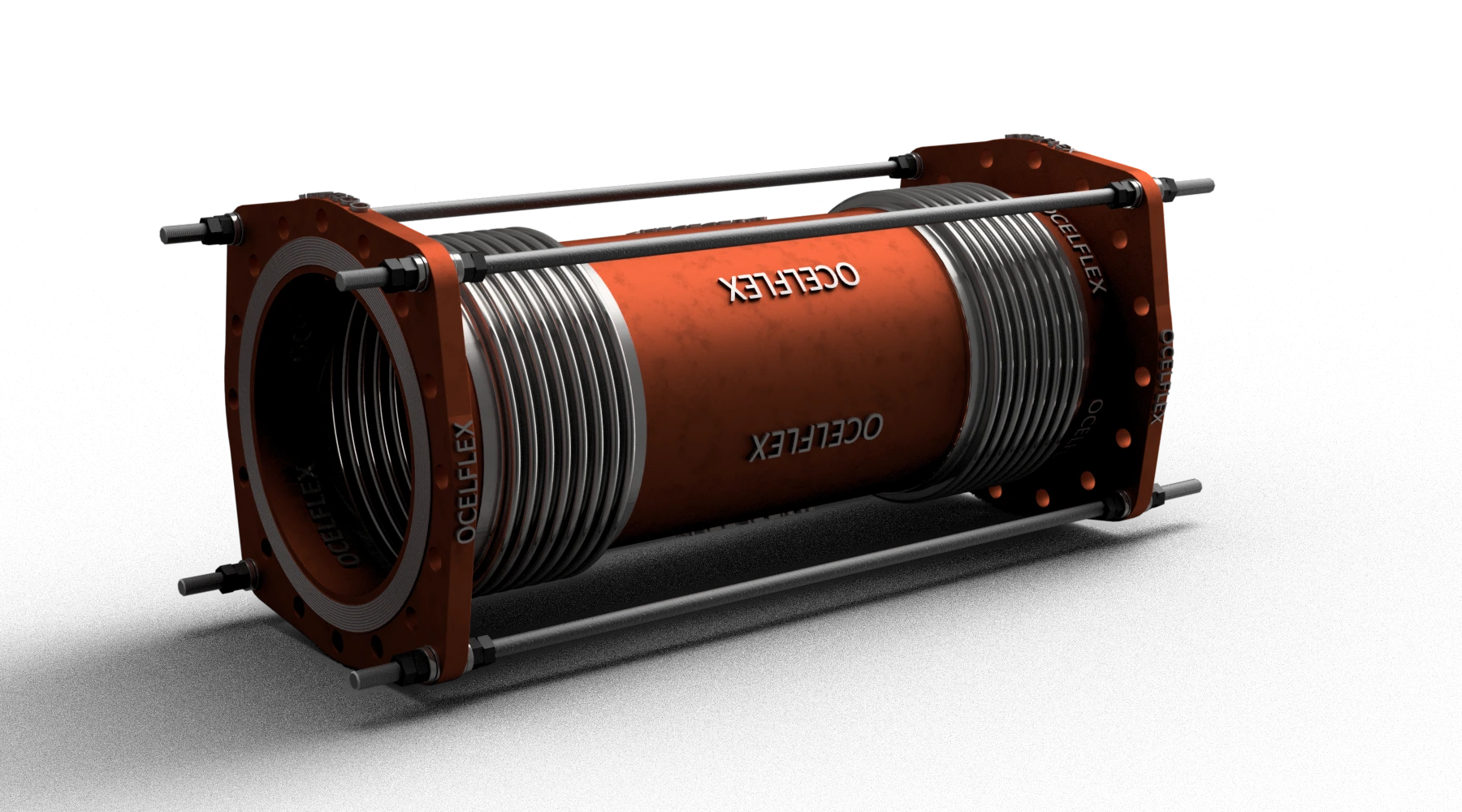
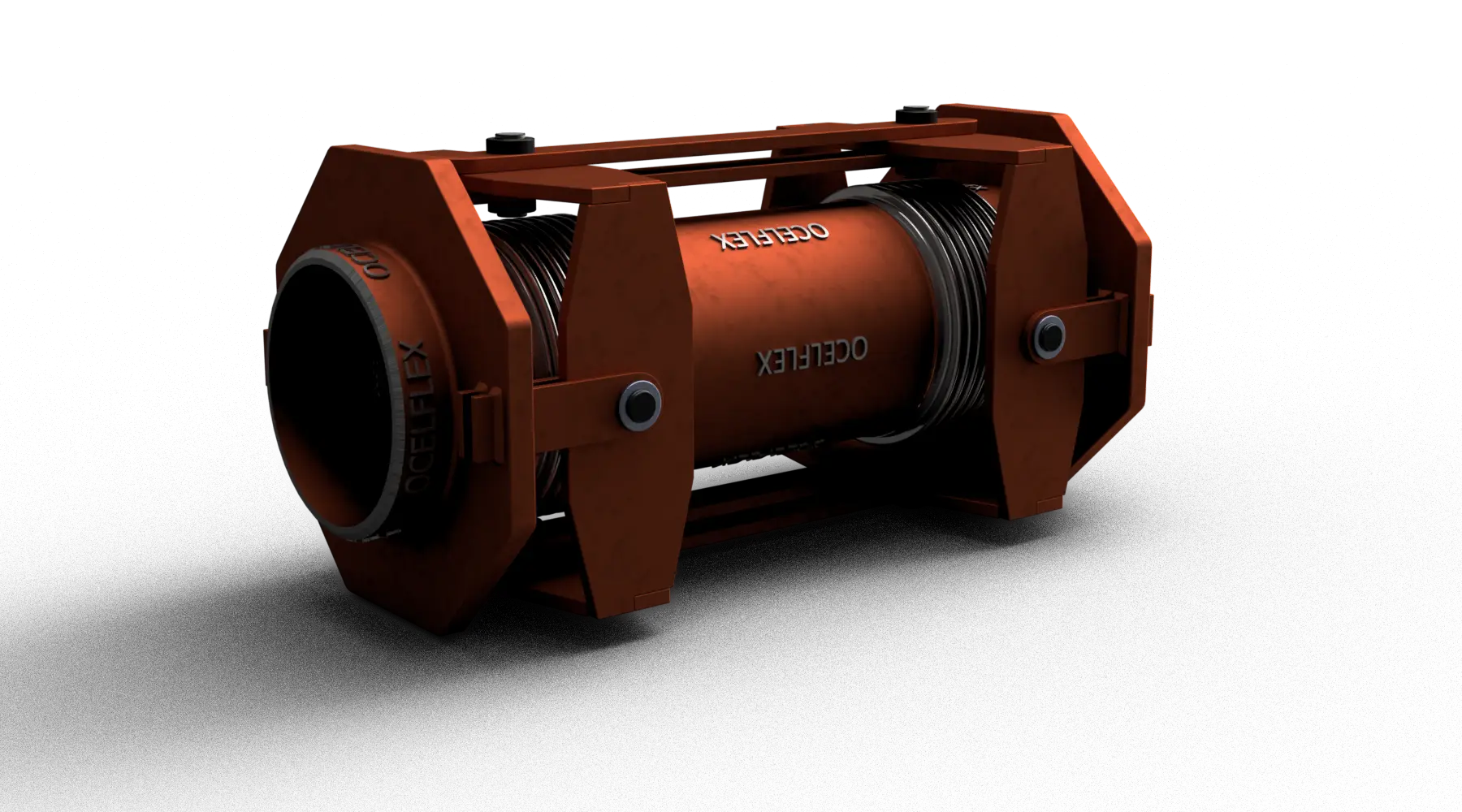
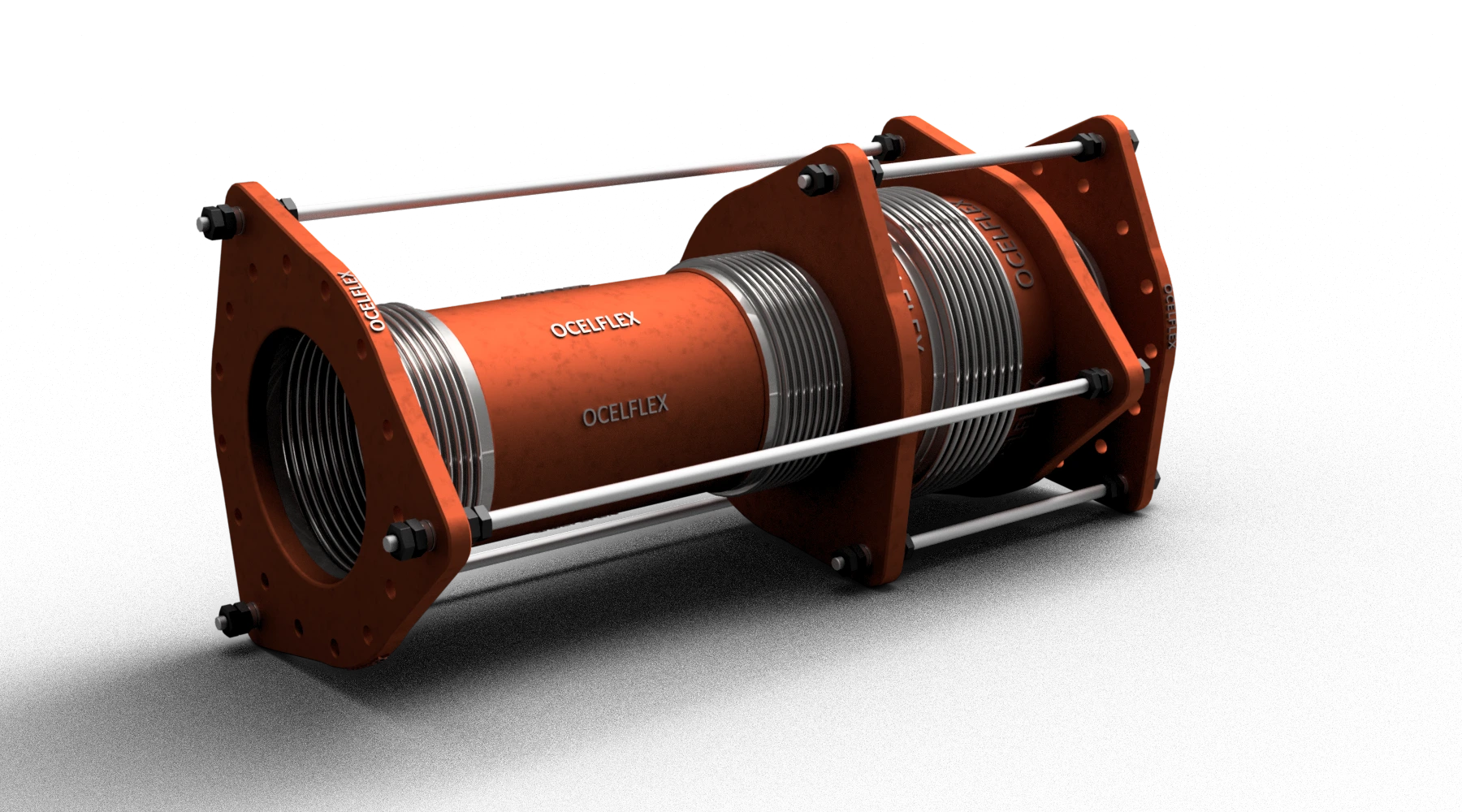
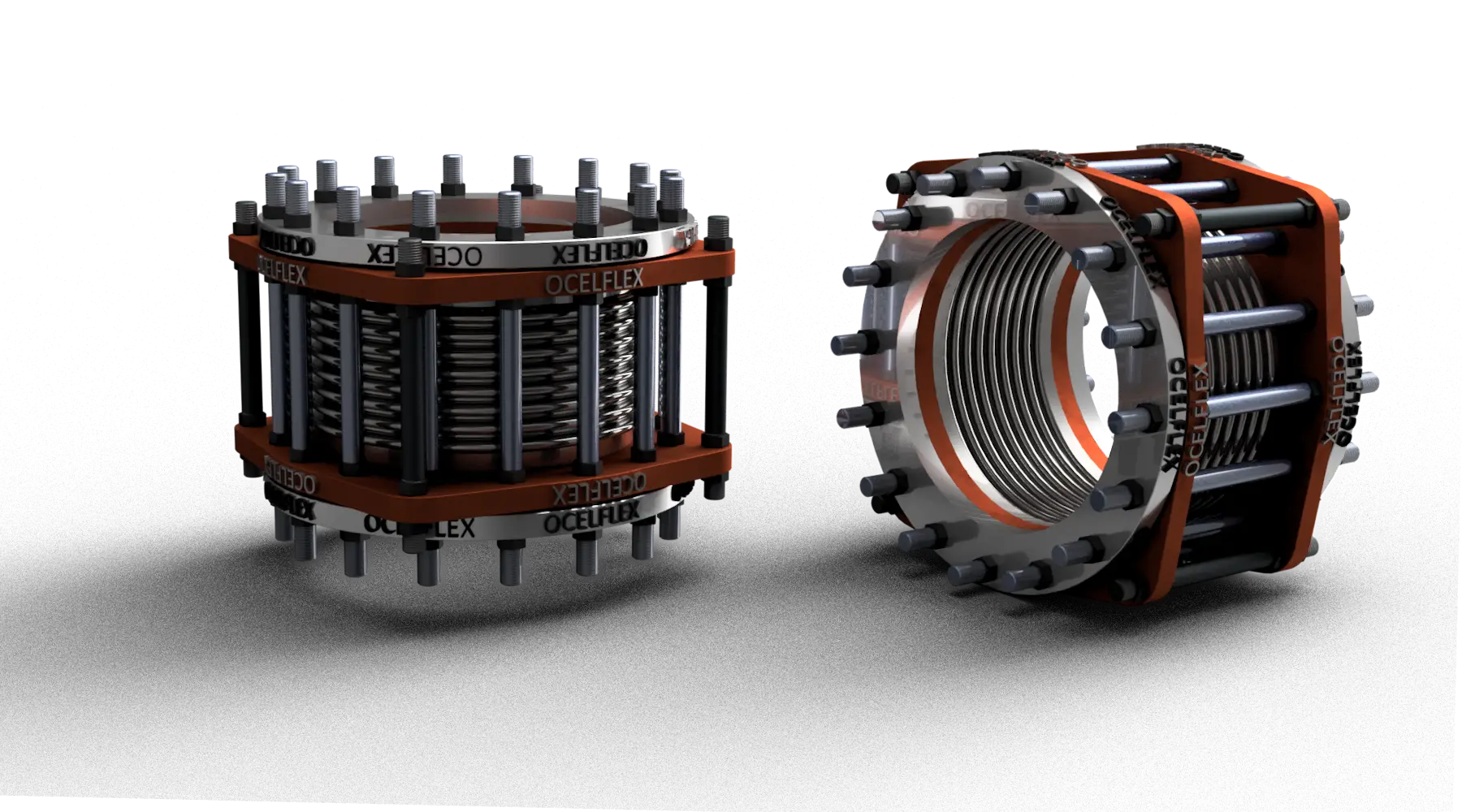
For applications demanding substantial lateral movement, our universal rectangular expansion joints offer an advanced solution. These designs feature a central section that remains unanchored within the piping system, ensuring effective movement absorption and proper functionality.
Within our universal rectangular metal expansion joint assemblies, we integrate precision-engineered tie rods—more accurately described as "limit rods". These threaded components connect to the expansion joint framework via metal brackets and securing nuts, establishing controlled movement limits for axial, lateral, and angular displacements during normal operation. Additionally, these limit rods serve a protective role by preventing excessive extension or compression during unforeseen system events. Typically manufactured from carbon steel with dual-sided adjustment nuts, these assemblies allow for application-specific movement calibration. In industry terminology, such systems are also referred to as tied rectangular expansion joints, reflecting their controlled movement design.
This comprehensive engineering ensures that our rectangular steel expansion joints deliver robust performance and durability, making them a reliable choice for customized ductwork and piping systems.
RECTANGULAR METAL EXPANSION JOINT
At Ocelflex, we manufacture fittings and end connections for steel expansion joints
in accordance with international standards and custom specifications. As a leading
metal expansion joint manufacturer, we produce high-quality fittings using materials
such as stainless steel, mild steel, brass, and other alloys tailored to specific
application requirements.
We offer a wide range of end connections such as fixed flange, vanstone fittings,
square flange, swivel flange, large union fittings, standard pipe end, customised
pipe end, grooved pipe end, fire standard pipe end, special purpose aerospace fittings
or customised fittings as per your requirement.
Our automated manufacturing processes and traceable material inspection ensure that every
component meets the demanding technical and performance standards necessary for
reliable operation in dynamic piping systems.
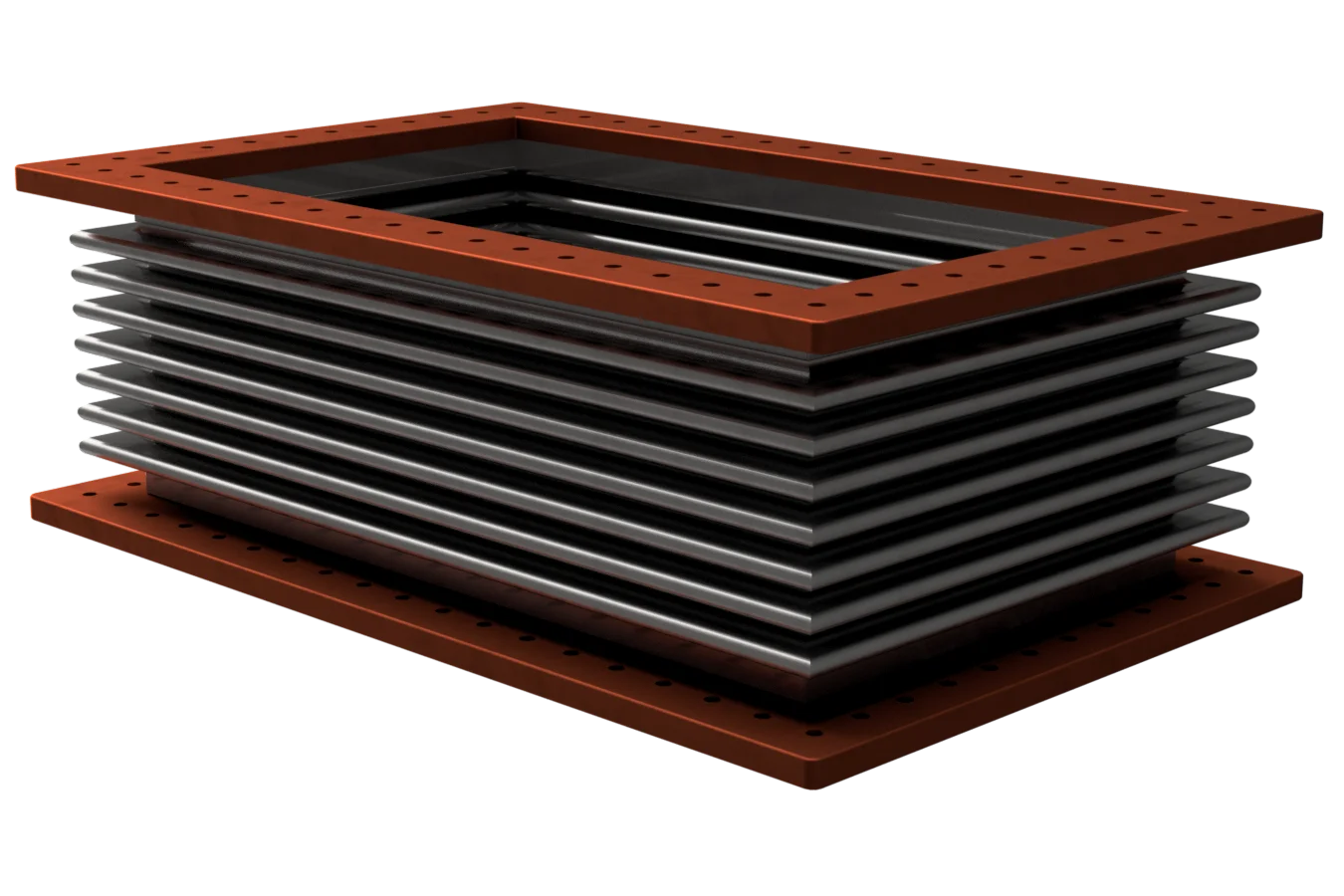
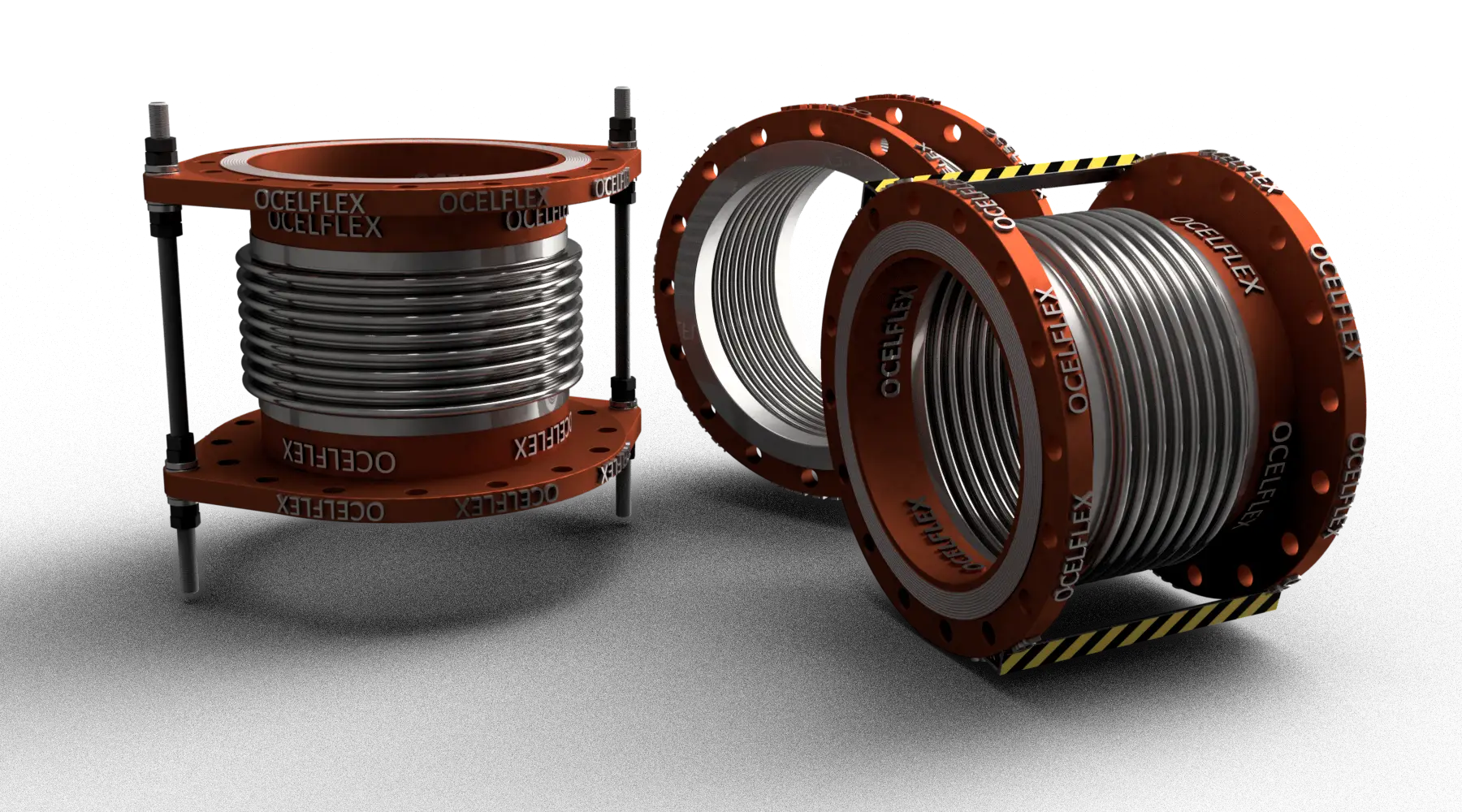
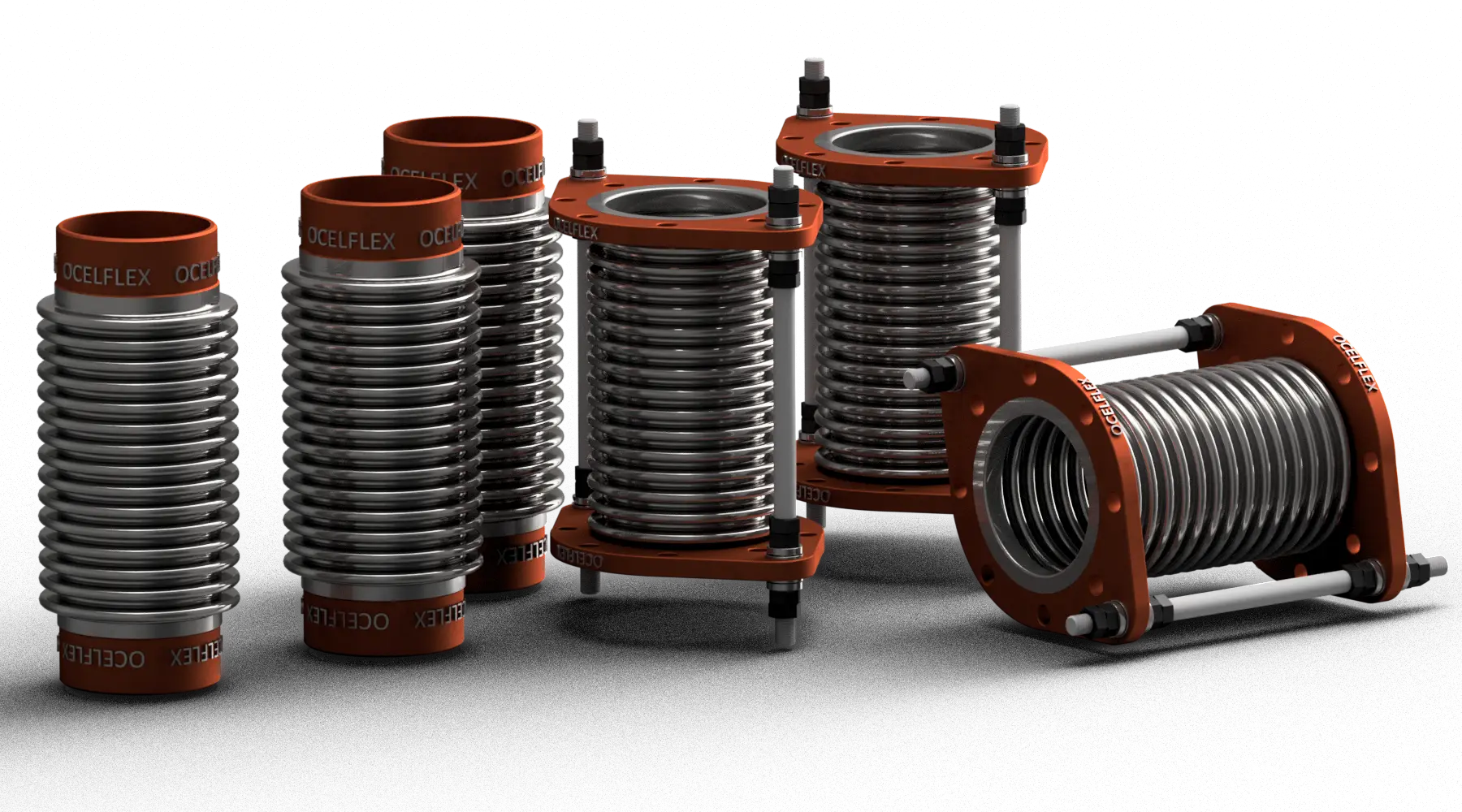
Ocelflex manufactures metal expansion joint with standard or customised flange specifications. The flange fittings are welded to the metal expansion joints.
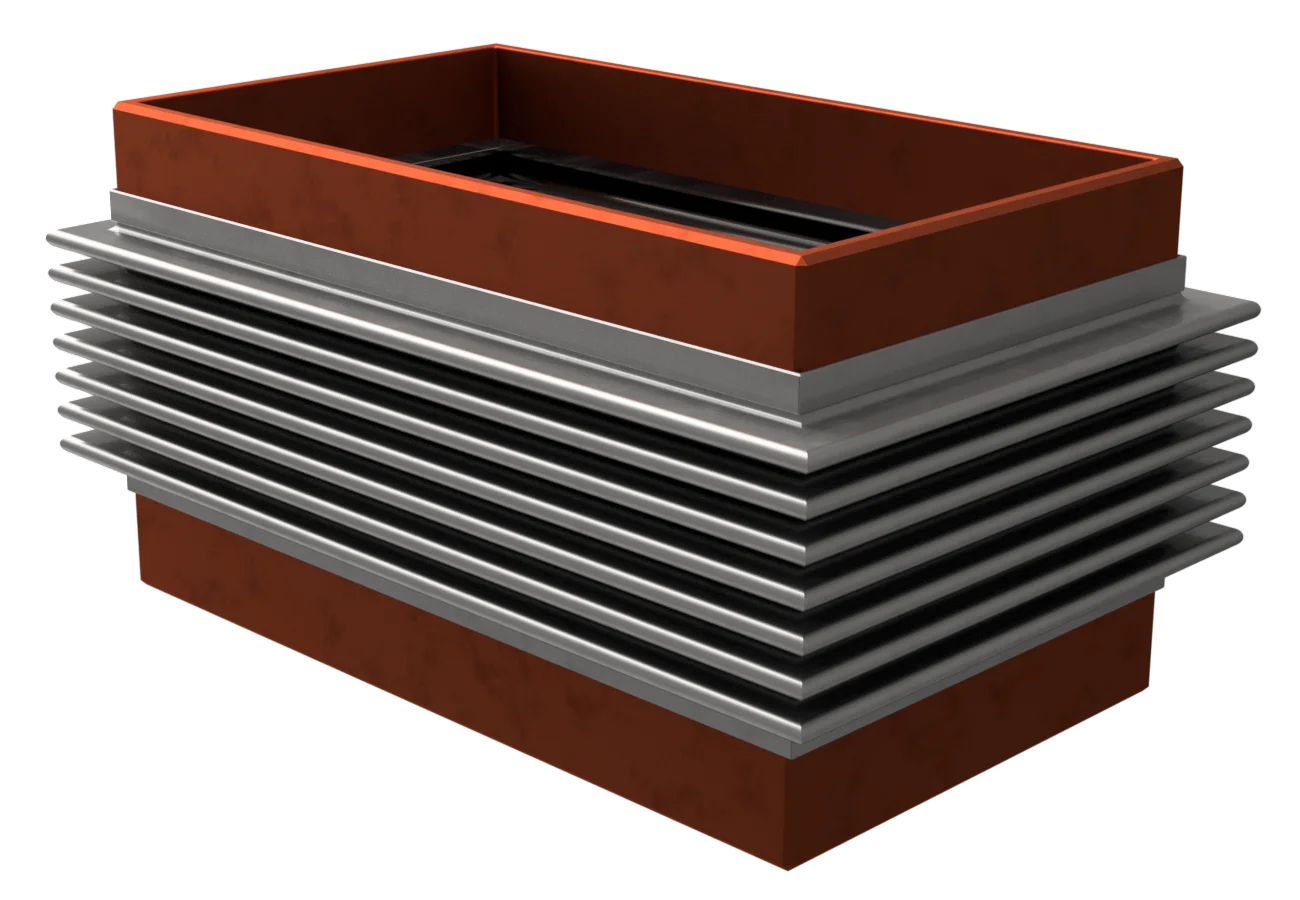
Expansion joints with weld ends or pipe ends offer a seamless connection by welding the joint directly to the piping system. This design minimizes the risk of leaks and provides a high-integrity, permanent solution—particularly advantageous in high pressure and high temperature applications.
Rectangular metal expansion joints effectively absorb axial, lateral, and angular movements, reducing stress on piping systems and prolonging the overall service life of the installation.
By compensating for thermal expansion and contraction, these joints minimize the risk of pipeline fatigue and failure, ensuring consistent performance even in high-temperature environments.
Available in various materials, including steel and stainless steel, and configured by different profile systems, these joints can be tailored to meet diverse application needs—from industrial piping to critical process systems.
Good. Rectangular Expansion Joint are capable of good axial compensation.
Good. Rectangular Expansion Joint are capable of good lateral deflection.
Good. Rectangular Expansion Joint are capable of good angular rotation.
We can manufacture rectangular expansion bellows of customised lengths for any size.
Depending upon the design, our rectangular expansion joints can work at operating temperatures ranging form - 270 ℃ to 1000 ℃.
Ocelflex's rectangular metal expansion joints are available in thick and thin ply design, for upto 20 bar pressure rating and full vacuum conditions.
Wide range of materials like :
Stainless Steel 304 (1.4301),
Stainless Steel 304L (1.4307)
Stainless Steel 316 (1.4401),
Stainless Steel 316L (1.4404)
Stainless Steel 321 (1.4541),
Inconel, Hastelloy, Monel, Carbon Steel
EJMA X, ASME Sec. VIII, Div. 1, ASME B31.3, ASME B31.1, EN 14917, EN 13480, EN 13445, Customised
 Expansion Joint
Understand the most commonly used technical terms when referring to Metal Expansion Joints, Rubber Expansion Joint, Fabric and PTFE Expansion Joint.
 Expansion Joint
Know what parameters to consider when choosing the right expansion joint for your application.
 Expansion Joint
Understand the axial, lateral, angular and torsional movements an expansion joint is designed to compensate, based on different expansion joint design specifications.
 Expansion Joint
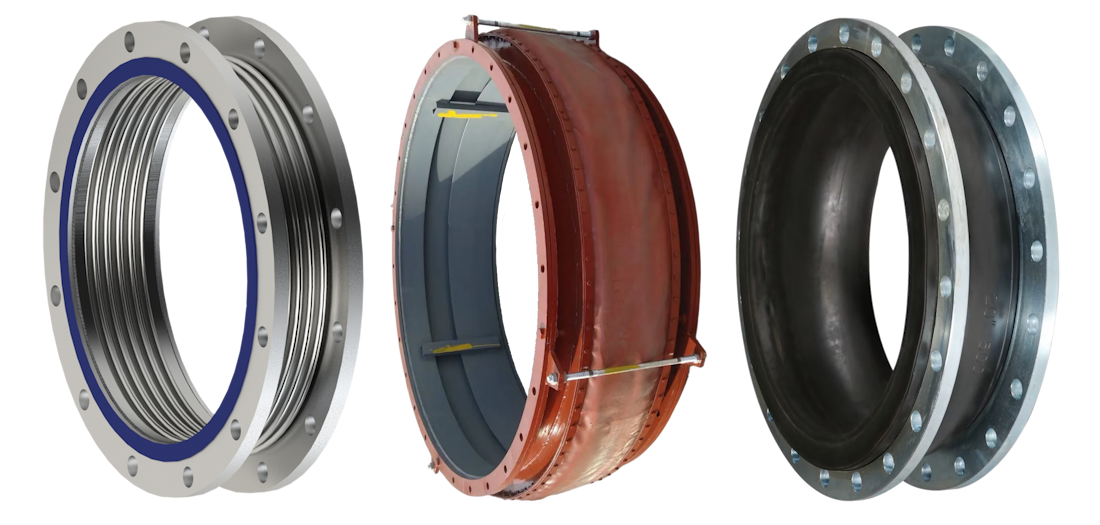
Confused which type of expansion joint is right for you? This guide will help you understand the difference between fabric expansion joints, metal expansion joints and rubber expansion joints.