Expansion Joint Terminology
Understand the most commonly used technical terms when referring to Metal Expansion Joints, Rubber Expansion Joint, Fabric and PTFE Expansion Joint.
Read More

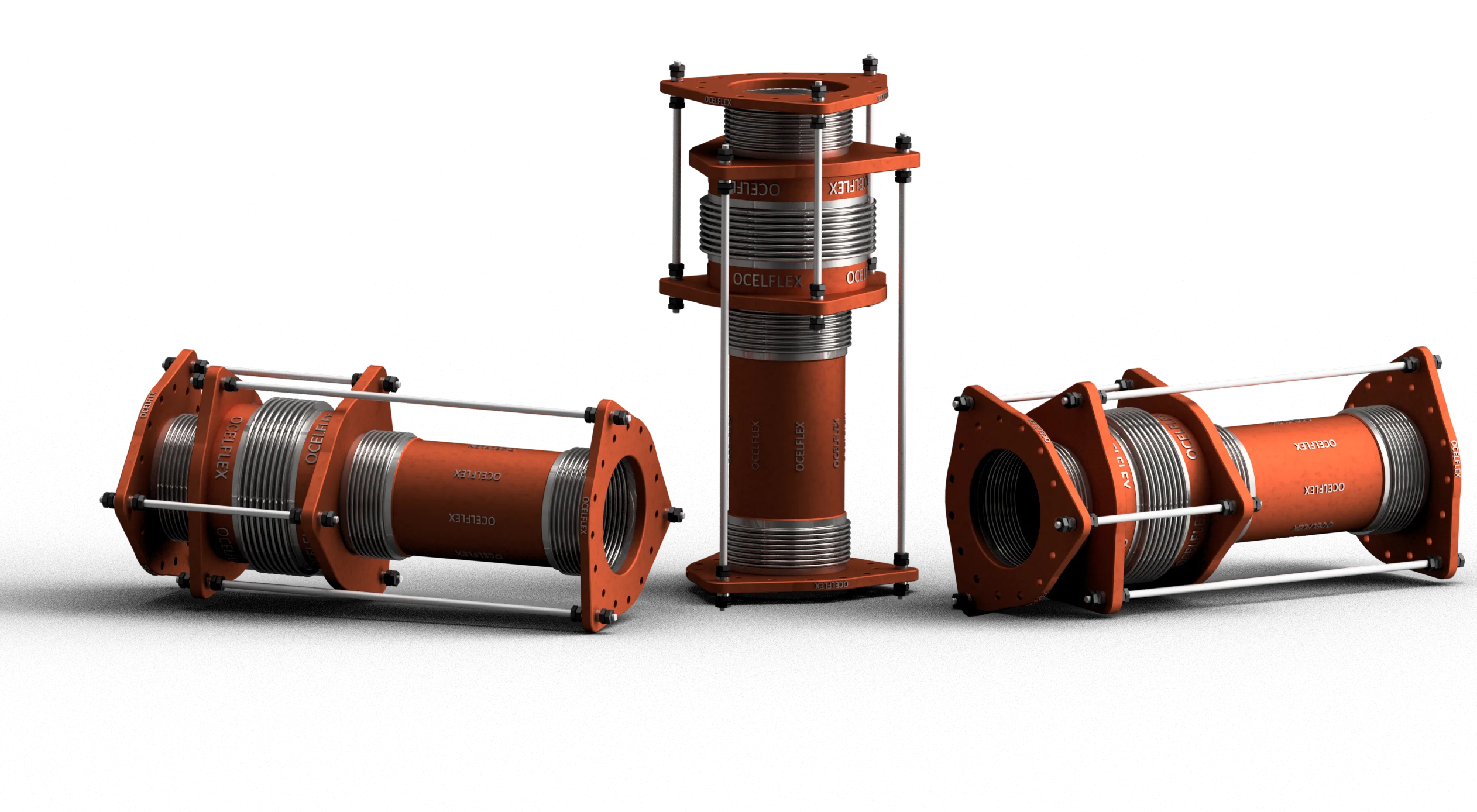
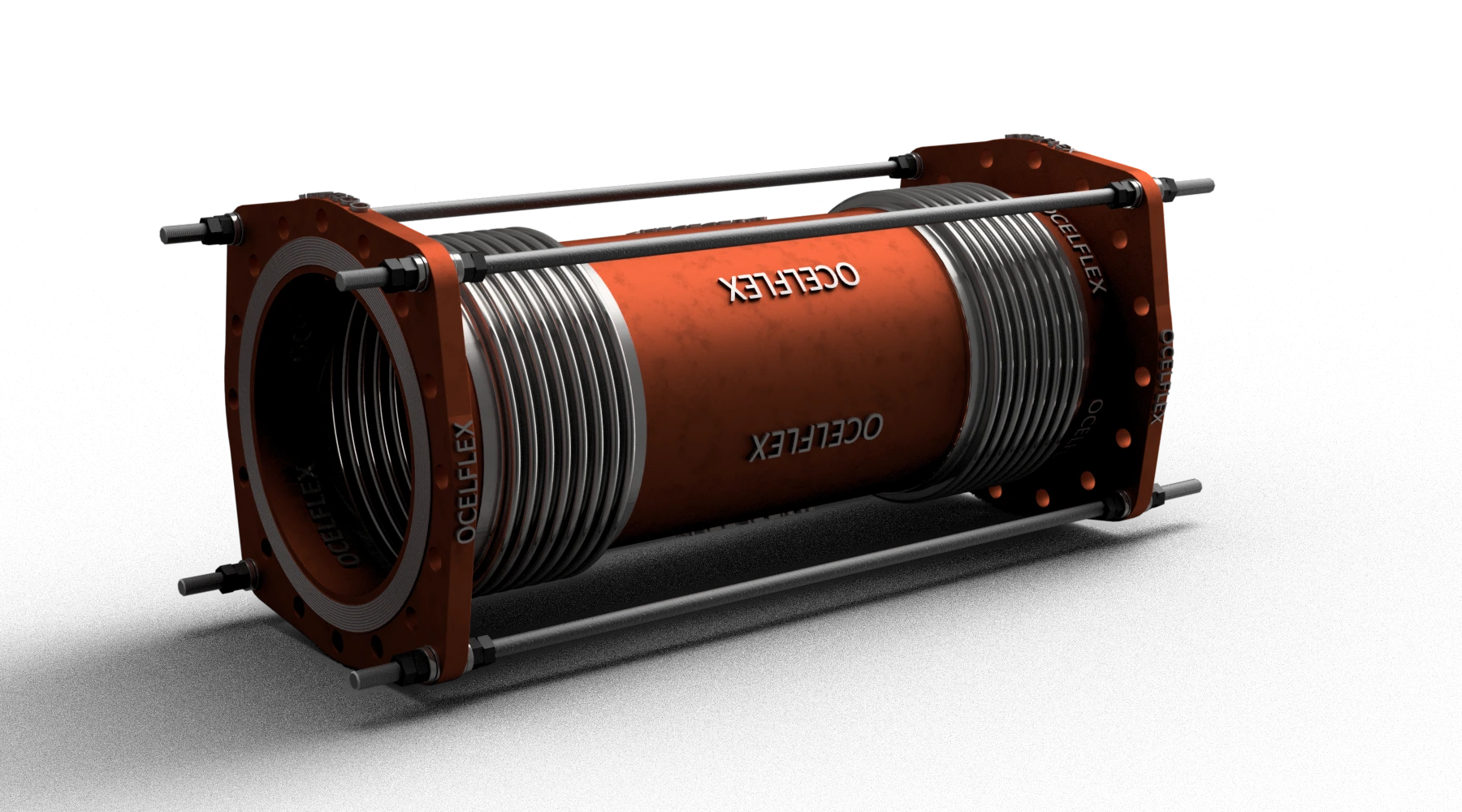
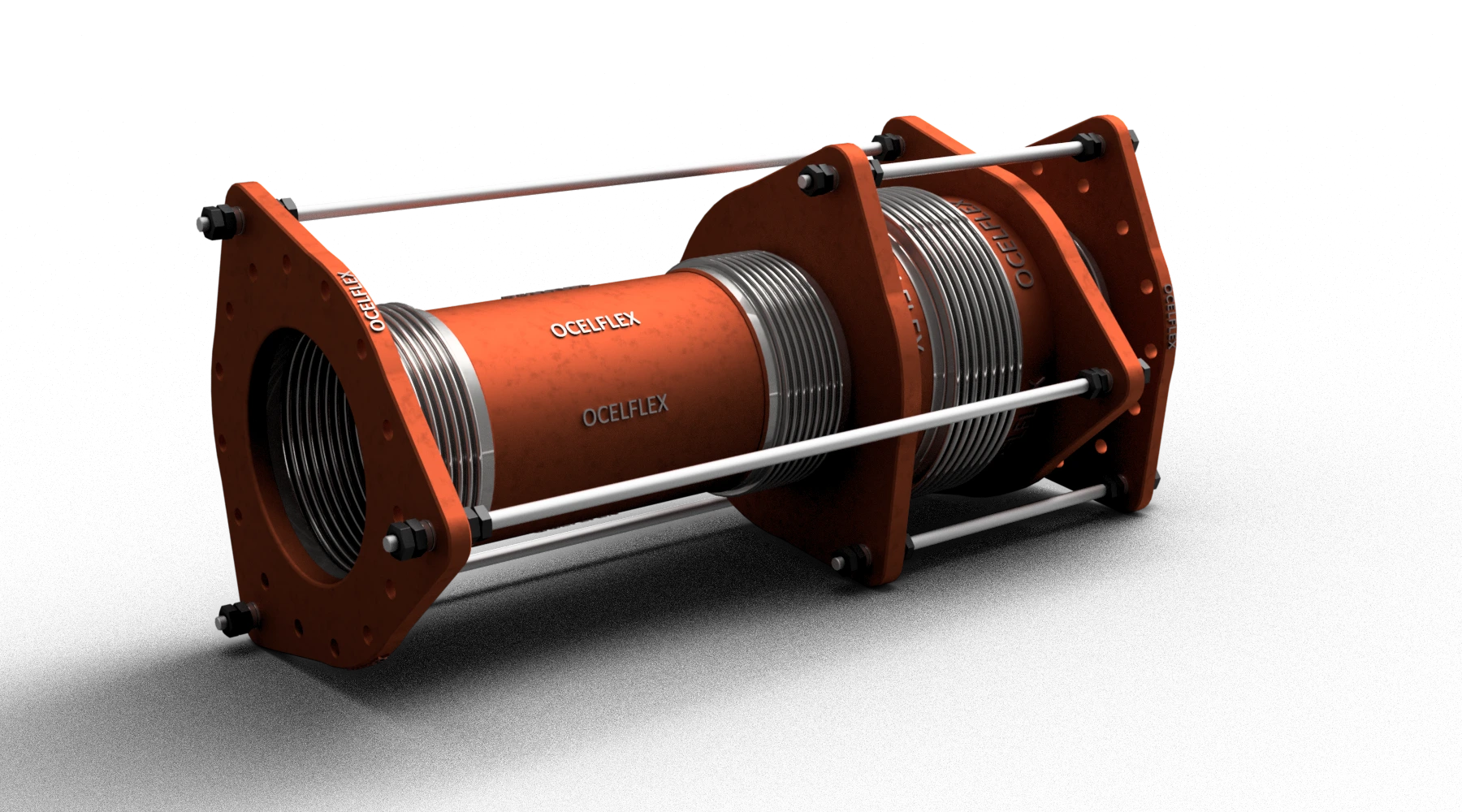
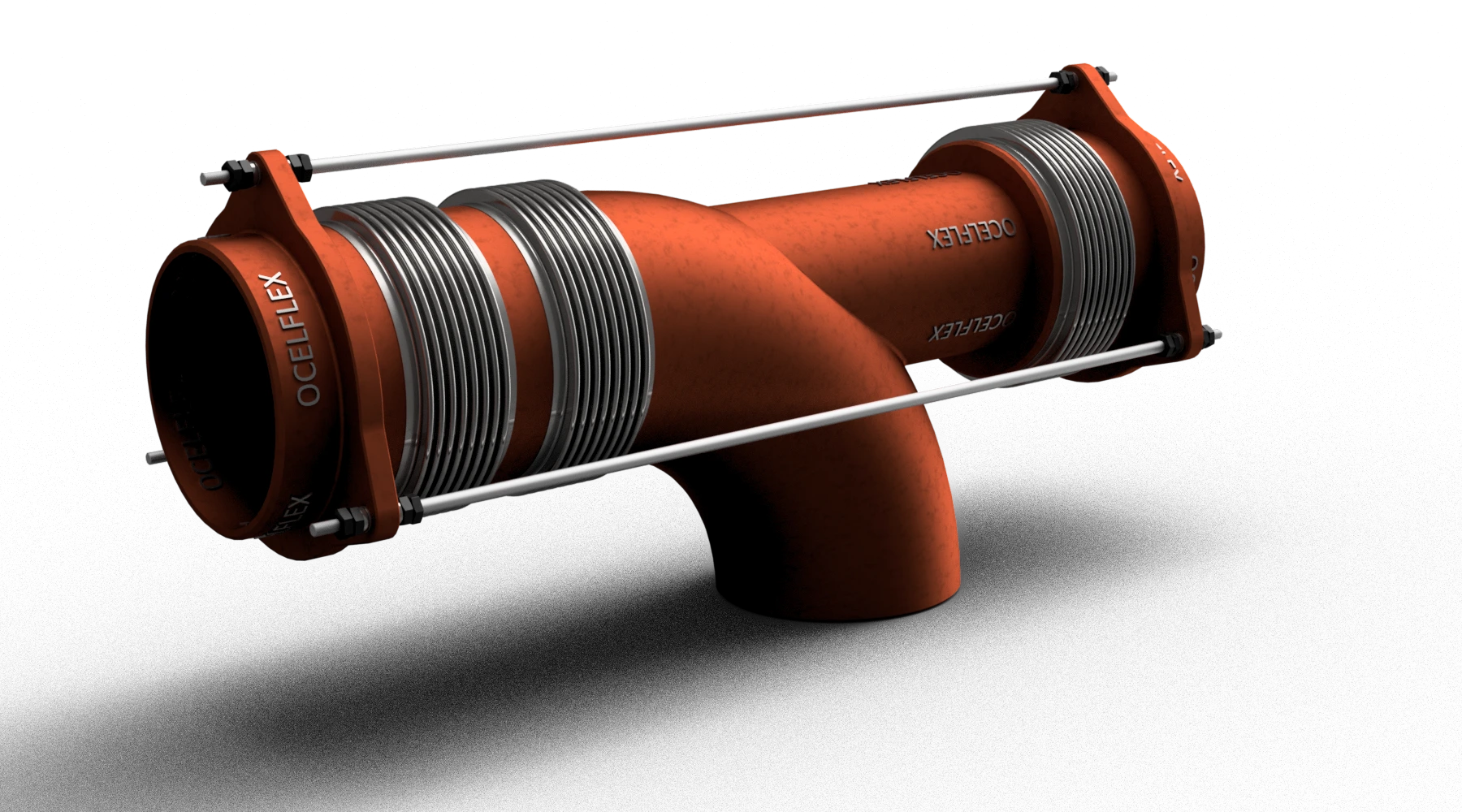
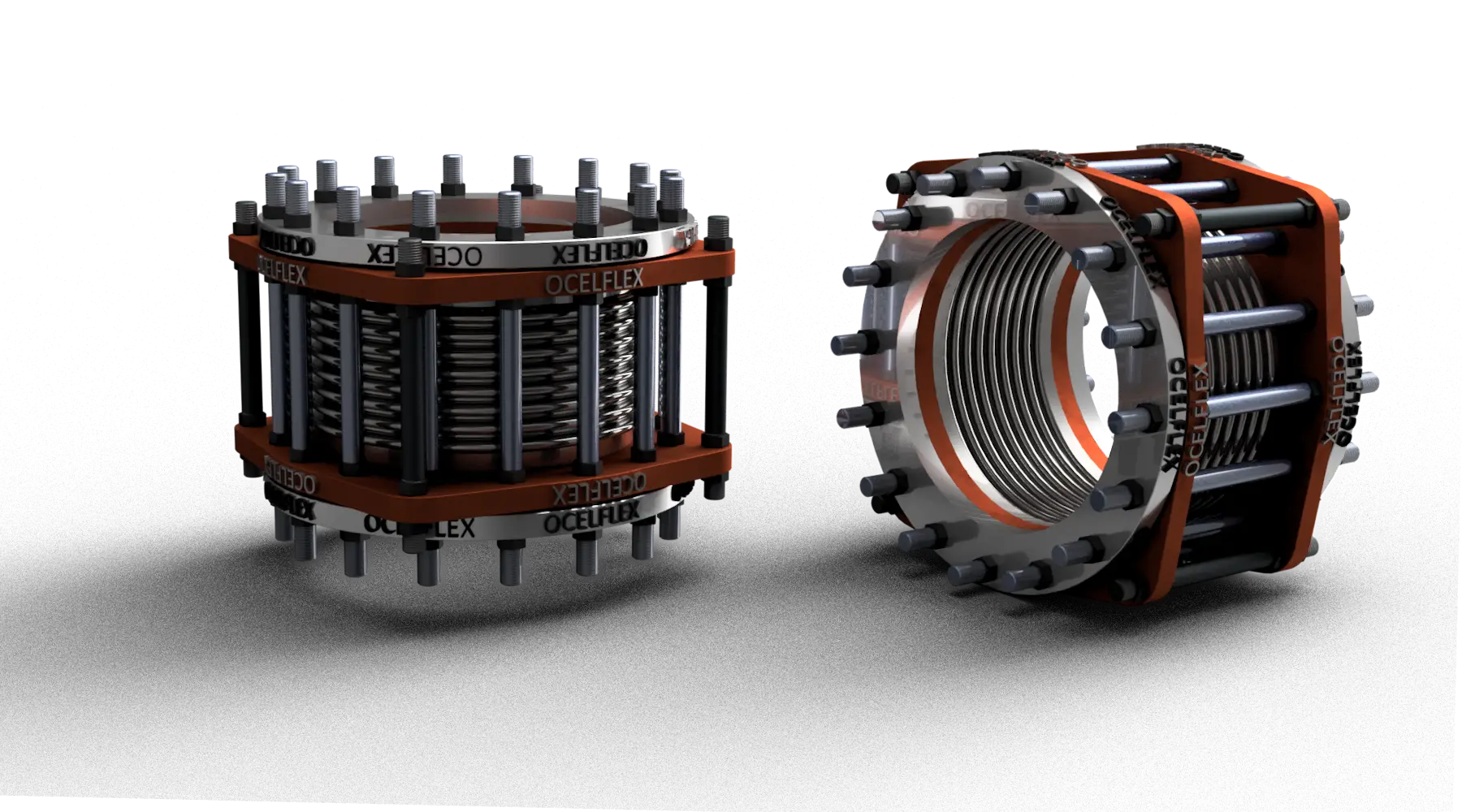
The inline pressure balanced metal expansion joint is a straight, yet sophisticated, design that incorporates two or three flexible expansion bellows arranged in series and secured with threaded tie rods. This construction offers a robust solution for managing thermal expansion, contraction, and pressure thrust in piping systems without the need for additional guides or fixed supports.
Let’s simplify how this inline pressure balanced metal expansion joints work, what goes into the construction and design of these joints and why we use them? A piping system must be engineered with ample flexibility to handle thermal expansion and contraction while offsetting the pressure thrust generated by internal pressure—often achieved with loops and offsets. Standard axial steel expansion joints are typically designed to absorb only axial movements. However, these unrestrained joints cannot counteract pressure thrust effectively without supplemental guides and fixed anchor points. In many pipeline systems, adding these supporting structural guides and fixed anchors is not feasible due to space restrictions or is more expensive.
This challenge is resolved by constructing an inline pressure balanced metal expansion joint, which consists of three critical components: the flow expansion bellows, the balancing expansion bellows, and threaded tie rods. Both the flow and balancing expansion bellows are manufactured with identical cross-sectional areas. The flow expansion bellows, often designed as a lateral metal expansion joint, connects directly to the main pipeline. When thermal expansion causes the flow expansion bellows to compress, the balancing expansion bellows extends correspondingly, neutralizing the pressure force and maintaining a constant overall volume within the joint. The outer expansion bellow has twice the effective area as the inner bellows and this allows for the balance of pressure caused by the internal unit.
Additionally, the deflection resulting from the spring forces is managed by the axial or lateral expansion joint configuration, which is engineered to absorb both lateral and axial movements. Simultaneously, the pressure thrust force is transformed into a tensile force within the tie rods, further stabilizing the system. The overall load imposed on the connected equipment is the cumulative sum of the spring forces from all the metal expansion bellows arranged in series.
As this design involves using multiple bellows together with fabricating the fittings and pipe joints in a complex design, and also considering multiple movement, pressure thrust, spring rate and other stress requirement, it is considerably costly than regular metal expansion joints. So, it is important that you select an expert manufacturer. As a top manufacturer of stainless steel expansion joints, and with years of experience in this field, we can provide the quality needed for designing and supplying such complex expansion joints.
Inline pressure balanced metal expansion joints are implemented in piping systems where pumps or turbines are not engineered to independently withstand the pressure thrust load. By integrating these joints, the pressure forces are effectively neutralized, thereby protecting critical equipment and ensuring reliable, long-term operation.
INLINE PRESSURE BALANCED METAL EXPANSION JOINT
At Ocelflex, we manufacture fittings and end connections for steel expansion joints
in accordance with international standards and custom specifications. As a leading
metal expansion joint manufacturer, we produce high-quality fittings using materials
such as stainless steel, mild steel, brass, and other alloys tailored to specific
application requirements.
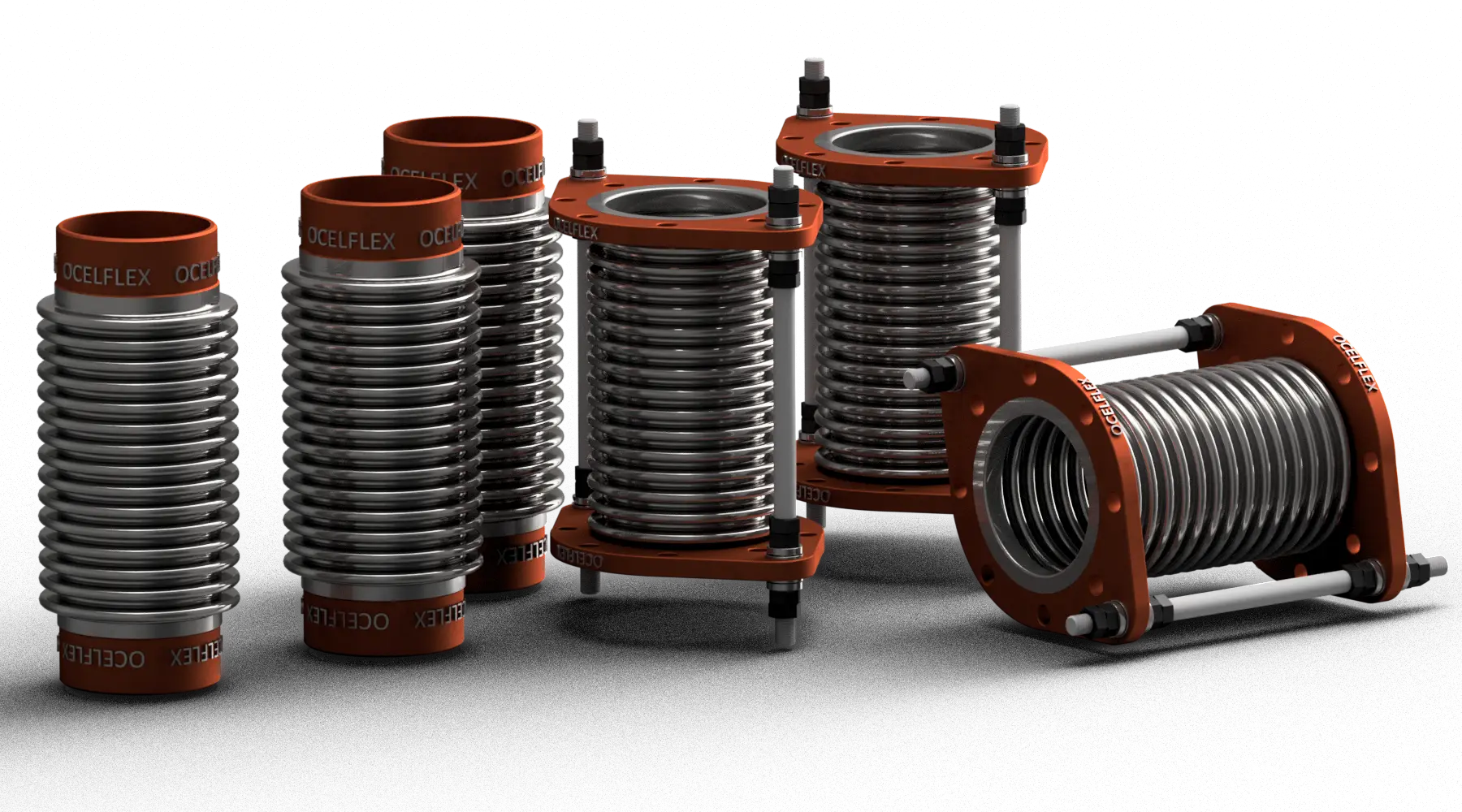
We offer a wide range of end connections such as fixed flange, vanstone fittings,
square flange, swivel flange, large union fittings, standard pipe end, customised
pipe end, grooved pipe end, fire standard pipe end, special purpose aerospace fittings
or customised fittings as per your requirement.
Our automated manufacturing processes and traceable material inspection ensure that every
component meets the demanding technical and performance standards necessary for
reliable operation in dynamic piping systems.

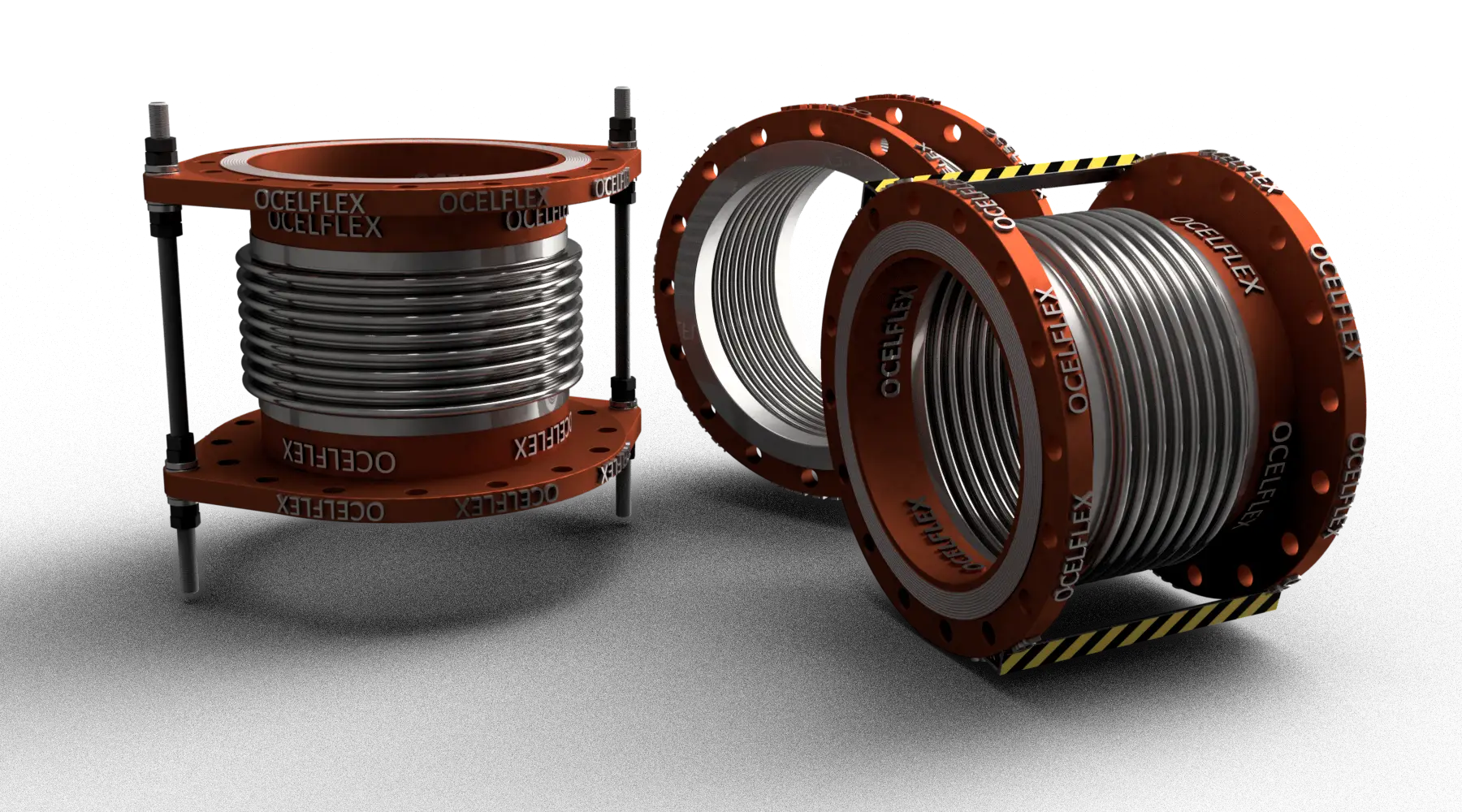
Ocelflex manufactures metal expansion joints with standard or customised flange specifications. The fixed flange fittings are welded to the joints, and are available in weld neck or customised flanges.
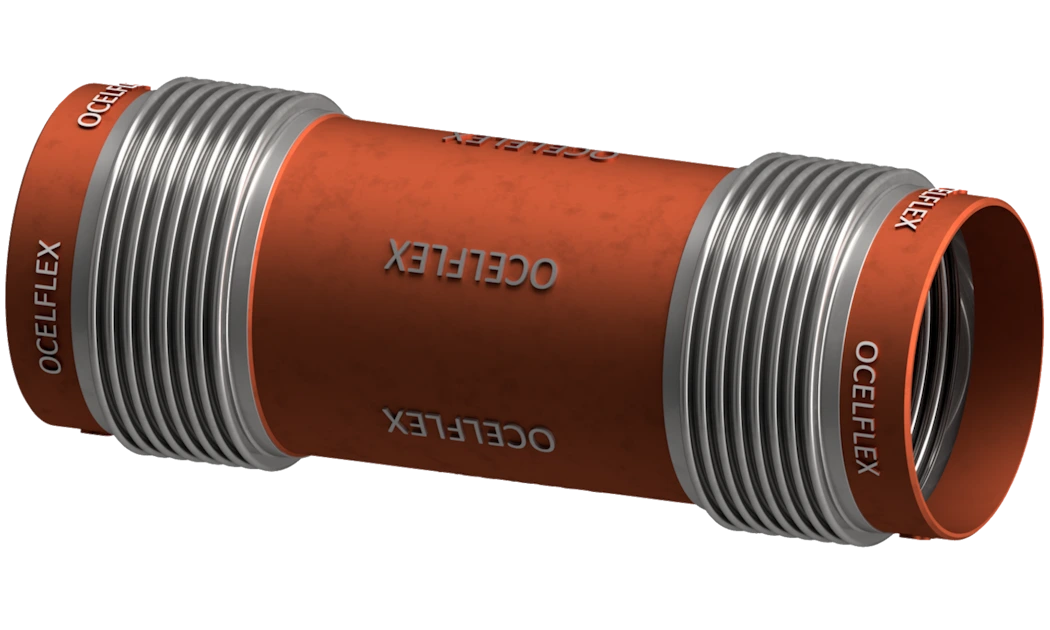
Expansion joints with weld ends or pipe ends offer a seamless connection by welding the joint directly to the piping system. This design minimizes the risk of leaks and provides a high-integrity, permanent solution—particularly advantageous in high pressure and high temperature applications.
These joints are engineered to absorb both lateral and axial movements, providing versatile flexibility for complex pipeline systems.
Designed to restrain pressure thrust, they significantly reduce the need for additional piping guides and fixed anchor points, leading to cost savings in installation and maintenance.
By effectively balancing internal forces, these joints alleviate external loads on turbine pipelines, enhancing system integrity and prolonging turbine and pump life.
Ocelflex manufactures pressure balanced metal expansion joints from sizes ranging :
From 1 1/2 inch NB ( DN 40 ) to 60 inch ( DN 1500 ).
We can manufacture expansion bellows of customised lengths for any size. Our standard lengths are :
For Diameters less than 24 inch, lengths upto 60 inch.
For Diameters from 24 inch to 60 inch, lengths upto 180 inch.
Depending upon the design, our pressure balanced expansion joints can work at operating temperatures ranging form - 270 ℃ to 1000 ℃.
Ocelflex's pressure balanced metal expansion joints are available in single ply and multiply design, for upto 40 bar pressure rating and full vacuum conditions.
Wide range of materials like :
Stainless Steel 304 (1.4301),
Stainless Steel 304L (1.4307)
Stainless Steel 316 (1.4401),
Stainless Steel 316L (1.4404)
Stainless Steel 321 (1.4541),
Inconel, Hastelloy, Monel
EJMA X, ASME Sec. VIII, Div. 1, ASME B31.3, ASME B31.1, EN 14917, EN 13480, EN 13445
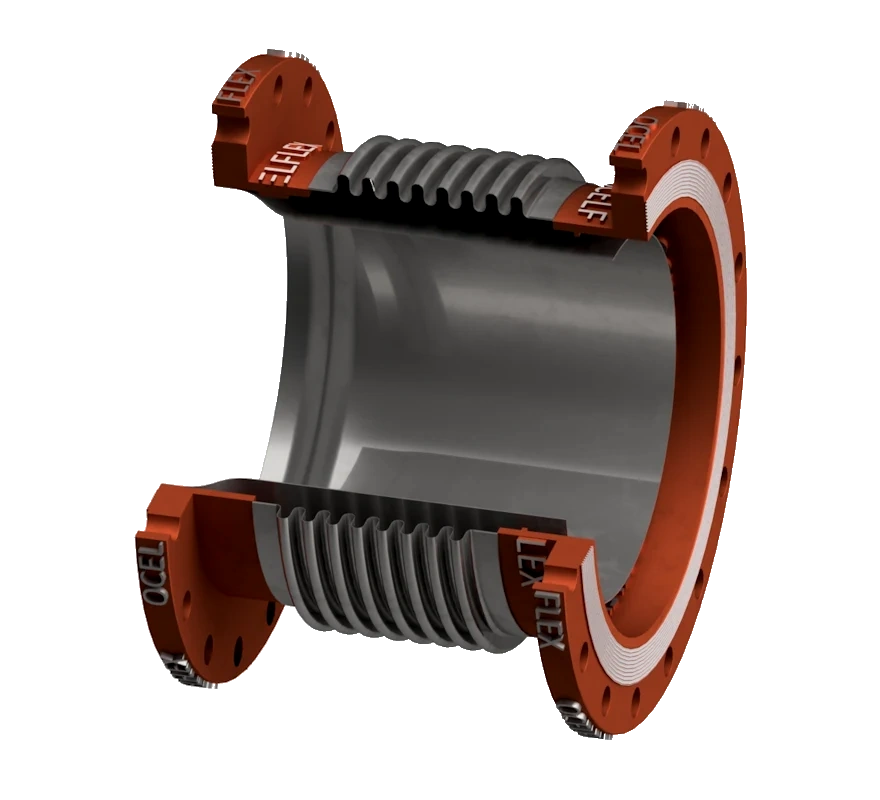
Ocelflex recommends to use inner sleeve in applications where there are high frequency vibrations caused by the inner media flow or where the inner media is corrosive enough to damage the inner thin wall of the metal expansion bellow.
Inner sleeves or liners minimizes the pressure drop throughout the expansion joint.
At Ocelflex we design the inner sleeves keeping into consideration that it should not restrict the movement.
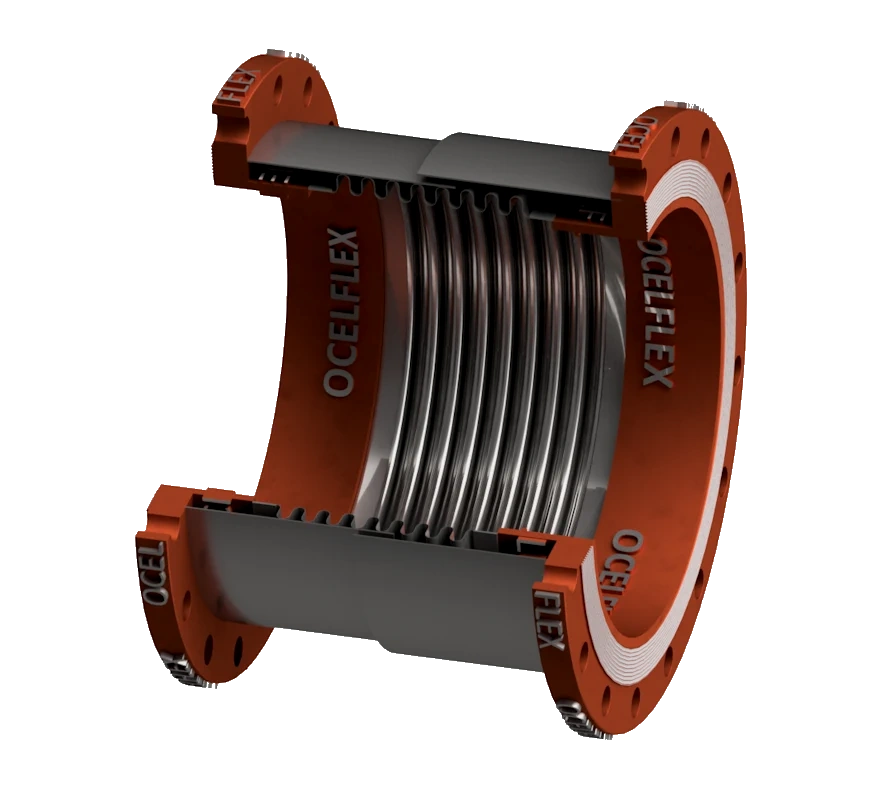
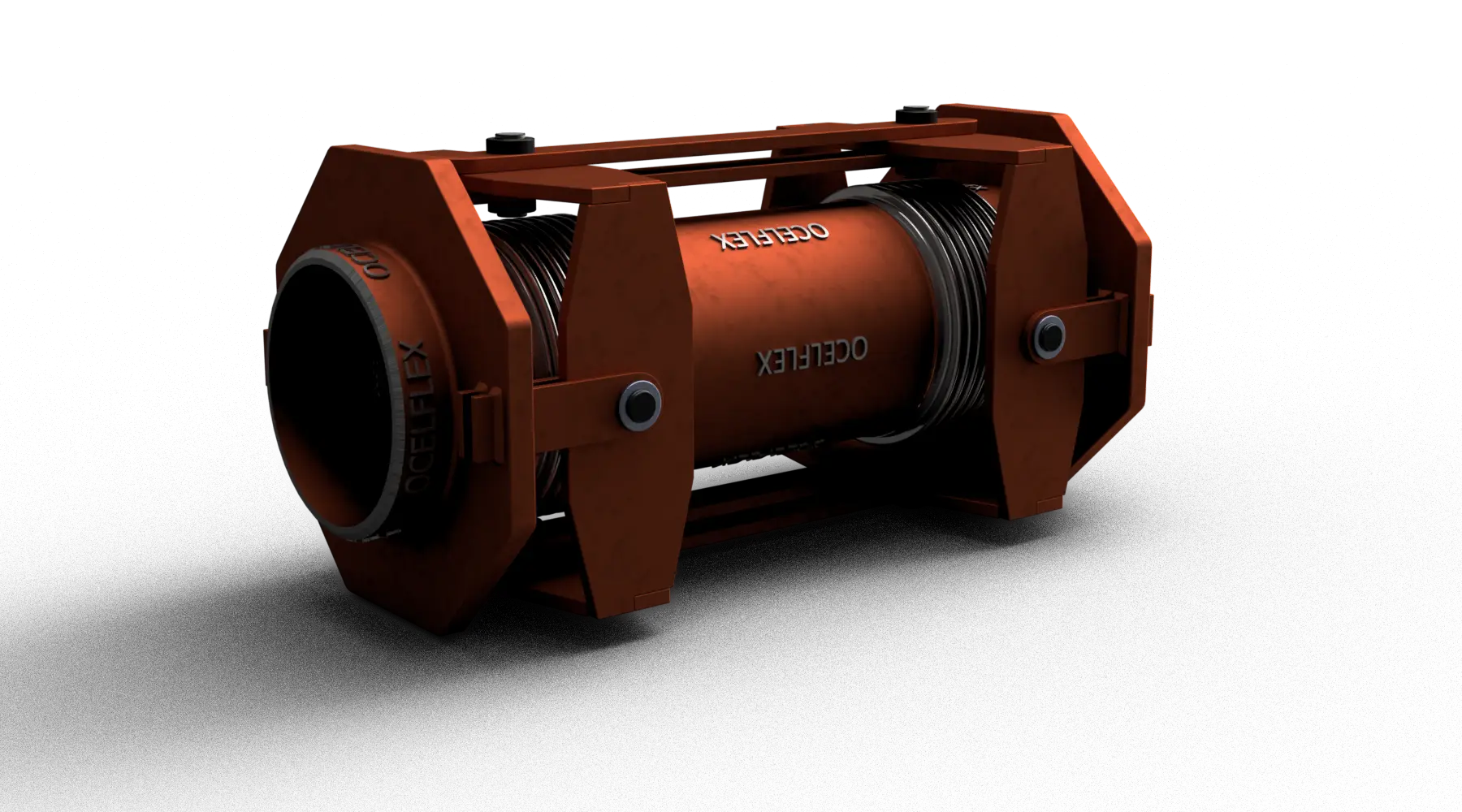
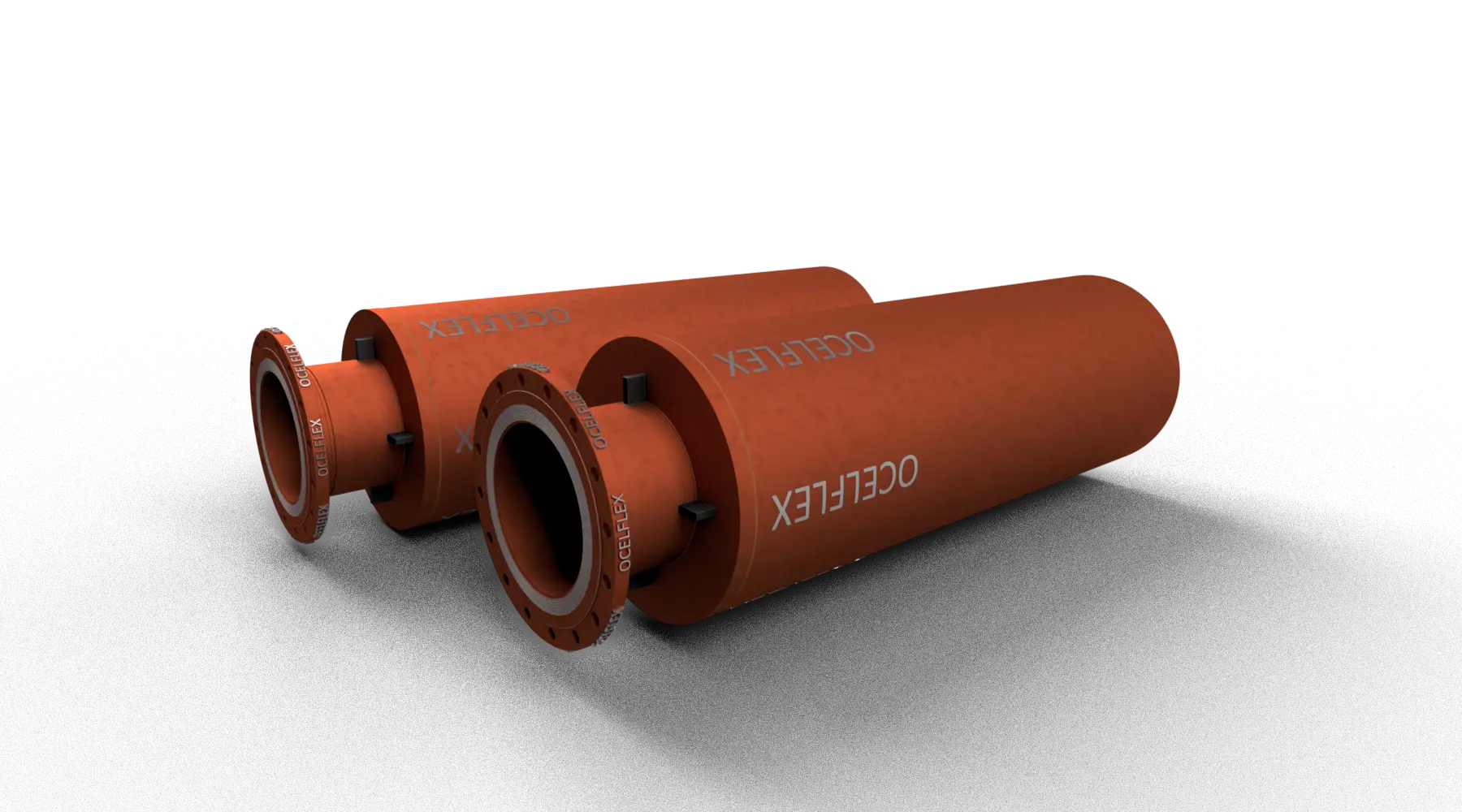
Given the delicate nature of the thin walled metal bellow element we recommend metal outer covers to protect these joints during plant construction and maintenance activities.
This cover also safeguards the expansion bellows from weld splatter, falling tools or parts, and potential damage from nearby accidents.
When designing metal expansion joints with an outer cover, it is crucial to account for any movement restrictions to ensure optimal performance.
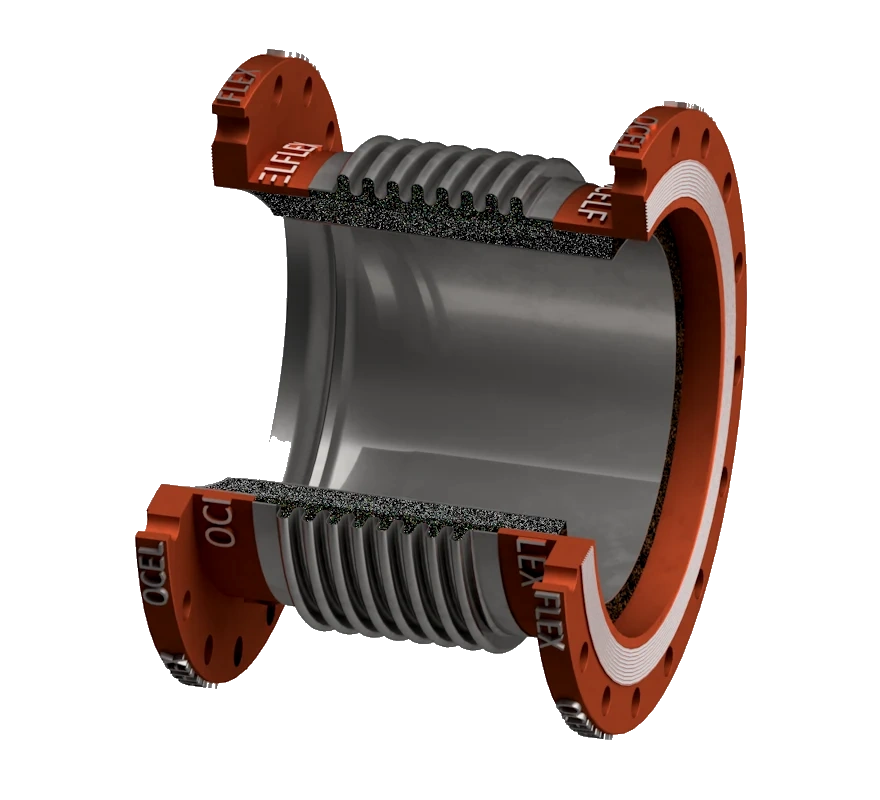
In applications where the inner media of a steel expansion joint carries significant particulate matter, these particles can accumulate in the bellows' convolutions, potentially causing corrosion or restricting movement. To address this issue, a protective particulate barrier is employed.
Typically made from fiberglass or ceramic fiber—materials well-suited for high-temperature environments—this barrier is installed without compromising the functionality of the steel expansion joint.
The barrier also serves as a thermal insulator, thereby enhancing the overall durability and performance of the joint in demanding industrial settings.
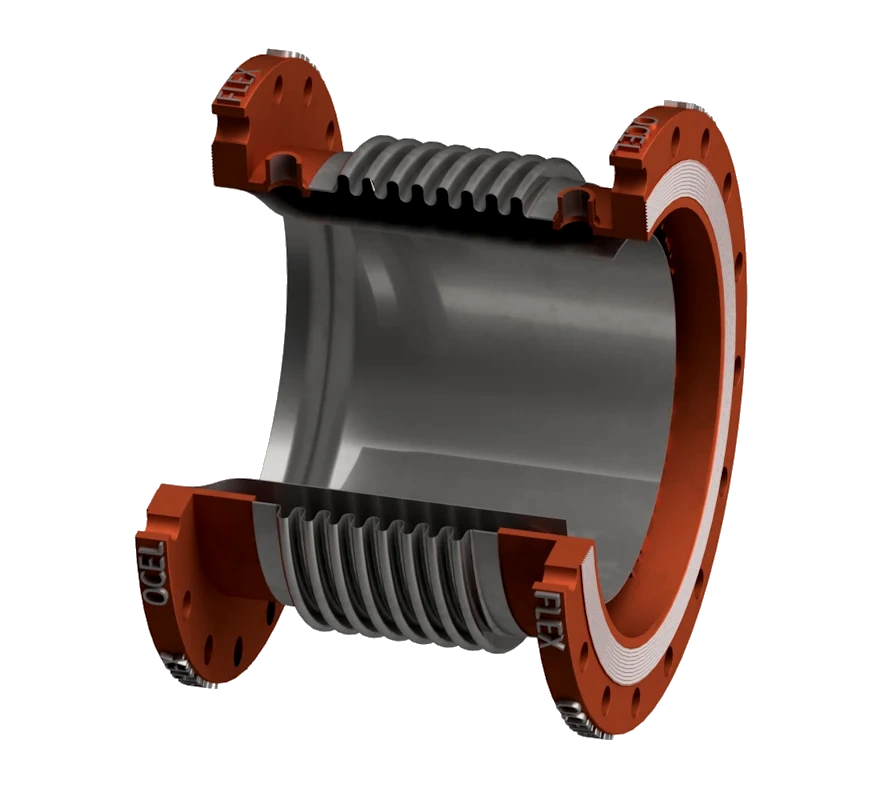
The purge connections are designed to allow the controlled flow of purging media, ensuring the joint remains free from contaminants and maintains optimal performance.
Incorporating a purge connection into a metal expansion joint requires meticulous design to ensure that the additional piping and fittings do not impede the joint’s primary function—accommodating movement.
By using steam or air as the purge media, the purge connections can help in stabilizing temperature gradients within the metal expansion joint.
 Expansion Joint
Understand the most commonly used technical terms when referring to Metal Expansion Joints, Rubber Expansion Joint, Fabric and PTFE Expansion Joint.
 Expansion Joint
Know what parameters to consider when choosing the right expansion joint for your application.
 Expansion Joint
Understand the axial, lateral, angular and torsional movements an expansion joint is designed to compensate, based on different expansion joint design specifications.
 Expansion Joint
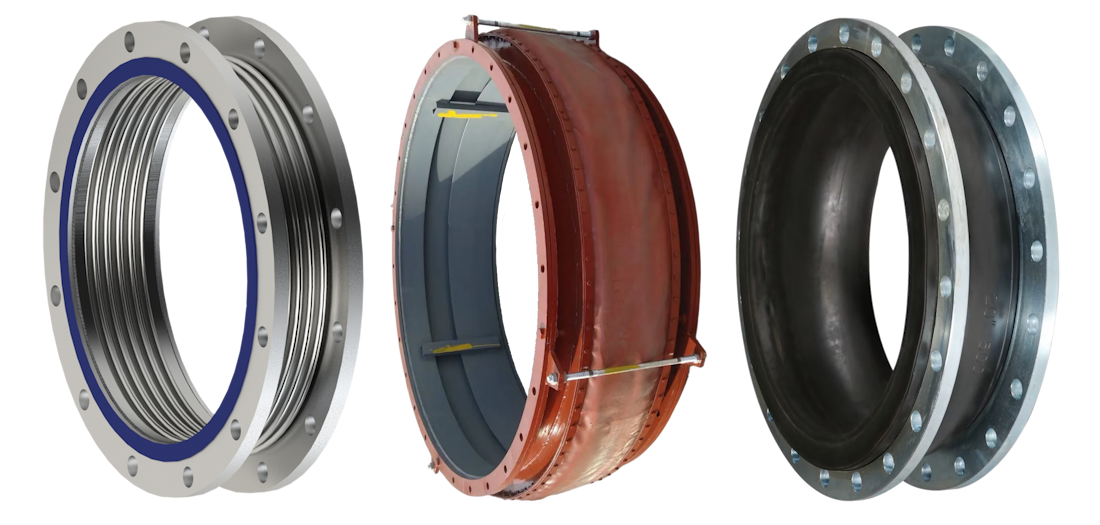
Confused which type of expansion joint is right for you? This guide will help you understand the difference between fabric expansion joints, metal expansion joints and rubber expansion joints.