Expansion Joint Terminology
Understand the most commonly used technical terms when referring to Metal Expansion Joints, Rubber Expansion Joint, Fabric and PTFE Expansion Joint.
Read More


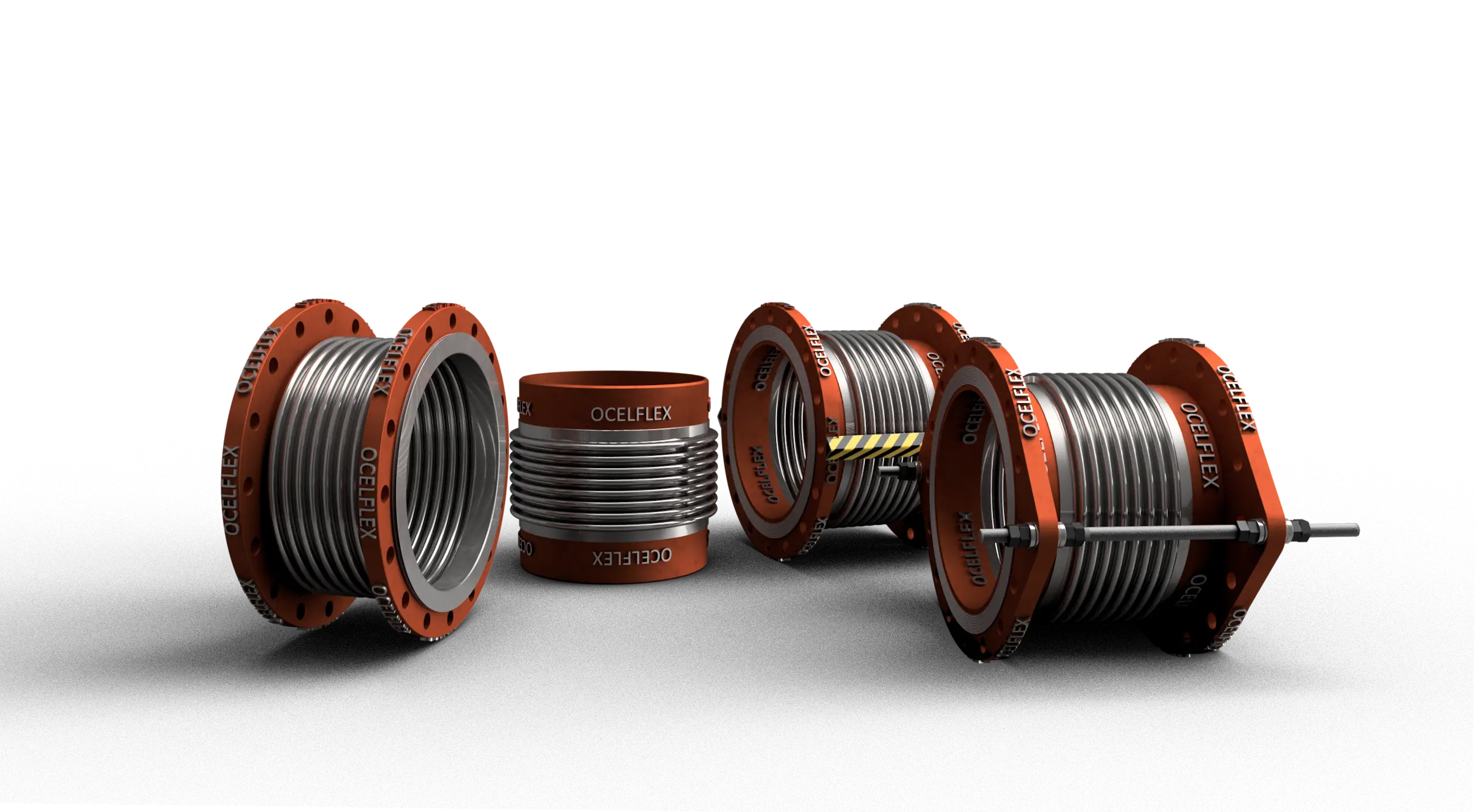
Unrestrained single metal expansion joints, also known as axial metal expansion joints, are engineered to absorb expansion and contraction along a pipe's axis. Unrestrained stainless steel expansion joints are designed to handle all three types of movements — axial, lateral, and angular. While they can absorb minor lateral and angular shifts, their primary function is to accommodate axial displacement. If the application involves compensation of lateral movement, then universal expansion joints are preferred.
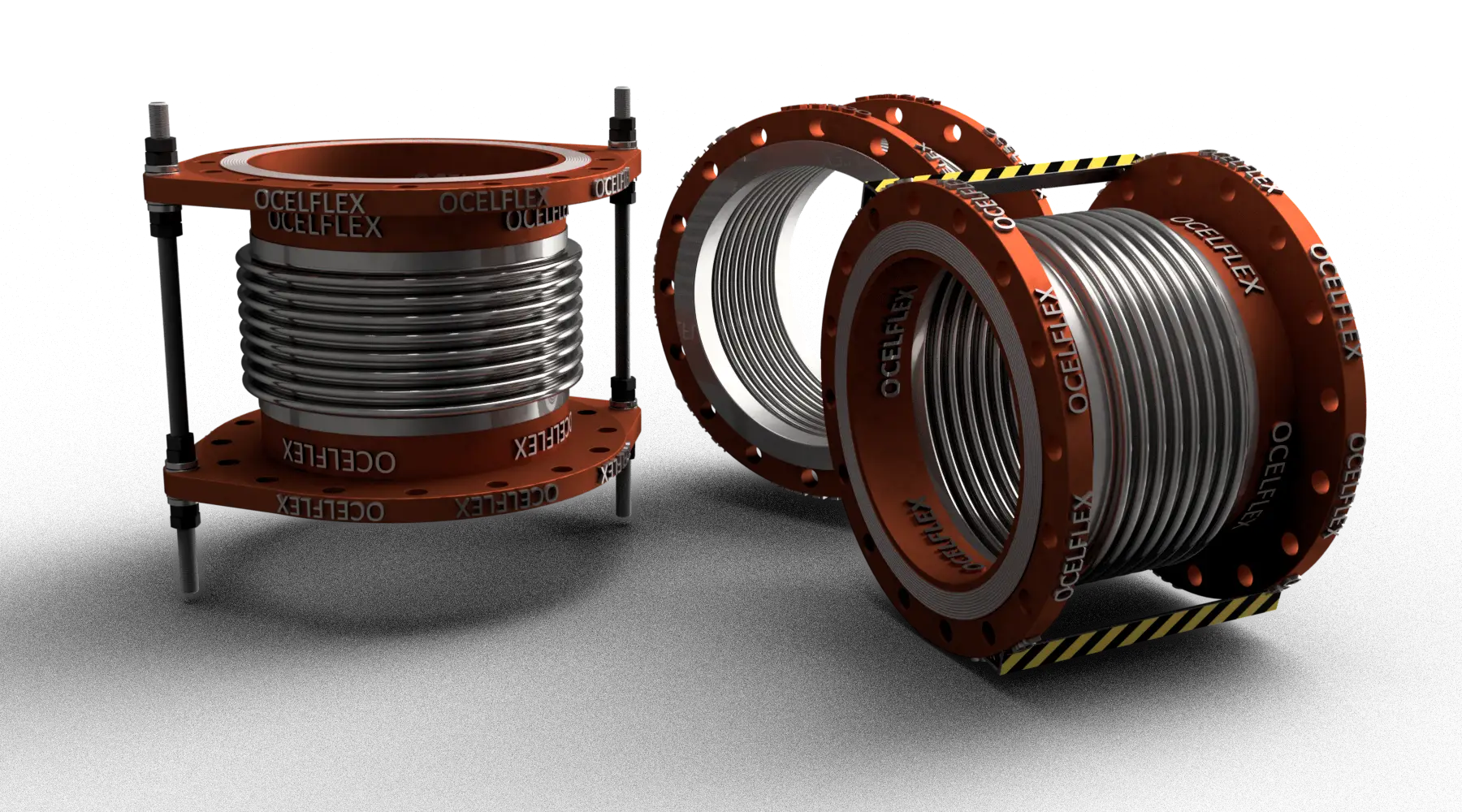
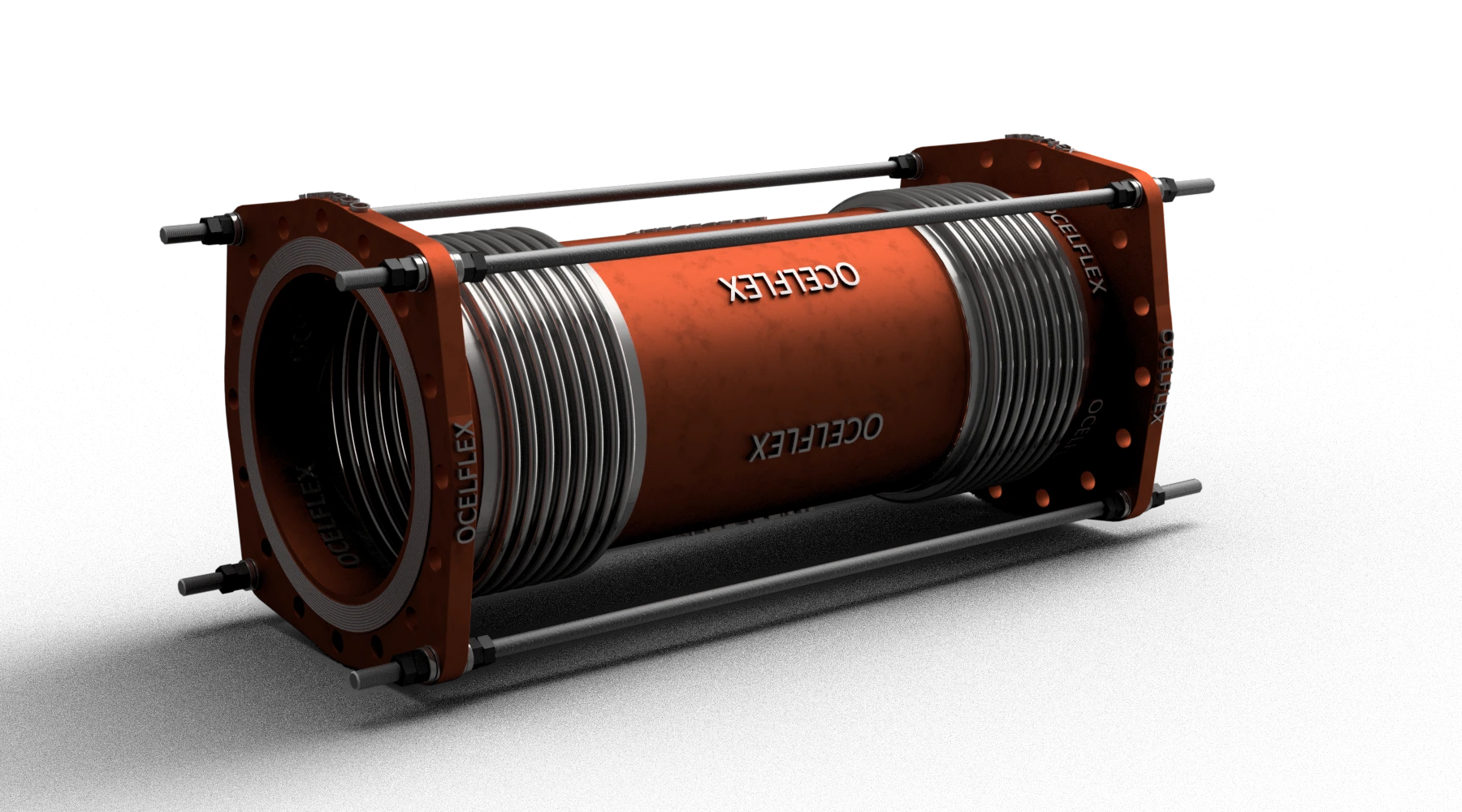
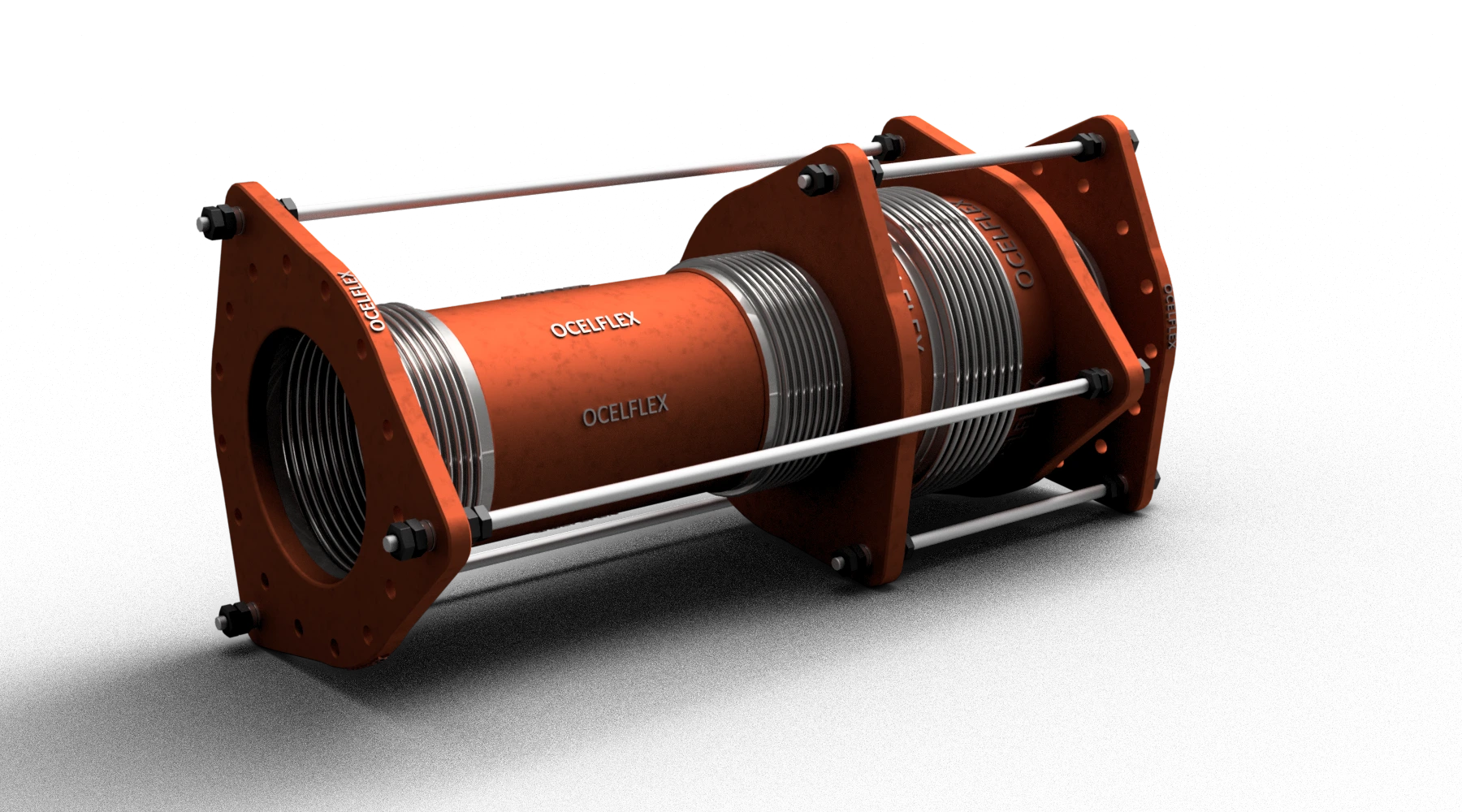
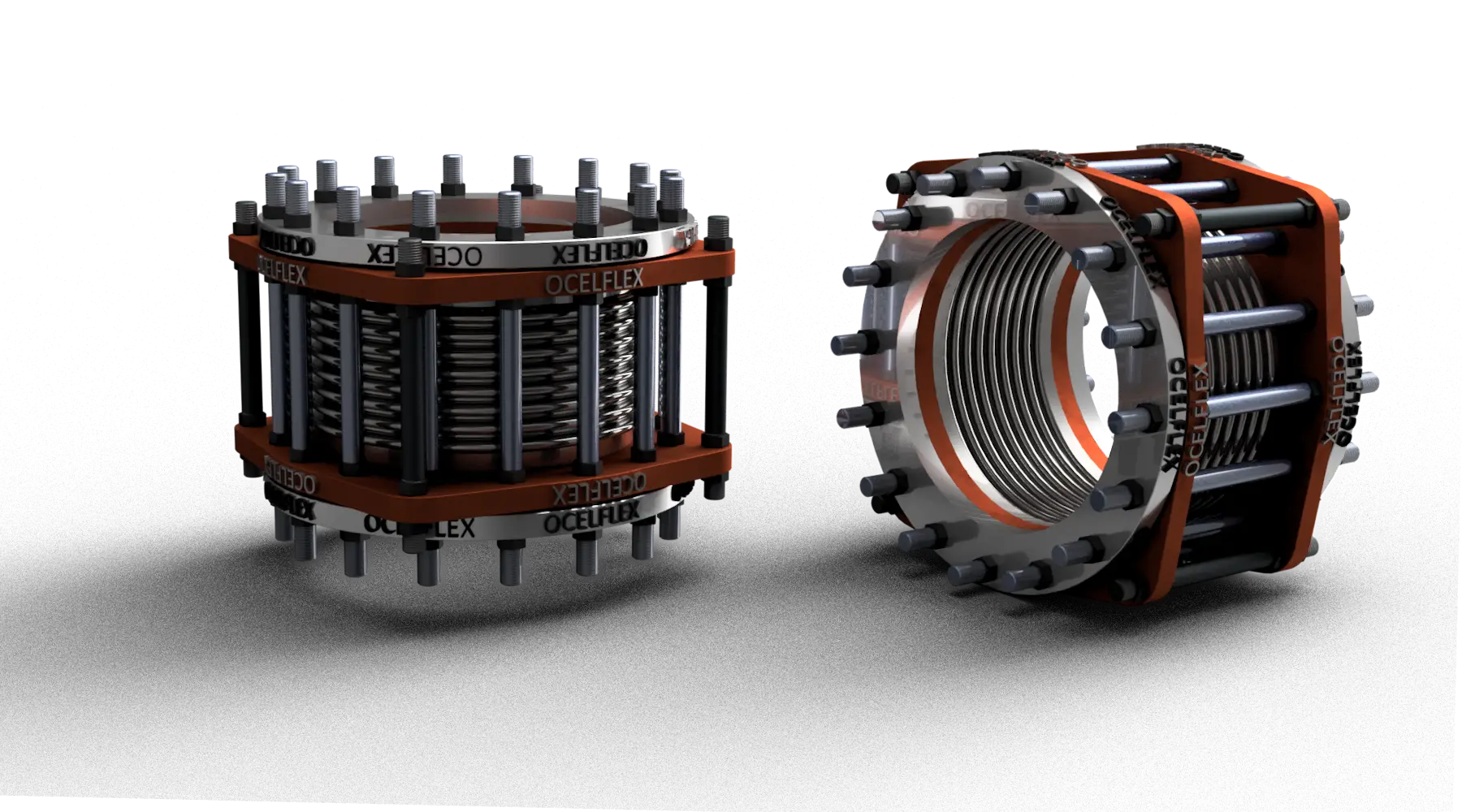
In order to eliminate main anchors, restrained or tied single metal expansion joints are used. These expansion joints are constructed with lugs and tie rods that can carry the pressure thrust of the system. Tie Rods are specially designed threaded rods, fitted to metal lugs / ears using nuts and washers, attached to the metal expansion joint assembly. For tied axial expansion joints, the axial movement capability is minimised, however lateral and axial movements can be absorbed easily.
SINGLE AXIAL METAL EXPANSION JOINT
At Ocelflex, we manufacture fittings and end connections for steel expansion joints
in accordance with international standards and custom specifications. As a leading
metal expansion joint manufacturer, we produce high-quality fittings using materials
such as stainless steel, mild steel, brass, and other alloys tailored to specific
application requirements.
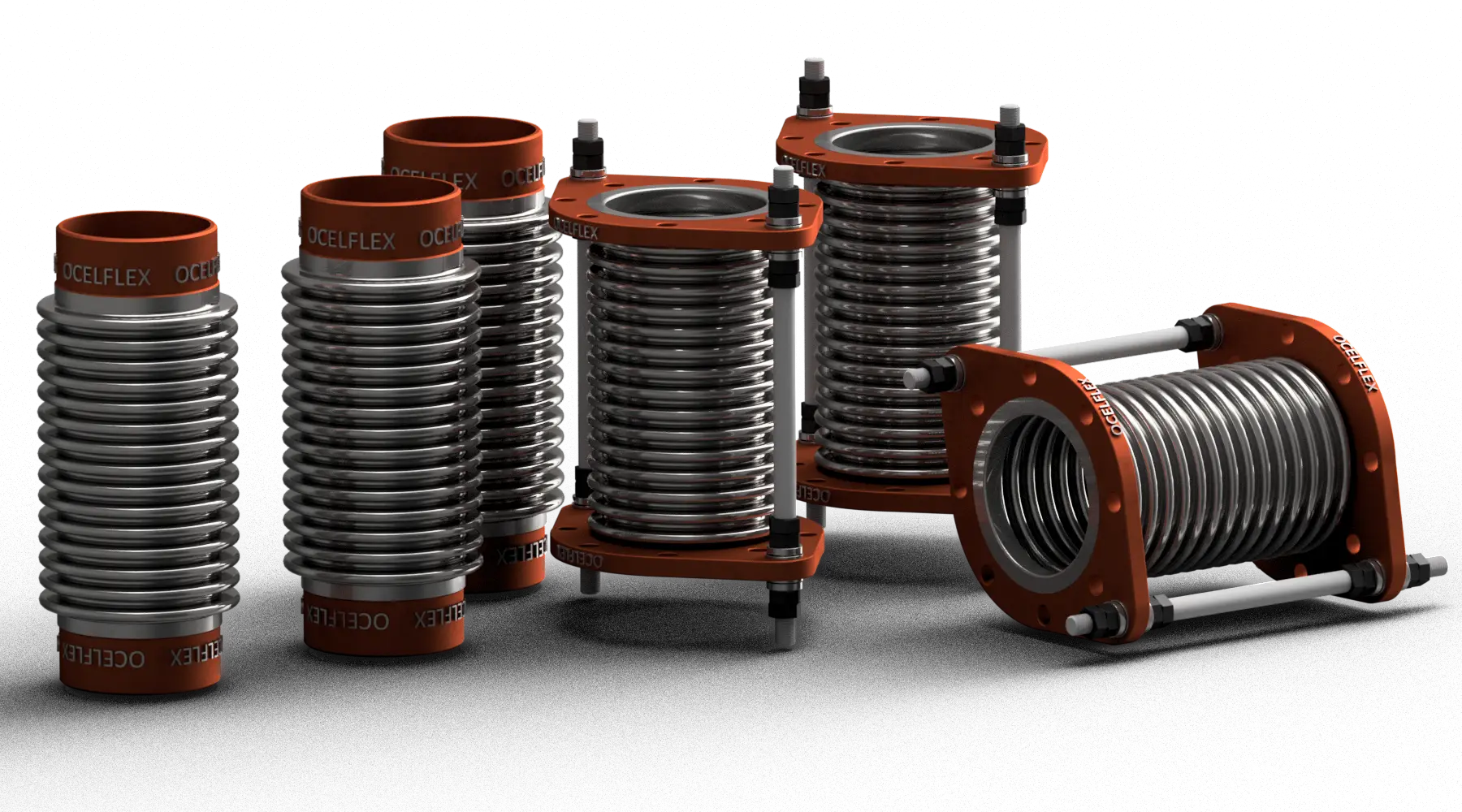
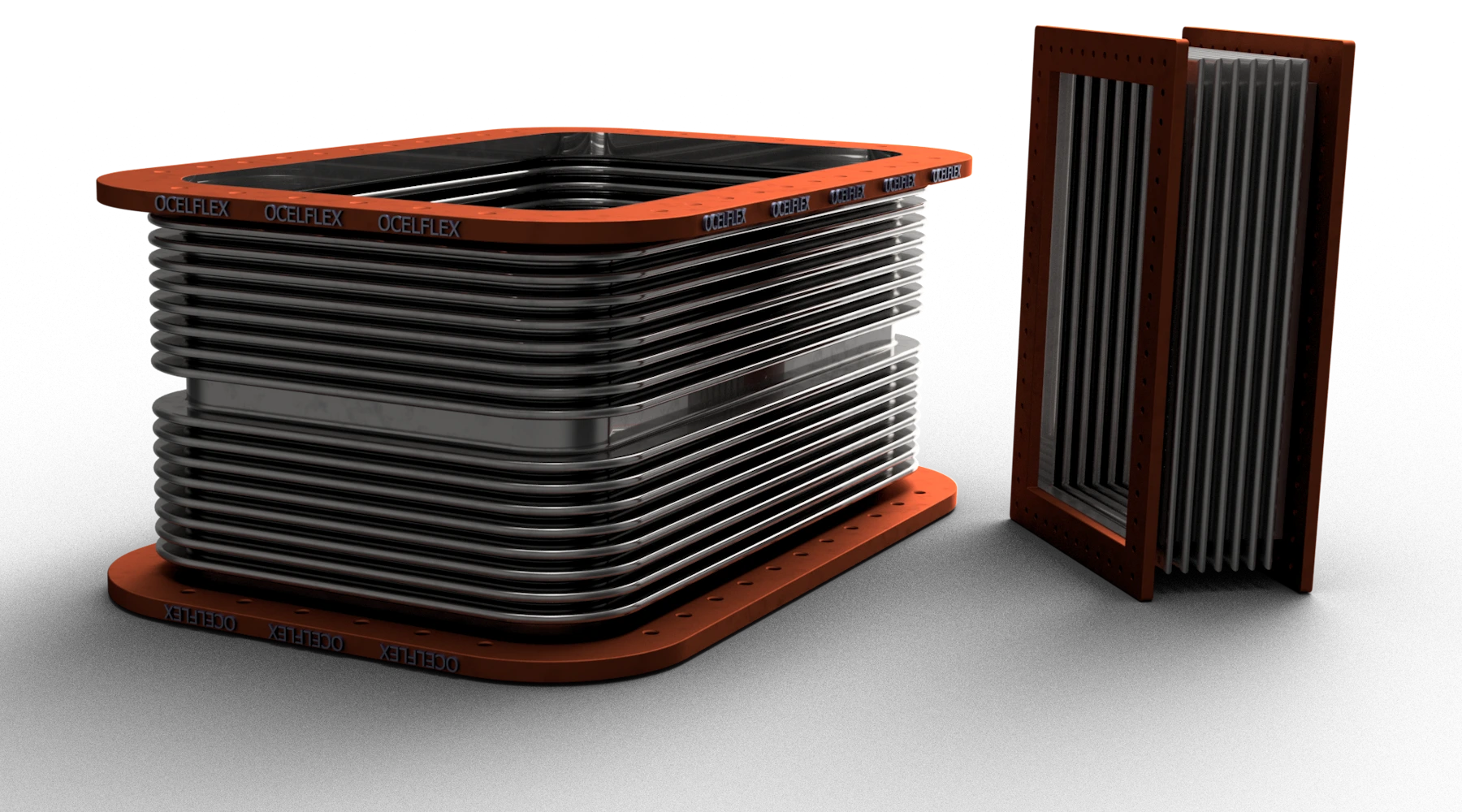
We offer a wide range of end connections such as fixed flange, vanstone fittings,
square flange, swivel flange, large union fittings, standard pipe end, customised
pipe end, grooved pipe end, fire standard pipe end, special purpose aerospace fittings
or customised fittings as per your requirement.
Our automated manufacturing processes and traceable material inspection ensure that every
component meets the demanding technical and performance standards necessary for
reliable operation in dynamic piping systems.

Ocelflex manufactures metal expansion joint with standard or customised flange specifications. The flange fittings are welded to the metal expansion joints.
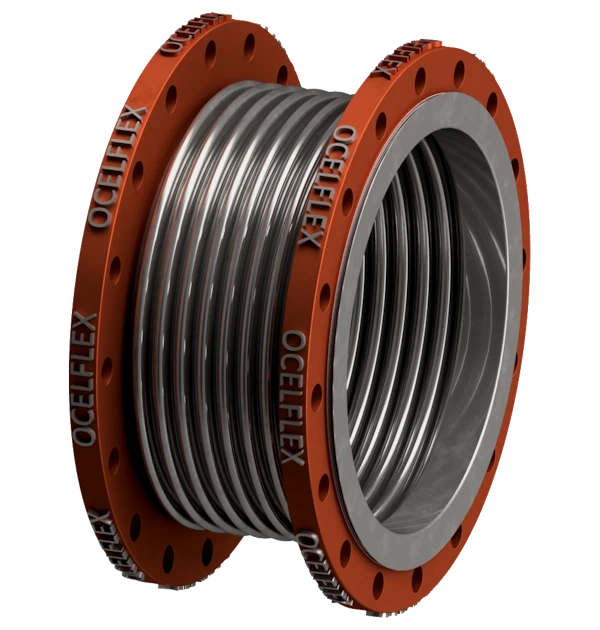
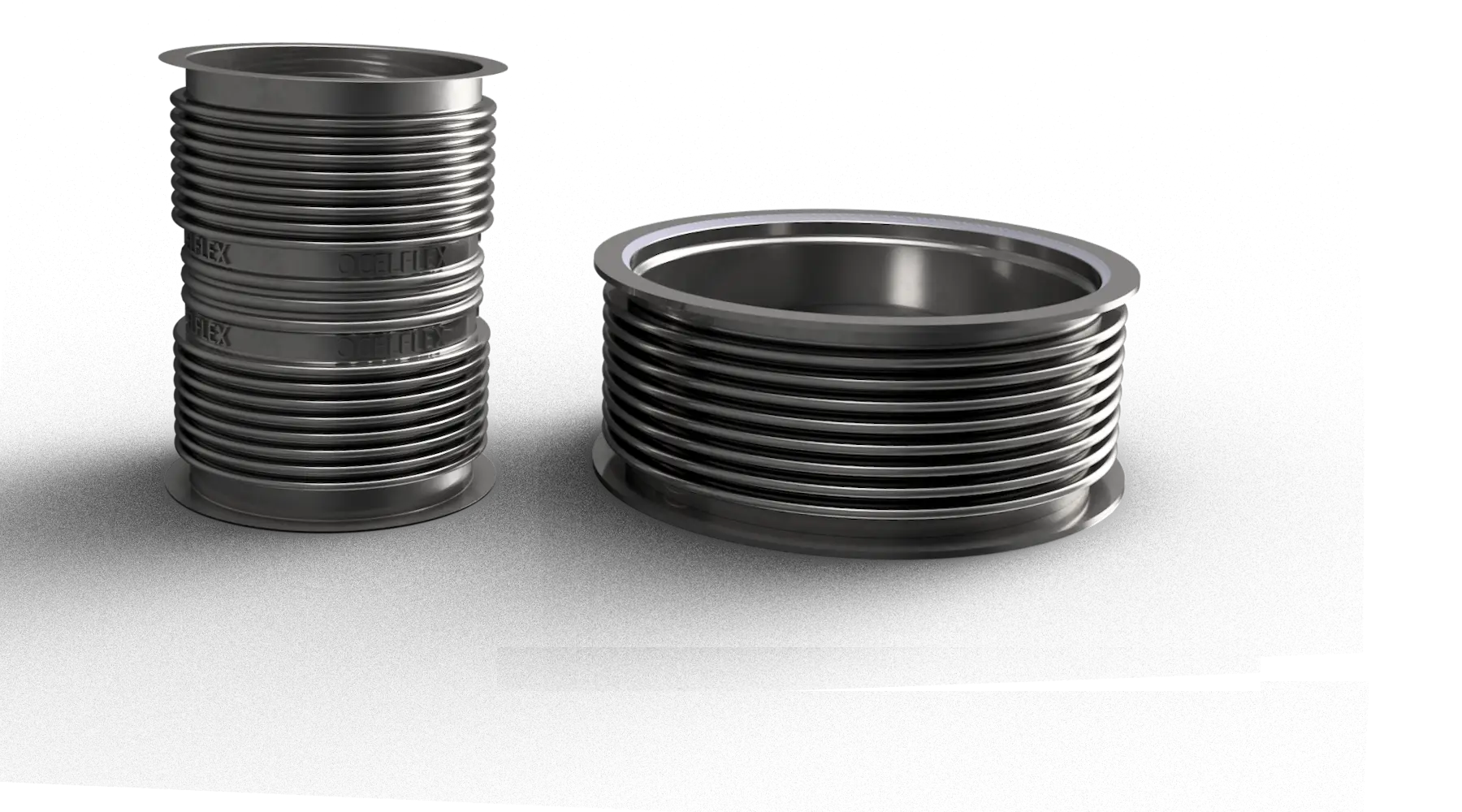
During forming, the inner steel tube is extruded and flared once the flanges are in place, resulting in what is commonly known as a Swivel Flange or Vanstone metal expansion joint. This design allows the flanges to rotate easily, which is particularly advantageous when mating flanges have misaligned bolt holes. Additionally, the continuous contact between the inner media and the bellows material provides a cost-effective solution for handling corrosive media without using expensive material for end fittings, yet ensuring both durability and reliable performance.
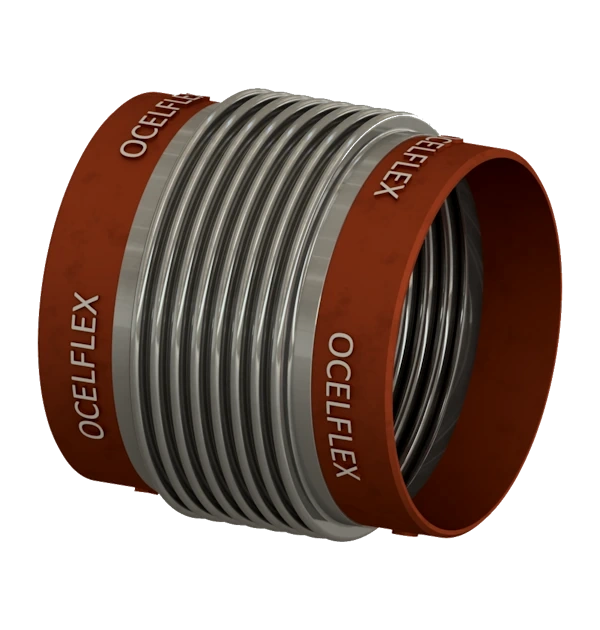
Expansion joints with weld ends or pipe ends offer a seamless connection by welding the joint directly to the piping system. This design minimizes the risk of leaks and provides a high-integrity, permanent solution—particularly advantageous in high pressure and high temperature applications.
Single Metal Expansion Joints feature a single-bellows design with end fittings, enabling straightforward installation and minimal maintenance. Ocelflex's compact profile ensures that precision-crafted metal expansion joints can reliably accommodate in tight piping configurations without sacrificing performance or durability.
Compared to other more complex stainless steel expansion joint designs, these joints offer a more cost-effective solution.
Additionally, the design will perform the same even on altering the flow direction. This unique capability preserves the efficiency of the piping system and maintains consistent operational standards under varying conditions.
Good. Axial expansion joints are recommended for large axial movements.
Moderate. Minimum lateral movement is advised for this metallic expansion joints.
Moderate. This metallic expansion joints can absorb minor angular movements.
Ocelflex manufactures single axial metal expansion joints from sizes ranging :
From 1 1/2 inch NB ( DN 40 ) to 60 inch ( DN 1500 ).
We can manufacture expansion bellows of customised lengths for any size. Our standard lengths are :
For Diameters less than 24 inch, lengths upto 20 inch.
For Diameters from 24 inch to 60 inch, lengths upto 24 inch.
Depending upon the design, our single axial expansion joints can work at operating temperatures ranging form - 270 ℃ to 1000 ℃.
Ocelflex's single axial metal expansion joints are available in single ply and multiply design, for upto 40 bar pressure rating and full vacuum conditions. We can customise expansion joints for higher pressure ratings, depending upon your requirement.
Wide range of materials like :
Stainless Steel 304 (1.4301),
Stainless Steel 304L (1.4307)
Stainless Steel 316 (1.4401),
Stainless Steel 316L (1.4404)
Stainless Steel 321 (1.4541),
Inconel, Hastelloy, Monel
EJMA X, ASME Sec. VIII, Div. 1, ASME B31.3, ASME B31.1, EN 14917, EN 13480, EN 13445
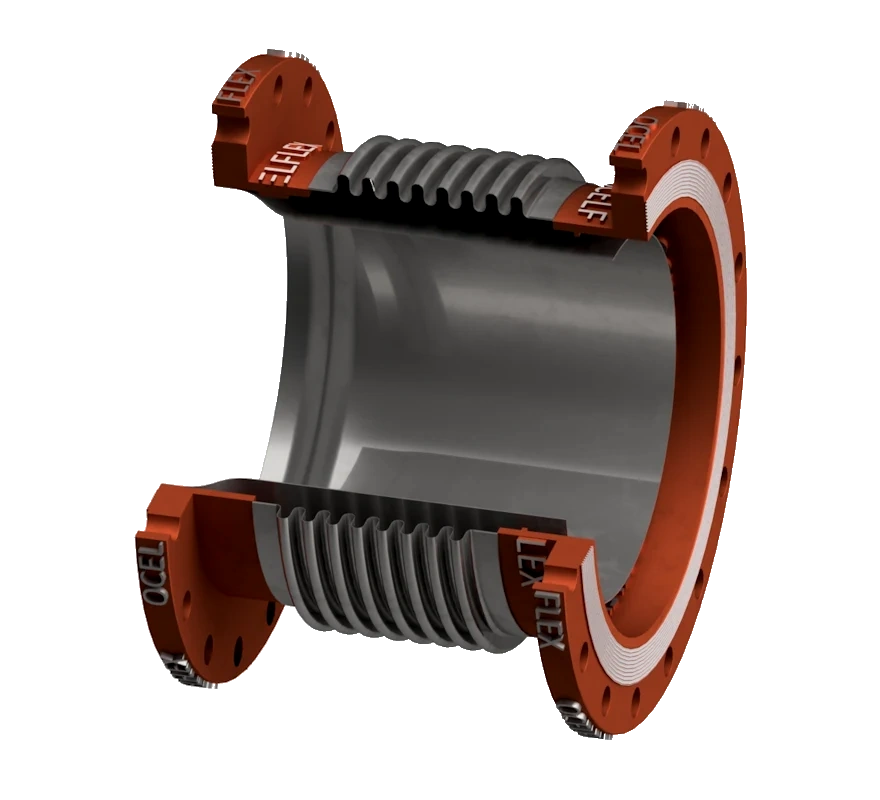
Ocelflex recommends to use inner sleeve in applications where there are high frequency vibrations caused by the inner media flow or where the inner media is corrosive enough to damage the inner thin wall of the metal expansion bellow.
Inner sleeves or liners minimizes the pressure drop throughout the expansion joint.
At Ocelflex we design the inner sleeves keeping into consideration that it should not restrict the movement.

Limit rods are for protection of the single expansion joint in case of anchor failure.
The threaded rods are fixed at the maximum movement points and so restrain the excess movements which can be caused due to pressure and forces caused during anchor failure.
These rods are usually manufactured in mild steel, but can also be manufactured in stainless steel for corrosive environments.
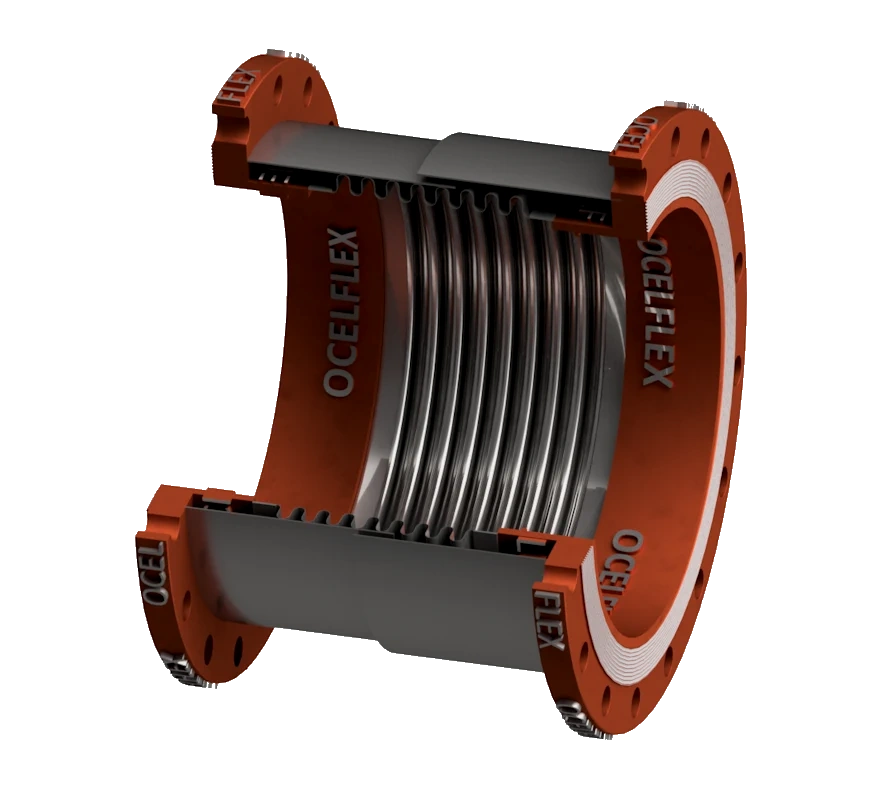
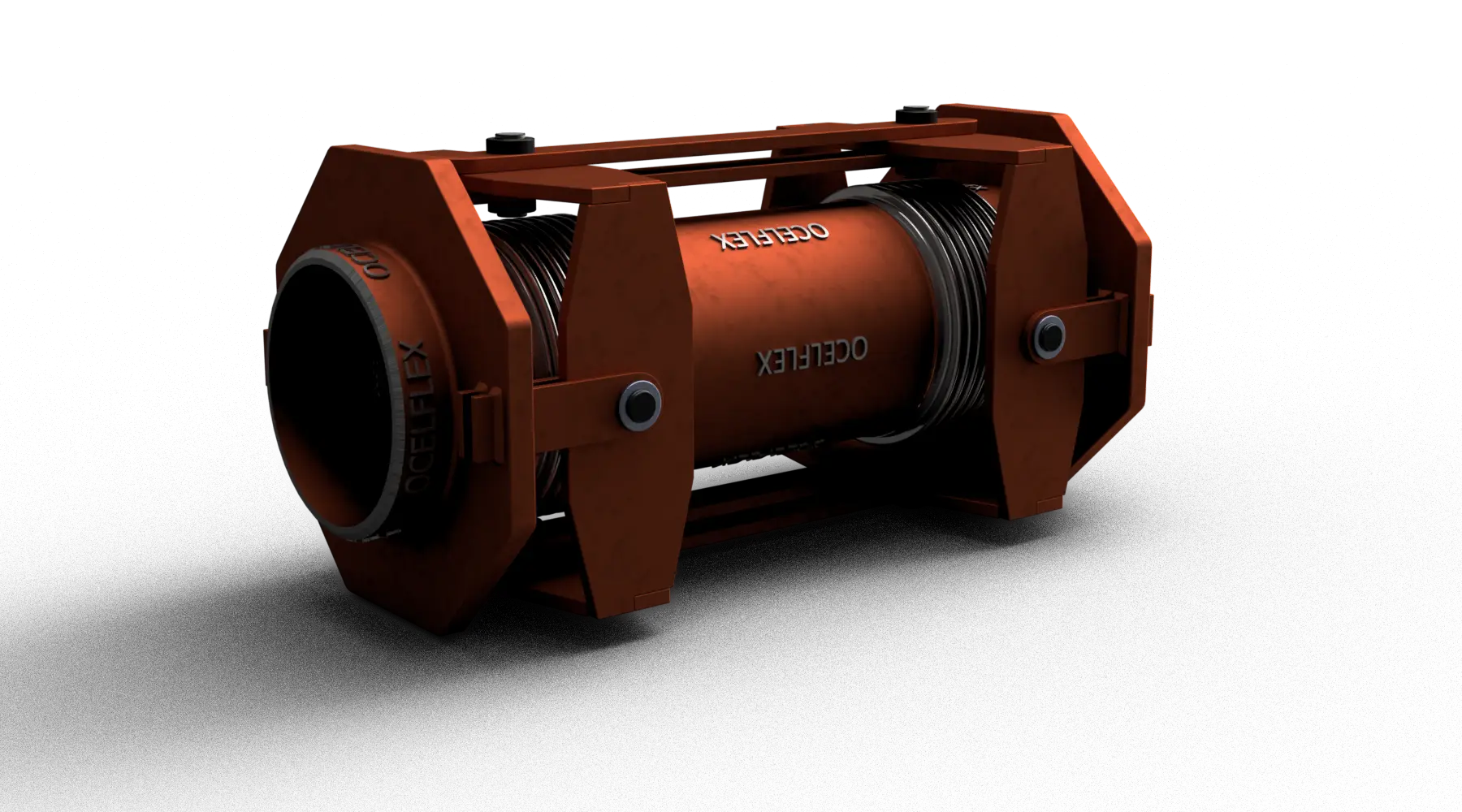
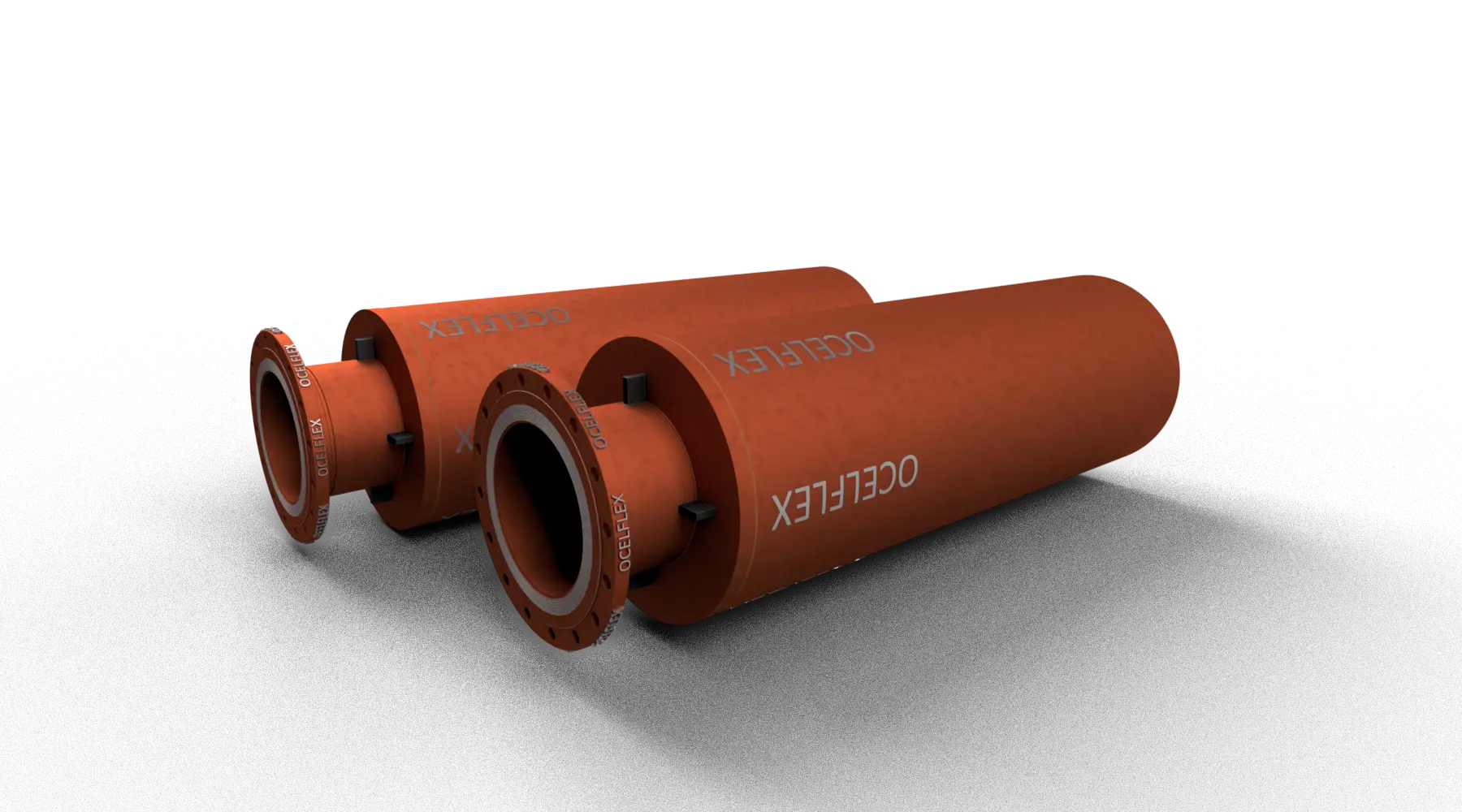
Given the delicate nature of the thin walled metal bellow element we recommend metal outer covers to protect these joints during plant construction and maintenance activities.
This cover also safeguards the expansion bellows from weld splatter, falling tools or parts, and potential damage from nearby accidents.
When designing metal expansion joints with an outer cover, it is crucial to account for any movement restrictions to ensure optimal performance.
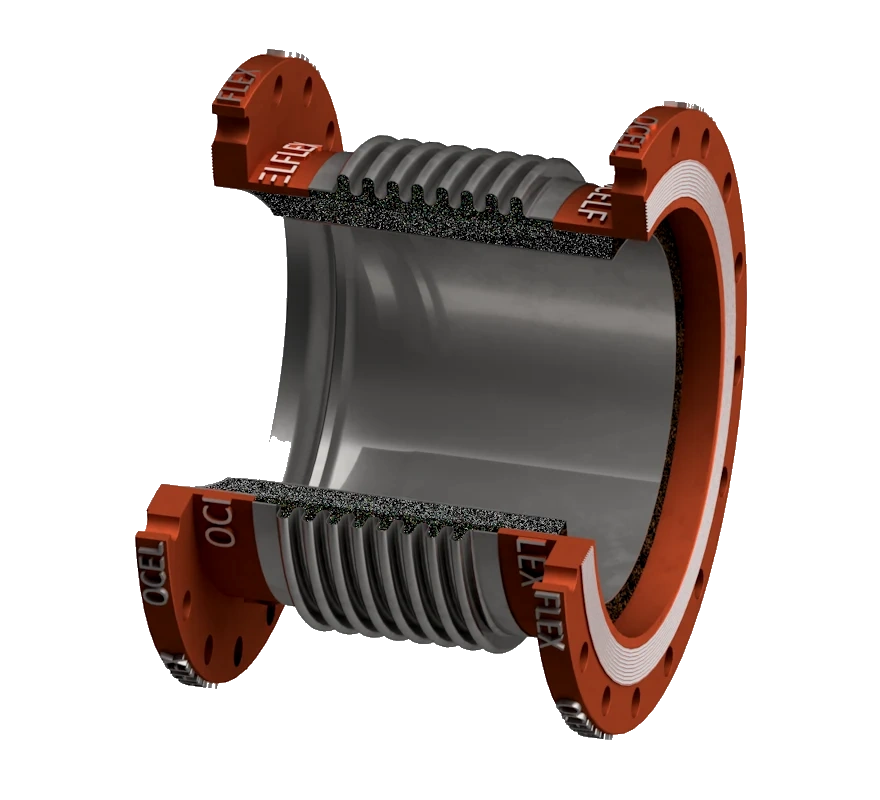
In applications where the inner media of a steel expansion joint carries significant particulate matter, these particles can accumulate in the bellows' convolutions, potentially causing corrosion or restricting movement. To address this issue, a protective particulate barrier is employed.
Typically made from fiberglass or ceramic fiber—materials well-suited for high-temperature environments—this barrier is installed without compromising the functionality of the steel expansion joint.
The barrier also serves as a thermal insulator, thereby enhancing the overall durability and performance of the joint in demanding industrial settings.
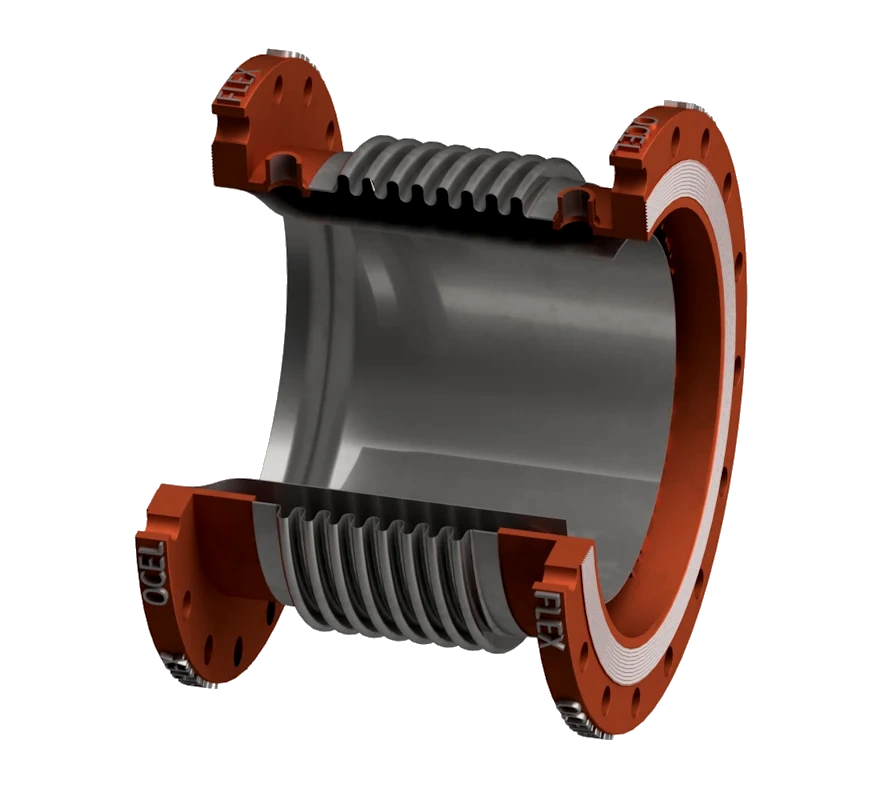
The purge connections are designed to allow the controlled flow of purging media, ensuring the joint remains free from contaminants and maintains optimal performance.
Incorporating a purge connection into a metal expansion joint requires meticulous design to ensure that the additional piping and fittings do not impede the joint’s primary function—accommodating movement.
By using steam or air as the purge media, the purge connections can help in stabilizing temperature gradients within the metal expansion joint.
SINGLE AXIAL METAL EXPANSION JOINT
For manufacturing and plant engineering teams, correct placement of anchors and guides around a metal expansion joint — particularly stainless steel expansion joints used in corrosive or hygienic processes — is essential to preserve bellows life, prevent load sharing problems, and control anchor reactions.
An axial expansion joint (bellows) is designed to compress or extend only along the pipe axis. If lateral bending, torsion, or pipe rotation occurs at the bellows, stresses rise quickly and life expectancy drops.
As a safe and good practice, there should be only one expansion joint between any two anchors. This keeps load paths predictable and prevents over-constraining the pipeline.
Let us further understand the best practices and common scenarios in industries worldwide.
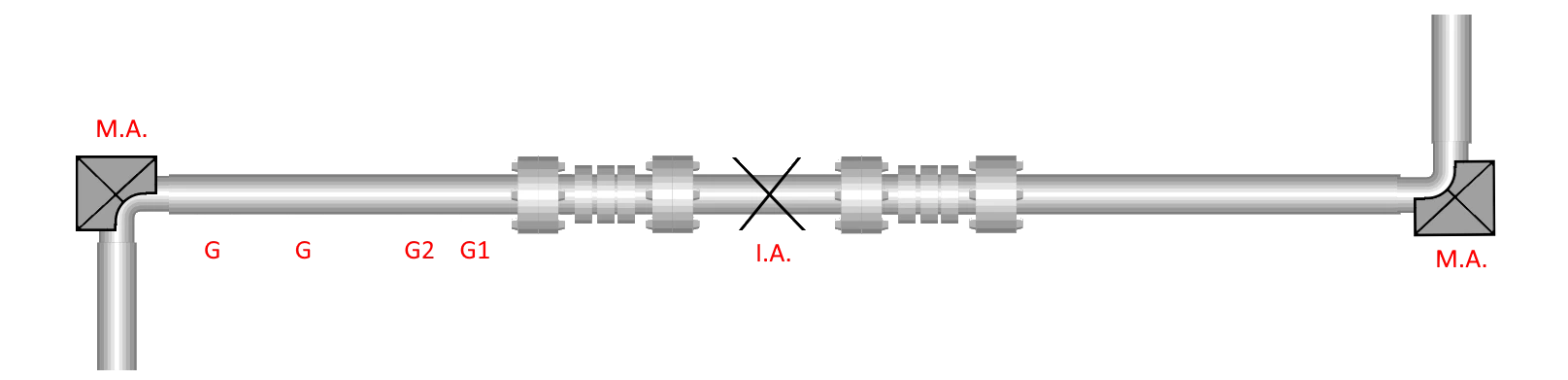
Position the metal expansion joint near one main anchor and provide a guide on the opposite side so movement can be taken up axially.
Place the first guide close to the expansion joint (typically within 1–3 pipe diameters where practical) to ensure the bellows sees axial motion without lateral offset.
Place the second guide close to the first guide — this creates a stable guided span.
Add additional guides along the rest of the run at regular intervals to control deflection and prevent sagging.
Exact spacing depends on pipe size, temperature, and insufficient support can cause sag-induced lateral displacement. For long unsupported runs, add intermediate supports or guides more frequently than with short runs. (Use structural and piping stress analysis to finalize spacing.)

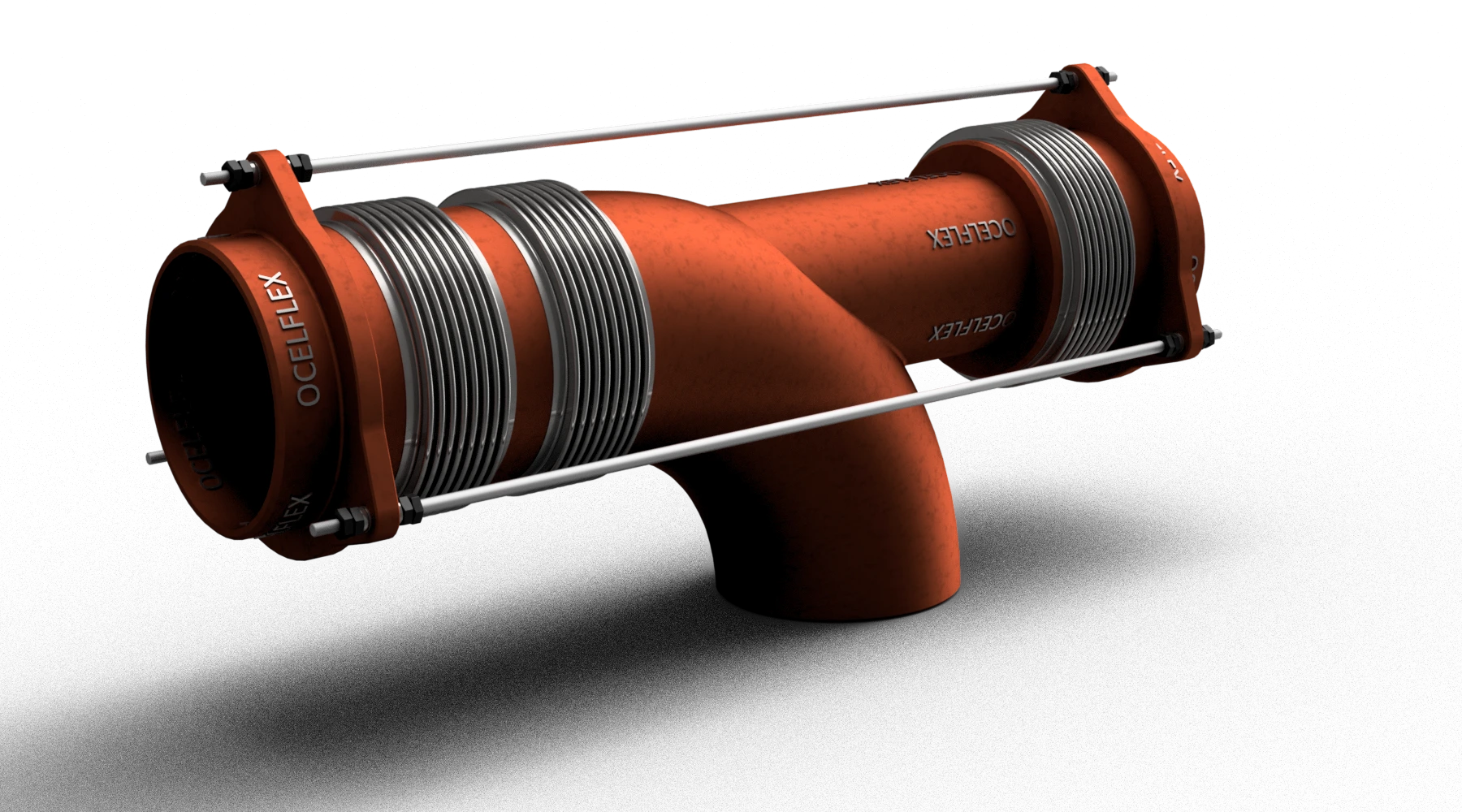
When using two axial expansion joints in series, treat them as two independent joints with an intermediate anchor between them. This prevents the two joints from interacting and ensures each joint carries its designed movement.
There must be only one expansion joint between any two anchors — so use an intermediate anchor when a second joint is added.
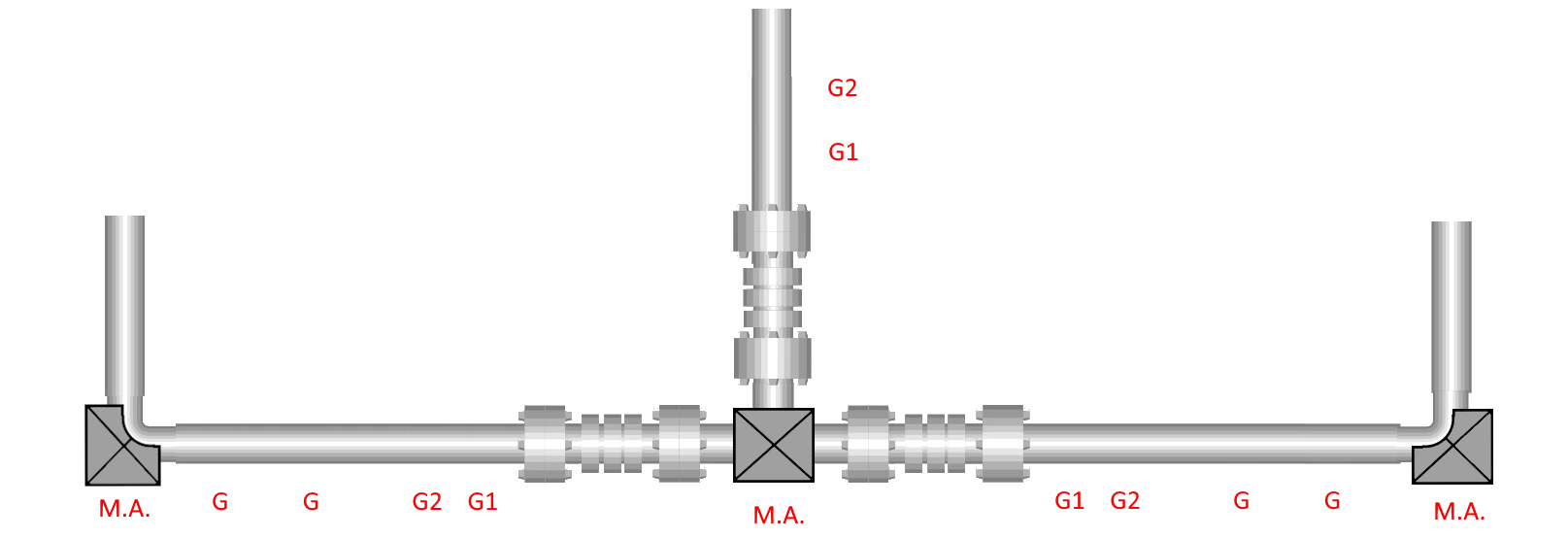
Treat the branch line as a separate load path. Place anchors and guides on the branch to isolate its movements from the main pipe and to avoid transferring unexpected moments into the bellows.
Place the second guide close to the first guide — this creates a stable guided span.
Add additional guides along the rest of the run at regular intervals to control deflection and prevent sagging.
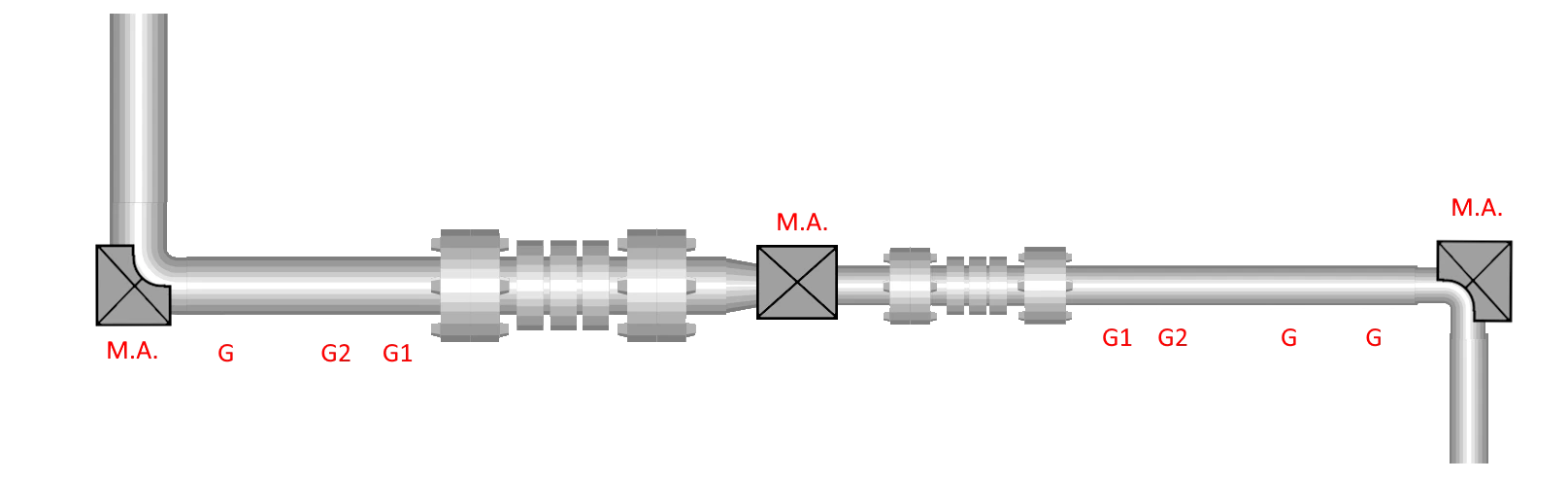
A reducer causes changes in internal flow area and may alter pressure thrusts. Place a main anchor near reducers when the axial thrust balance is ambiguous — especially for high-pressure systems — so differential thrusts do not overload the joint or anchors. Also consider inner stainless steel lining in such applications where internal flow alters the inner pressure.
When designing the placement of a metal expansion joint in an industrial pipeline system, a number of factors need to be considered for correct installation of the expansion bellow such as Bellows free length, design temperature, installation/assembly temperature, pipe run length between fixed anchor points, coefficient of thermal expansion of the piping material, expected thermal movement, bellows spring rate, internal pressure, allowable expansion bellow movement, etc. Some of the basic calculations are given below :
 Expansion Joint
Understand the most commonly used technical terms when referring to Metal Expansion Joints, Rubber Expansion Joint, Fabric and PTFE Expansion Joint.
 Expansion Joint
Know what parameters to consider when choosing the right expansion joint for your application.
 Expansion Joint
Understand the axial, lateral, angular and torsional movements an expansion joint is designed to compensate, based on different expansion joint design specifications.
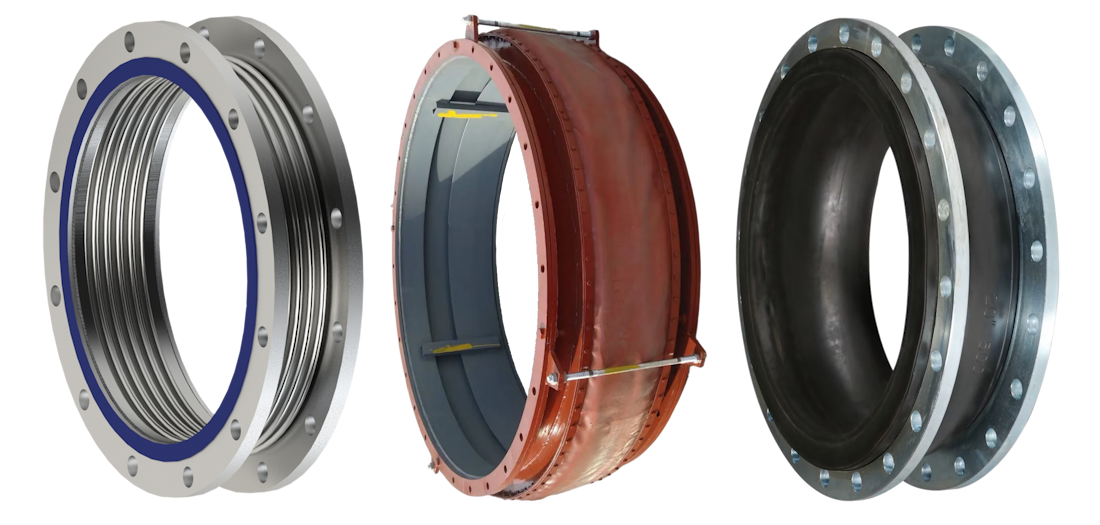 Expansion Joint
Confused which type of expansion joint is right for you? This guide will help you understand the difference between fabric expansion joints, metal expansion joints and rubber expansion joints.