Expansion Joint Terminology
Understand the most commonly used technical terms when referring to Metal Expansion Joints, Rubber Expansion Joint, Fabric and PTFE Expansion Joint.
Read More

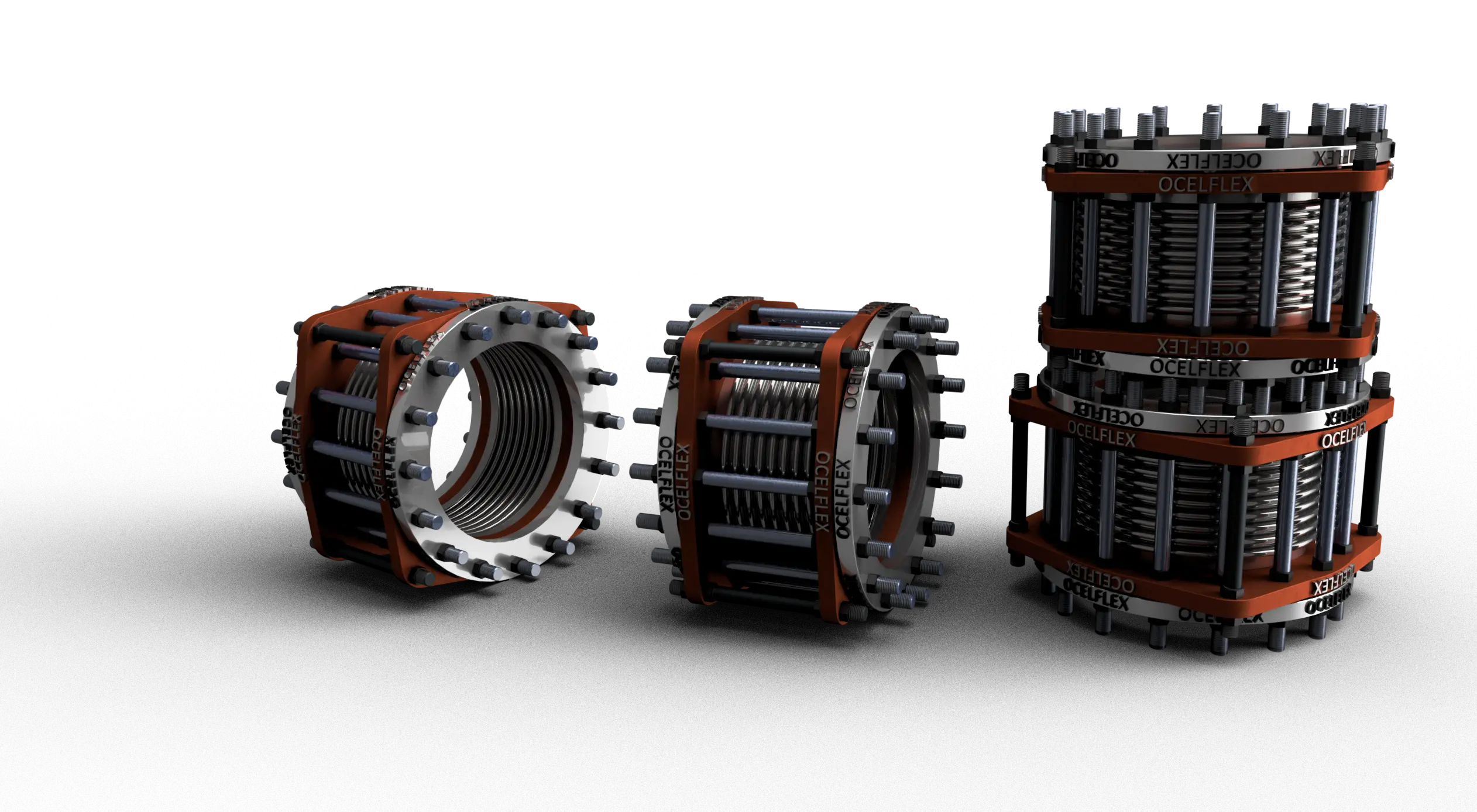
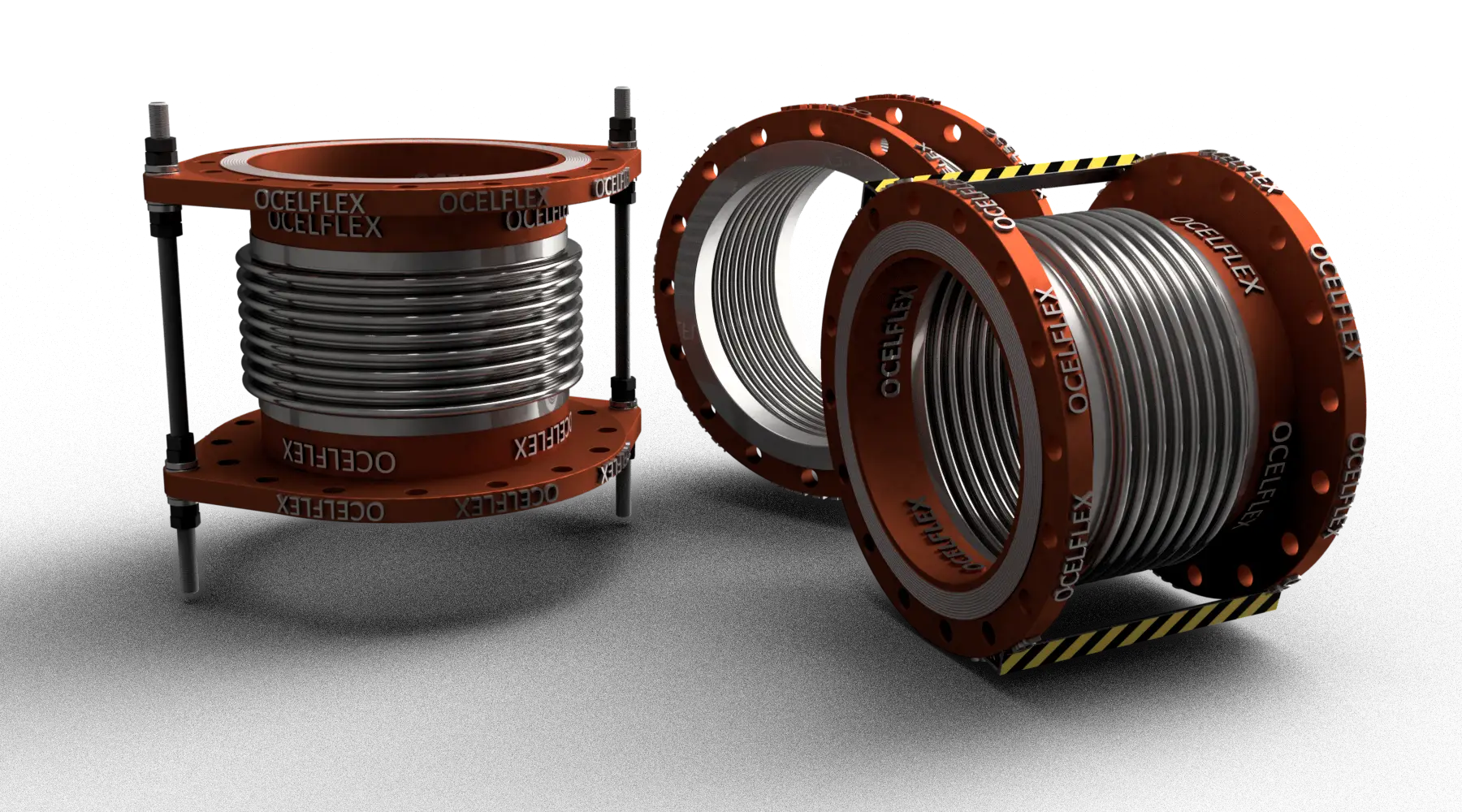
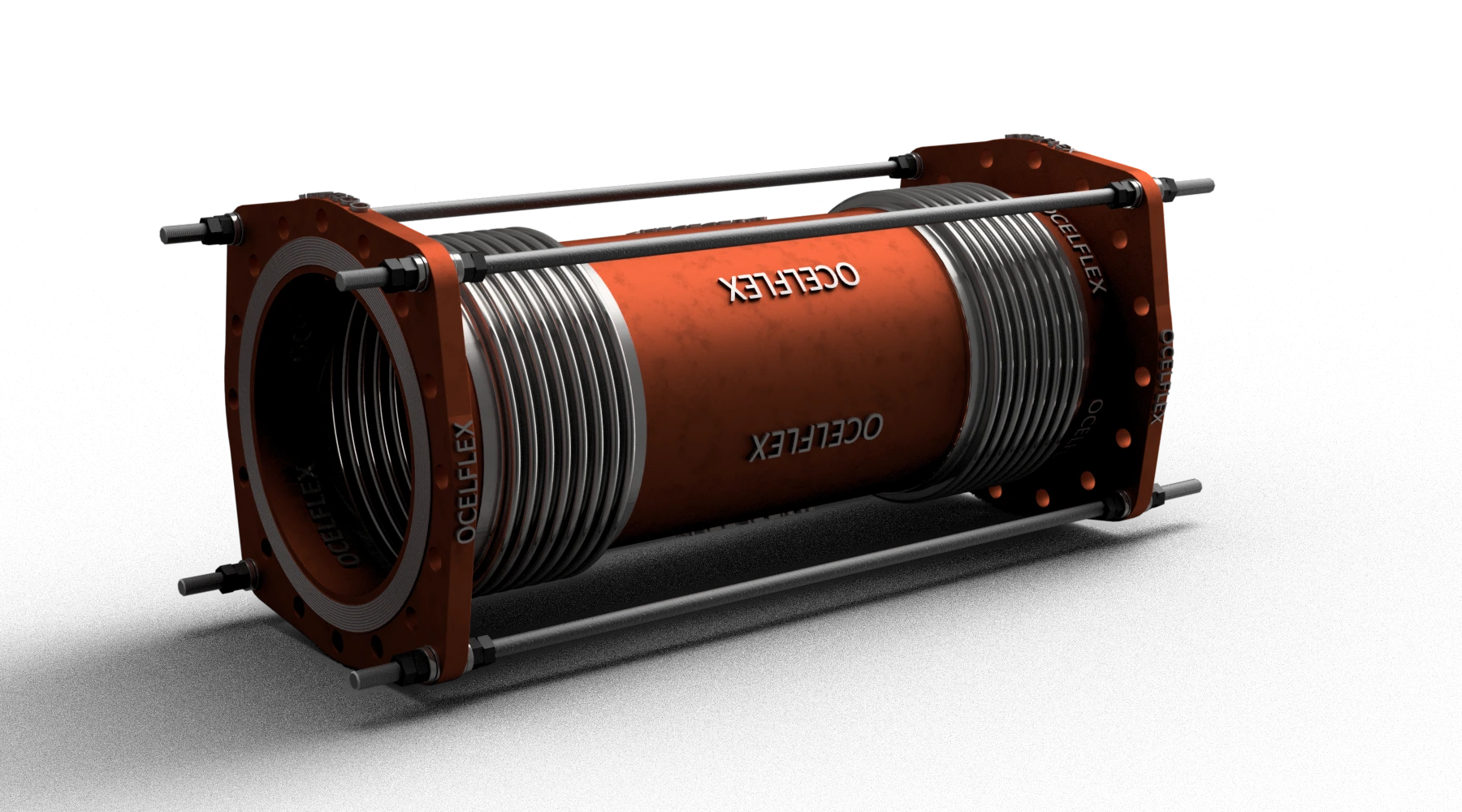
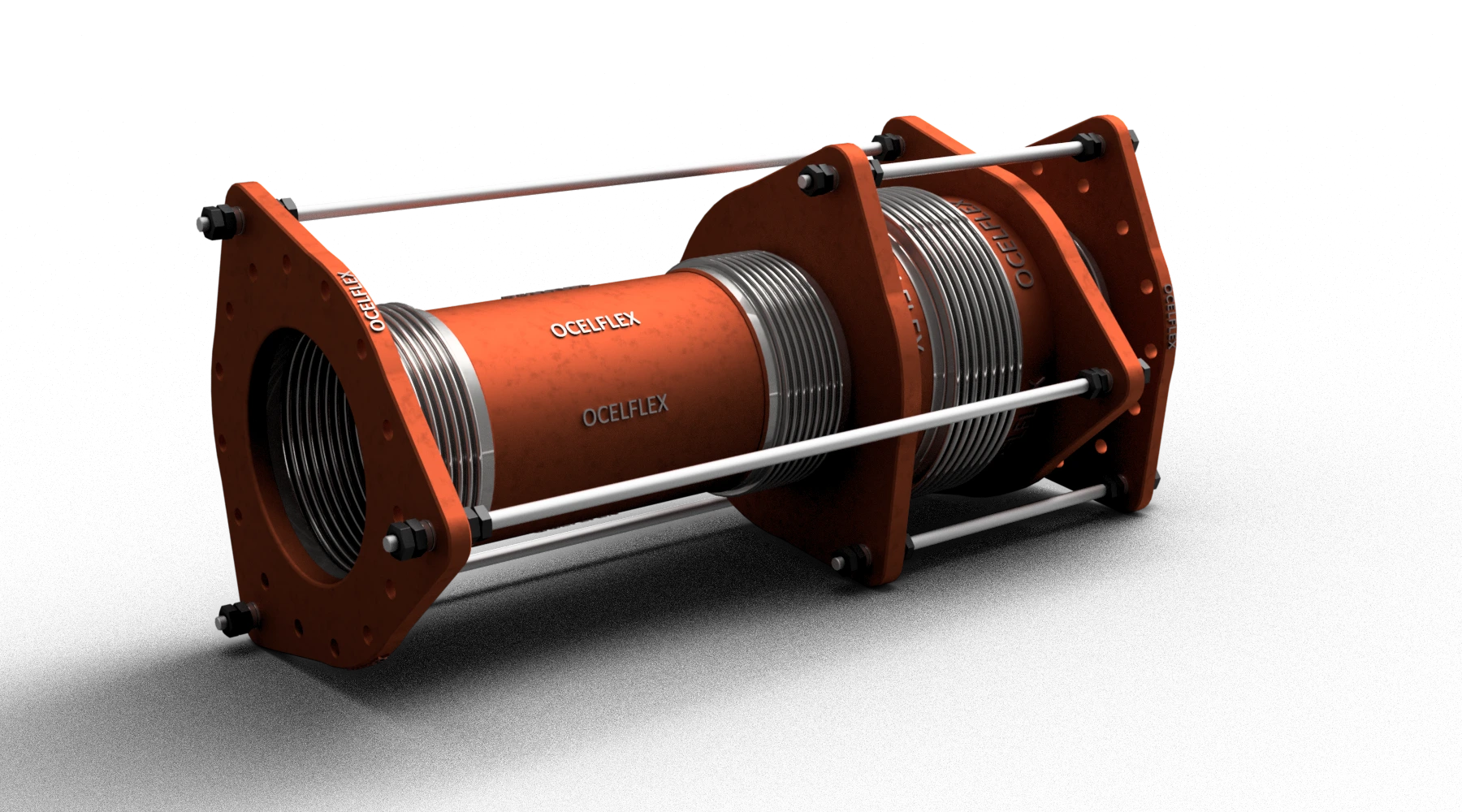
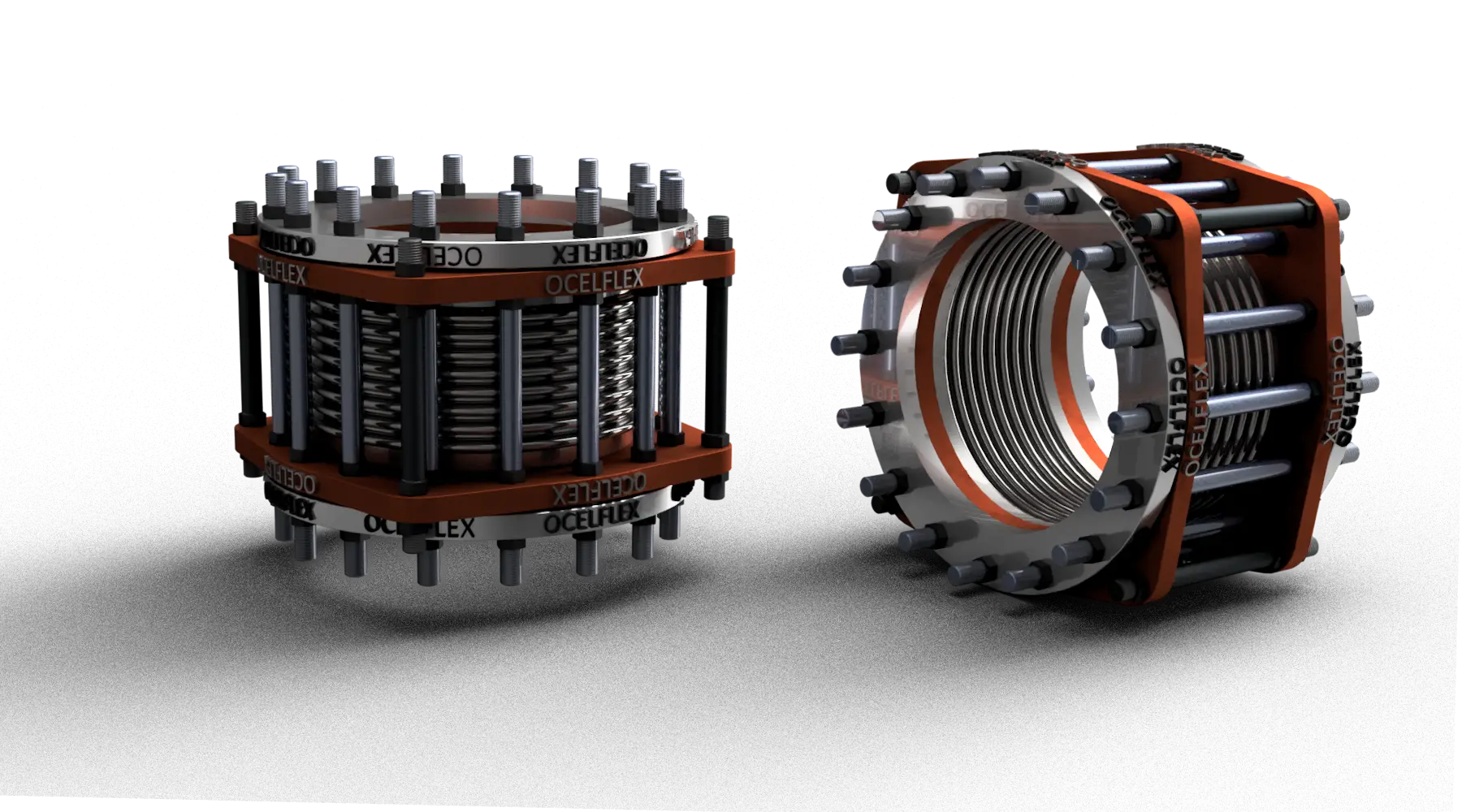
An expansion bellow type dismantling joint is a specifically engineered design for use in flanged pipeline systems for mounting and dismantling valves or similar piping components. Characterized by its double-flanged construction, this component is primarily intended to simplify the installation and removal of flanged equipment, which often require periodic maintenance and attention.
For larger diameter, these joints typically offer a greater degree of longitudinal adjustability, often around 100 mm, whereas for smaller diameter, these joints can offer up to 30 mm of longitudinal adjustability, which can be secured at a desired length using integrated threaded tie rods. Beyond this primary function, the tie rods also play a crucial role in the absorption of pressure thrust forces that arise from the internal pressure within the pipeline.
Traditional approaches often require separate metal expansion joints to accommodate thermal movement, along with spool pieces that must be removed to access valves. Integrating both expansion and dismantling functionalities into a single component represents a significant advantage in the design and maintenance of piping systems. With substantial longitudinal adjustability, these metal expansion joints offer considerable flexibility during installation. This adjustability accommodates minor misalignments in piping and slight variations in the lengths of equipment being fitted or removed, thereby simplifying fieldwork and reducing the need for precise on-site modifications.
Furthermore, the design of these steel expansion joints is optimized for maximum space efficiency, allowing seamless installation in confined spaces and compact chambers without requiring additional clearance.
METAL EXPANSION BELLOWS TYPE DISMANTLING JOINT
At Ocelflex, we manufacture fittings and end connections for steel expansion joints
in accordance with international standards and custom specifications. As a leading
metal expansion joint manufacturer, we produce high-quality fittings using materials
such as stainless steel, mild steel, brass, and other alloys tailored to specific
application requirements.
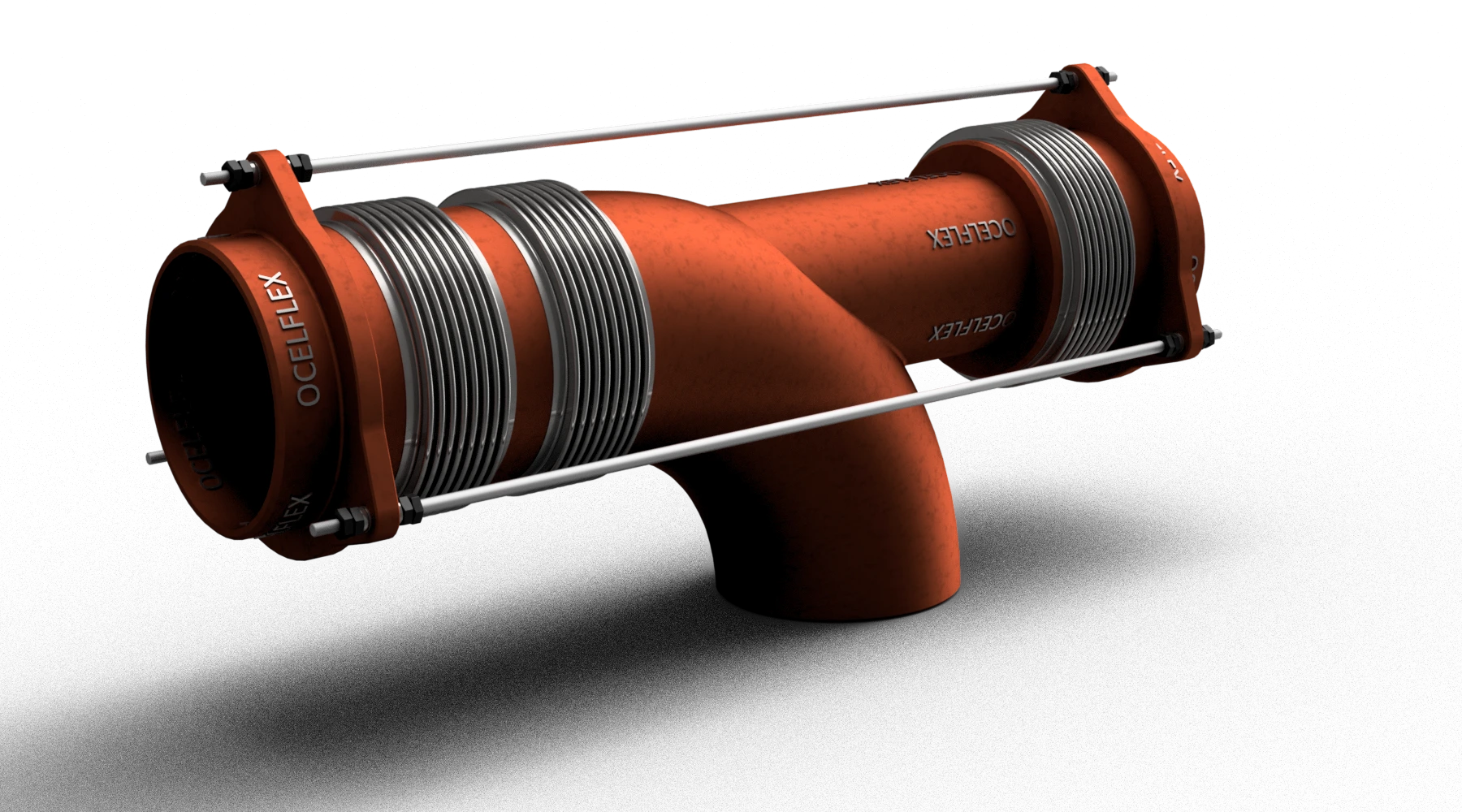
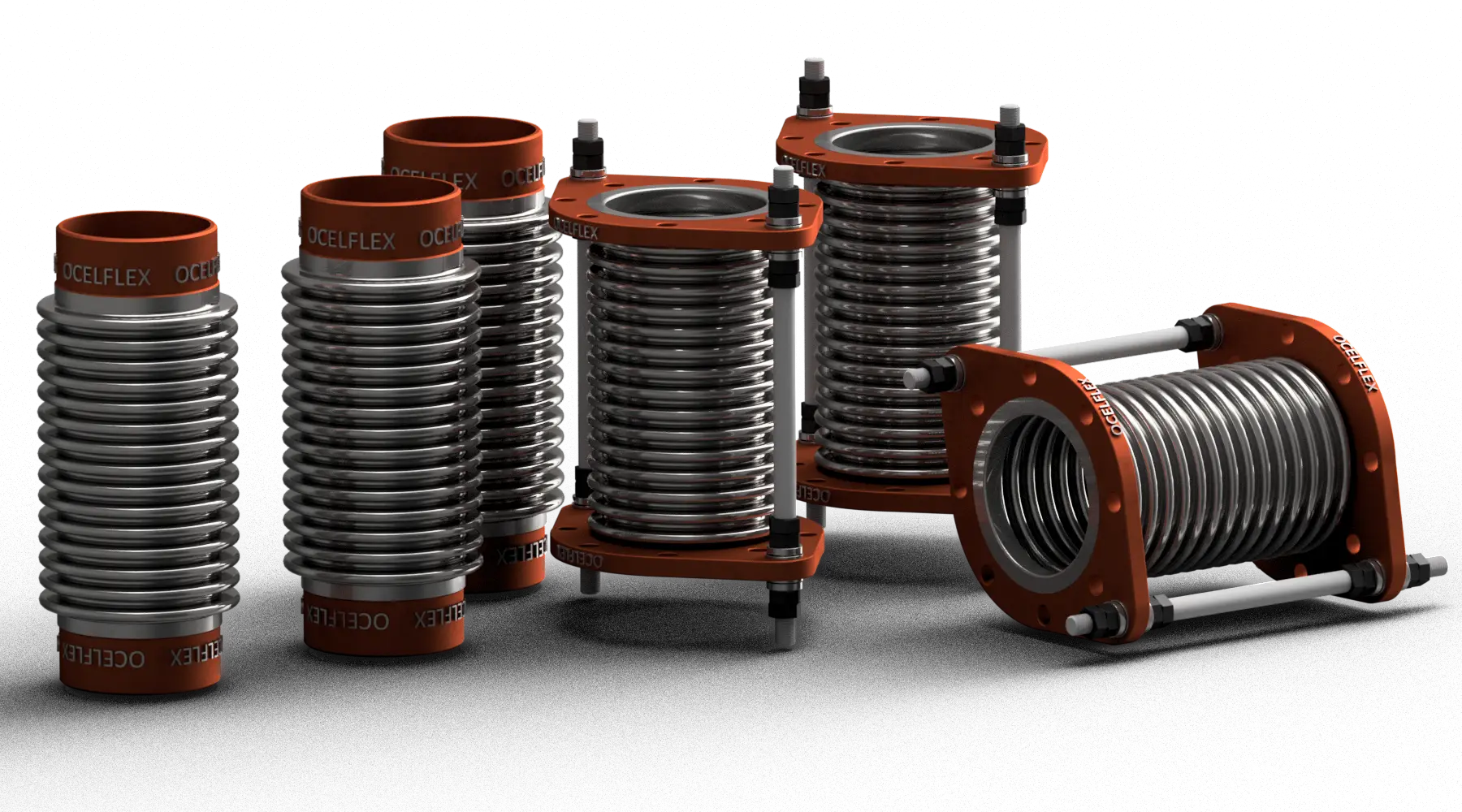
We offer a wide range of end connections such as fixed flange, vanstone fittings,
square flange, swivel flange, large union fittings, standard pipe end, customised
pipe end, grooved pipe end, fire standard pipe end, special purpose aerospace fittings
or customised fittings as per your requirement.
Our automated manufacturing processes and traceable material inspection ensure that every
component meets the demanding technical and performance standards necessary for
reliable operation in dynamic piping systems.
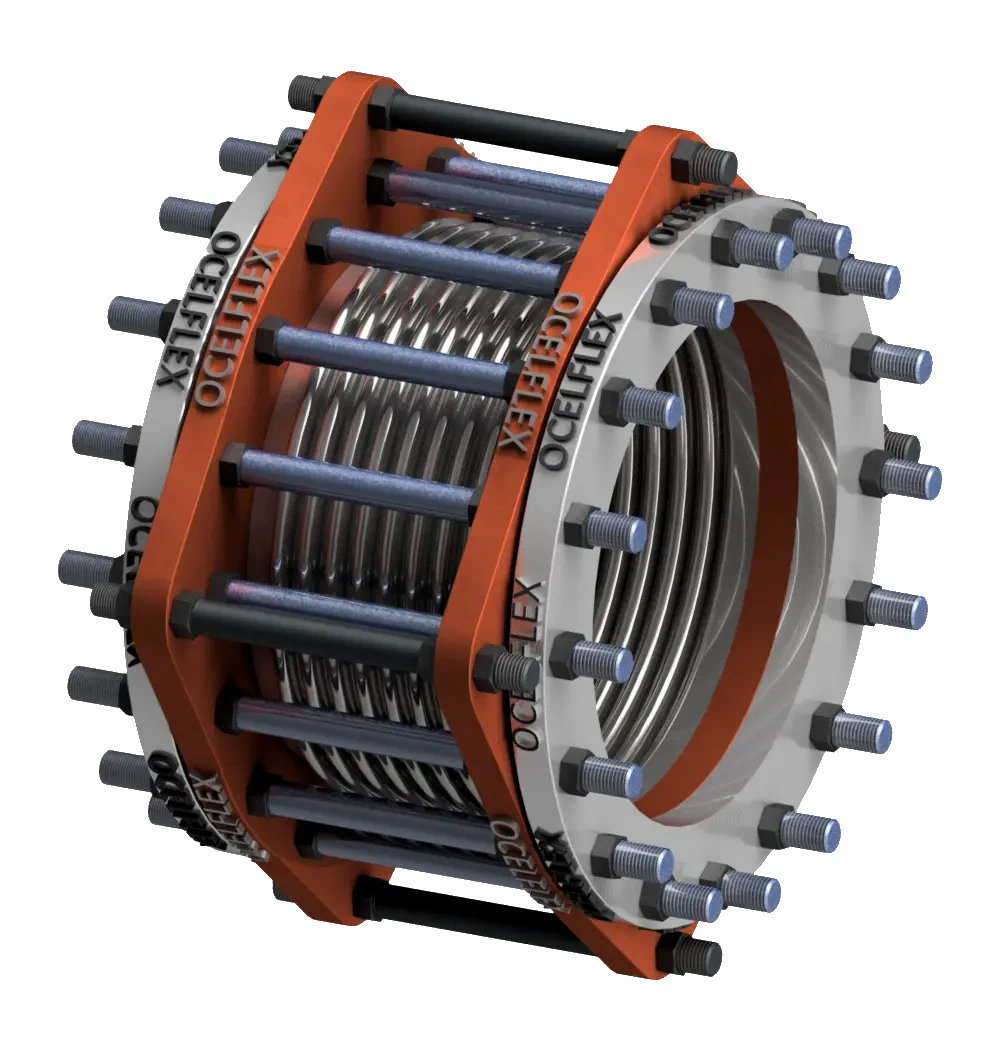
Ocelflex manufactures metal expansion joint with standard or customised flange specifications. The flange fittings are welded to the metal expansion joints.
Metal Expansion Bellows type Dismantling Joints simplify maintenance by allowing the straightforward removal and installation of flanged equipment—especially valves that control system flow and require periodic inspection, repair, or replacement.
The steel expansion bellows element within the dismantling joint's construction compensates for dimensional changes in the pipeline caused by thermal expansion and contraction.
The use of tie rods effectively contains both the adjustability and the pressure thrust, ensuring that the pipe expansion joint remains secure and stable under varying operational conditions.
Moderate. Metal Expansion Bellows type Dismantling Joints will accept axial expansion movements in the piping system.
Moderate. Minimum lateral movement is advised for this metallic expansion joints.
Moderate. Minimum angular movement is advised for this metallic expansion joints.
Ocelflex manufactures dismantling type metal expansion joints from sizes ranging :
From 1 1/2 inch NB ( DN 40 ) to 60 inch ( DN 1500 ).
We can manufacture expansion bellows of customised lengths for any size. Our standard lengths are :
For Diameters less than 24 inch, lengths upto 18 inch.
For Diameters from 24 inch to 60 inch, lengths upto 24 inch.
Depending upon the design, our metal expansion bellows type dismantling joints can work at operating temperatures ranging form - 270 ℃ to 1000 ℃.
Ocelflex's Metal Expansion Bellows type Dismantling Joints are available in single ply and multiply design, for upto 40 bar pressure rating and full vacuum conditions.
Wide range of materials like :
Stainless Steel 304 (1.4301),
Stainless Steel 304L (1.4307)
Stainless Steel 316 (1.4401),
Stainless Steel 316L (1.4404)
Stainless Steel 321 (1.4541),
Inconel, Hastelloy, Monel
EJMA X, ASME Sec. VIII, Div. 1, ASME B31.3, ASME B31.1, EN 14917, EN 13480, EN 13445
 Expansion Joint
Understand the most commonly used technical terms when referring to Metal Expansion Joints, Rubber Expansion Joint, Fabric and PTFE Expansion Joint.
 Expansion Joint
Know what parameters to consider when choosing the right expansion joint for your application.
 Expansion Joint
Understand the axial, lateral, angular and torsional movements an expansion joint is designed to compensate, based on different expansion joint design specifications.
 Expansion Joint
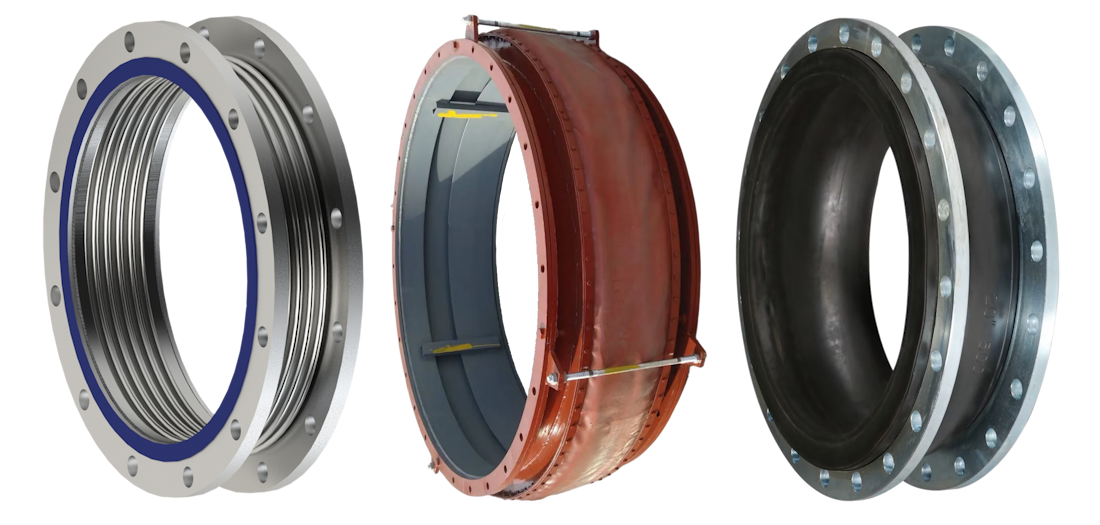
Confused which type of expansion joint is right for you? This guide will help you understand the difference between fabric expansion joints, metal expansion joints and rubber expansion joints.